
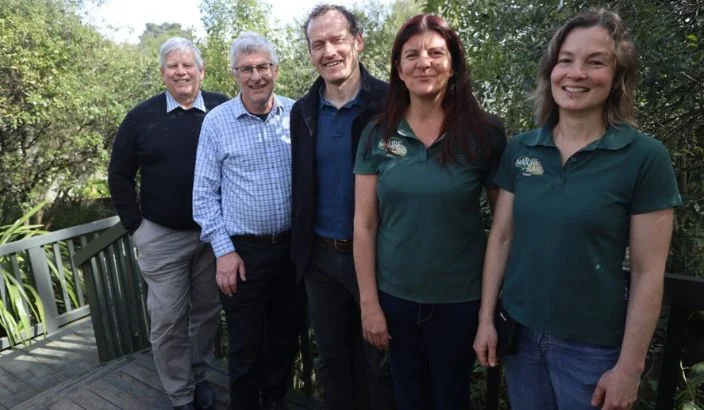
A chirpy visit by big fish in Aotearoa’s membership association representing veterinarians to the “unsung heroes” in wildlife care.
New Zealand Veterinary Association chief executive Kevin Bryant and president Rob Mills toured Natureland Wildlife Trust on 18 September, commending its “grassroots level” conservation mahi.
Natureland’s manager, Leah Foster, says its Breed for Release programmes had soared in the last 12 months with the final three South Island kākā freed to Abel Tasman National Park.
Six pāteke (brown teal) ducklings have also been born, with one released in Milford Sound, and 32 yellow-crowned kākāriki or parakeets have been bred and released into the Pūkaha Wildlife Centre in Wairarapa.
Seven of its juvenile tuatara were also set free in the Brook Waimārama Sanctuary in November last year in the inaugural mainland translocation of the reptile in Te Tauihu.
Rob says behind-the-scenes access to these programmes was “a privilege” and the community uniting to help wildlife was “something the association holds dear to itself”.
“I think that the efforts that are going to make the habitats really friendly and natural is just immense,” he says.
“It takes money, and within what I assume are fairly limited budgets, it’s such an asset to the city.”
Winstone Aggregates and Rātā Foundation financially support the Breed for Release programmes but funds remain a threat to conservation longevity.
Natureland board member Brendan Hickman says smaller wildlife organisations “fly under the radar” so continued advocacy to lure sponsorship must persist.
“Places like Natureland doing Breed for Release, it sort of gets missed, and the cost to get those programmes going is not insignificant,” he says.
“For places like the Abel Tasman to thrive with native wildlife, we need these places to succeed, so that’s probably the biggest challenge from a veterinary perspective,” Brendan adds.
