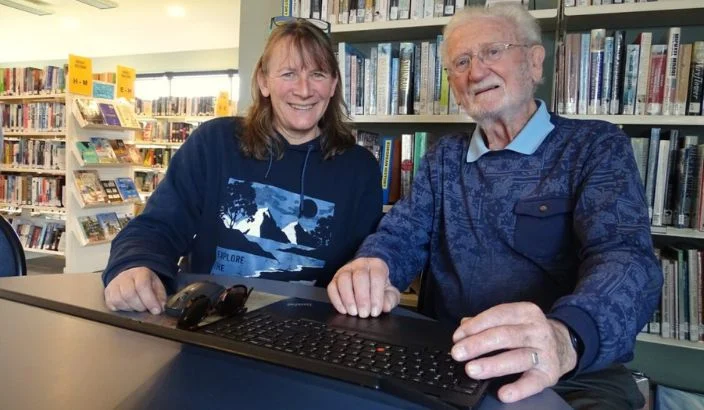
Michael Halse admits his computer skills are a result of “stealth and stumble”, so to have a volunteer show him how to tackle tasks at Māpua’s Click and Connect sessions has been a relief.
The technical support sessions in the RSA room adjoining the library have been offered for a few weeks and volunteer Sally Hargraves says they have been popular, with quite a few regulars returning to learn more.
“There’s definitely a need for it and I’m very aware that the word hasn’t spread to all the people who need it because the people who really need it aren’t so connected.”
Often, she says it is older people seeking help with straightforward technology, such as managing photos and getting rid of annoying notifications, with no-one to help.
“They might not have grandkids living locally to help them and you can’t get that help on the phone.”
Sally is part of a small team of volunteers who run the sessions on Tuesday afternoons between 2.15pm and 3.30pm, and Michael is full of praise for them.
“This is excellent. We’ve had a computer for years and years and it was used for basic stumbling about with emails, but now there’s so many quirks and dodges you can use to make it easier.”
While the sessions cover the basics, Sally says everyone also needs to start talking about creating a legacy account to deal with the digital afterlife of a person when they die. She says the digital legacy that continues on the internet, such as Facebook and Instagram, can be programmed to self-destruct, or someone can be nominated in a will to have authority to deal with it all. They become the digital contact with the passwords to manage them.
“The main thing is to look it up and find some information. Hardly anyone is doing it, and most people don’t even know you have to do it.”
One place to start, she says, is a website, Death and the Internet at www.internetnz/nz.
