
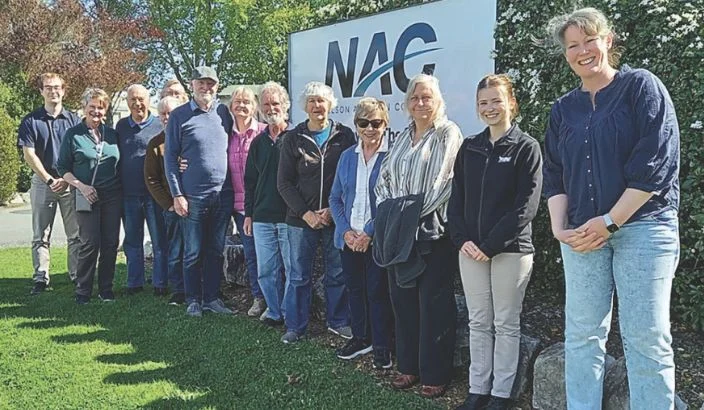
Well, didn’t we have a treat on Wednesday, 15 October. Fourteen of us from the Nosey Parkers Group headed off to Nelson Aviation College to find out what goes into training future airline pilots. And let me tell you—it was absolutely fascinating!
We were warmly welcomed by Jackie Day, the college’s safety, training and development manager (what a title!). Jackie kicked things off with a chat and a short video that gave us a glimpse into the history of the college and the sort of training they offer. Fun fact: Nelson Aviation College is one of just four colleges that are Air New Zealand Preferred Training Organisations (PFTO). Impressive, right?
The main base is out at the Motueka aerodrome, though they also have a smaller training facility in Nelson. That’s where they keep a Boeing 737 simulator. They also have a twin-engine aircraft there, but students aren’t allowed to fly it without an instructor. Sensible, really.
The college is privately owned, and they don’t mess around when it comes to standards. You need at least 70% to pass, and they maintain a very high success rate. Near enough is not good enough—and you can see they mean it. We got to peek in on a class in progress and counted around 20 students, all hard at work.
Now here’s something we didn’t know: before someone can even begin commercial pilot training, they already need to have a private pilot’s licence. The college does offer a private pilot course, but becoming a commercial airline pilot takes real passion—and a good chunk of commitment. One of the reasons students need to have their licence first is to show the government they’re serious, especially if they’re hoping to get a student loan. It’s a big investment.
The full commercial training course runs for 88 weeks, and the college takes on new students three times a year. They have a fleet of twelve aircraft—Cessna 152s and 172s, plus a Piper Seminole PA44—but wouldn’t you know it, every single plane was out flying when we visited. Typical! Excitingly, they’ve also ordered some new Infinitus Spark electric aircraft, which they will be taking order of from 2026.
After the intro session, we split into two groups for a proper tour of the campus, led by friendly flight instructors Nathan and Lucy. The building is cleverly designed to look like a propeller from above—how cool is that? Inside, it’s got everything: offices, classrooms, a kitchen, and accommodation for the students. They each get a small single room, and a cooked meal every day—pretty good setup!
The college operates Monday to Friday, giving both students and the local community a break from aircraft noise over the weekend. Beyond flying skills, the college also places a big focus on looking after their students’ well-being, which makes sense—it’s a tough, expensive course, and support is key. All in all, we spent about ninety minutes there, and every minute was worth it. We came away with a whole new appreciation for what it takes to become a pilot. A big thank you to Jackie, Nathan, and Lucy.
