
ROBYN PARKES
A gathering for those interested in the establishment of a teaching institution for music in Nelson was held on 27 February 1894.
Organisers were thrilled with a large crowd attending, all anxious to see a music school established in the city.
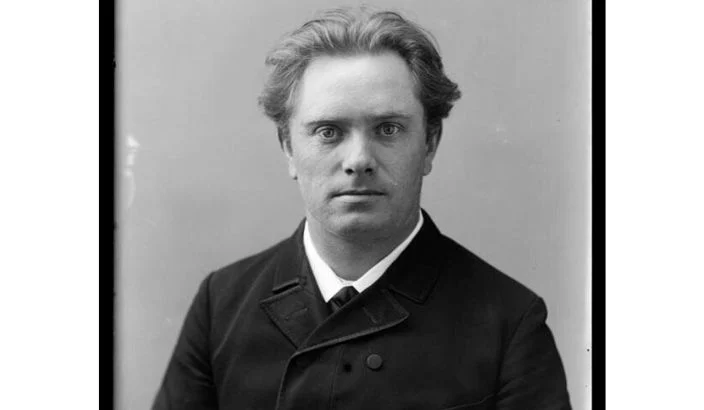
Musician Michael Balling offered to conduct a school for at least two years.
Michael was for five years a student in the Conservatoire of Wurzburg, Germany, and for six years solo viola player at the Wagner festivals in Bayreuth.
He was thought to be the most gifted conductor ever to settle in New Zealand.
Already there were tentative plans for Michael to run classes for orchestral and vocal music twice weekly, either for free or for a small charge for those with musical ability.
A drawn-up scheme involved the rental of a premises before the commencement of the next college term, for the school to be open morning and afternoon for students, a schedule of school subjects to be defined to include orchestral instruments and the theory of music, staff to be paid by the school for time occupied, each student to take a chief and secondary study, and regular examinations the same as any other school. It was unanimously carried to forge ahead.
A provisional committee meet in March to prepare a draft scheme for inviting subscriptions.
A prospectus was compiled and put out for the public of Nelson to peruse.
Michael was appointed as principal, also holding the position of teacher of harmony, violin, viola and orchestral instruments. Mrs Houlker was appointed teacher of singing.
Fees were set at £2, 2sh per term with the year consisting of three terms.
Instruction was to be two hours per week for each student, with each student selecting two subjects.
Two other weekly classes at no cost were offered for students chosen by Michael from those who showed talent but were unable to pay the teaching fees.
By May 1894, 30 applications had been submitted for prospective students.
Meetings between the trustees of the School of Music and members of the Harmonic Society were held to consider arrangements for the Harmonic Hall in Trafalgar Square to be lengthened by 15 feet and for two classrooms to be built adjoining, to allow for the school to begin. Mr H. Baigent was entrusted with the alterations.
Miss Dugdale of Wellington was appointed onto the staff as teacher of the pianoforte.
The long-awaited day, 8 June, 1894, arrived for the opening of the Nelson School of Music.
Subscriptions had allowed for the alterations to the Harmonic building and to send to England for orchestral instruments and to purchase a piano.
After paying all expenses the school was able to start almost free of debt.
Nelson’s school of music was the country’s first conservartorium, a miniature of those found throughout Germany.
On the opening day over 40 students had signed up. By July student numbers had grown to 68.
The first of a series of musical evenings took place on 22 August under the direction of Balling, assisted by the students. What a great success.
Michael returned to Germany around February 1896 and was farewelled at a concert held in the Theatre Royal.
His replacement was Gustav Handke, who had studied for several years at the Leipsic Conservatorium, was a qualified violinist and viola player and trained in the theory of music.
With growing demands, by April 1899 the trustees realised that they needed a more suitable building.
The Harmonic Society also felt that they too needed a bigger hall so in order to meet the wants of both parties’ arrangements were set in place to find land for a new building.
