
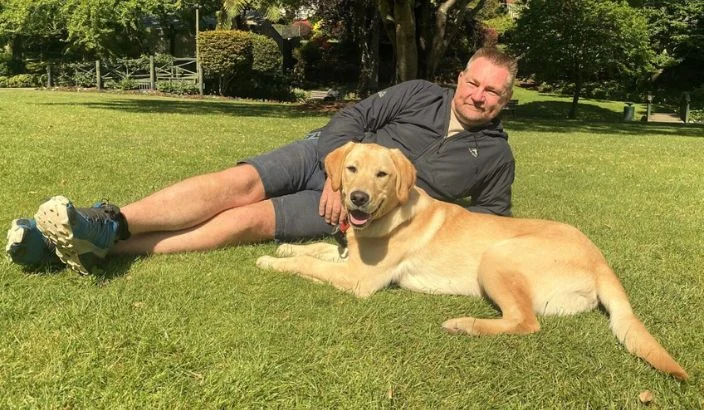
Meet Banksie, an eight-month-old golden labrador who is following in the tracks of his predecessor, Piper, to work alongside dog tracker Don Schwass and help bring missing dogs home.
Don’s previous dog, Piper - a four-year-old black labrador - had become a household name before she died in August due to an undiagnosed illness. Her loss left Don with decades of tracking experience and a toolkit that includes modern technology such as a drone to help in searches, but no canine partner.
“A dog is one of the tools in the toolbox and I would be like a builder without a hammer. I thought, if I could find a dog about eight months old with that working ethic, we might have another crack.”
Don spent 35 years volunteering with Search and Rescue (SAR), often working alongside police, so he asked about young dogs in the police kennels. After watching a couple of videos of the young lab Banksie – named to fit the police “B” naming year - Don had his new partner.
“It was probably meant to be – he was the only one around and they knew what I was looking for – a focus on the handler. In the environments we go into, I need to know the dog is listening to me and some dogs don’t have it.”
He acknowledges Banksie has big pawprints to fill. With Piper, he says, “we had our own song sheet”.
“I bred her and picked her, and we had this great connection of trust. When she got old we were going to get old together, and sadly it didn’t go that way.
“I did hundreds of missions with her – when I got to 33, I stopped counting. We went from the top of the North Island to down south. She loved flying on a plane.”
Young Banksie, he says, will have his own strengths.
“Banksie will bring his own things to the table and will have quirks she didn’t have. In the next six months, he will either be up and going or just a pet.”
Don’s dog-tracking volunteer work began in 2004 after a friend’s labrador, Floyd, went missing for five days. With his first tracking dog, a beagle named Cleo, he found Floyd in four-and-a-half hours.
Word spread, and after Don and Piper located a missing dog called Ace on the Lewis Pass, social media spread their reputation wider.
The pair were regularly being flown around the country to find missing dogs. For someone with a seven-day-a-week fish and chip business on Salisbury Rd it was getting a bit busy, and now Don is trying to limit those trips away.
Even so, he still helps with about two cases a week, often helping to solve them over the phone by teaching people how to search for their dog smarter. He says there’s still a 92 per cent success rate via the phone.
He loves the challenge – and the rewards – of bringing a lost dog home.
“It’s a game of hide and seek and chess all in one, and at the moment I still have the passion to solve the problem. The reunions are the same as a child; the dog is part of the family, and it is the same emotions.”
He has also located two deceased dogs recently which he says is just as important because owners still want their dog back.
