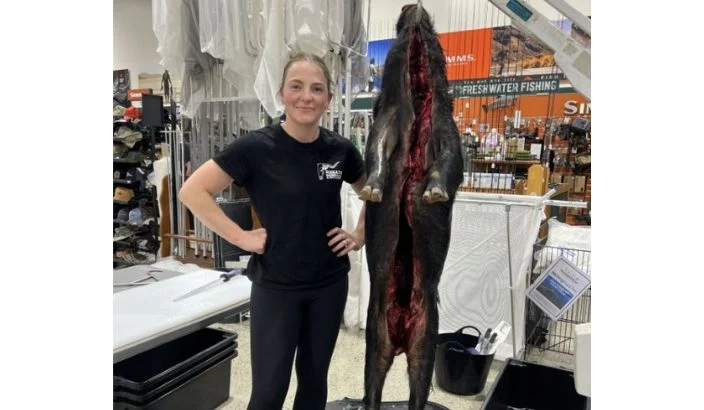
Motueka-born and raised, Hannah Kelly has always lived close to the land.
Growing up on a lifestyle block with a father she describes as “a mad hunter”, she often joined him on hunts.
Breaking down animals was simply part of everyday life – long before she imagined it could become her career.
Today, Hannah is one of the younger faces entering the homekill and rural butchery sector – an industry that relies on practical skill, resilience and a genuine connection to the communities it serves.
Her working life has taken unexpected turns. In high school, she developed an interest in food preparation, which led her to the New Zealand Army.
She spent six years based at Burnham, Canterbury, as a qualified chef.
“I really enjoyed it,” she says. “There was the fitness, the drills, all the skills that come with Army life – but I loved the food side.”
After leaving the Army, Hannah returned home, where her parents were running a coffee cart in Motueka.
“I was going to help Mum and Dad at the coffee cart, but it was busy in the butchery, so Dad asked if I could help there for a bit.”
That “bit” became something more. Mark and Kath Kelly started the butchery in 2014 when keen hunter Mark upgraded to a bigger chiller.
“Dad’s bigger chiller meant mates started putting their animals in there, which led to people asking him to break down their animals,” Hannah says. “Around the same time, two very experienced butchers were retiring, and they helped Dad get into it – the timing just lined up.”
Hannah quickly found she enjoyed the work. “It was similar to what I’d done with Dad – breaking down animals,” she says.
For the past four years, butchery and homekill have been her everyday life.
She has also given live butchery demonstrations at several events – a role she initially felt hesitant about.
“I wasn’t sure when I was first approached,” she laughs. A butchery demonstration is a practical, hands-on presentation where a butcher shows an audience how to correctly and safely break down an animal or a specific cut of meat.
It’s educational and designed to teach skills and best practices.
“But I gave it a go. I really enjoyed chatting with people, especially other women, and sharing the little things I know.”
The job, she admits, has its challenges. “Breaking down beef can be a tougher day – literally. They’re big animals.”
Early starts, often around 4.30am, are part of the routine, but she says the satisfaction of producing well-prepared meat for rural families makes the hard work worthwhile.
Hannah emphasises that butchery is a skill anyone can learn. “Definitely give it a go if you’re interested. If you’re not a hunter, find someone who is and learn by breaking down your own animals. The good thing about meat is even if you stuff something up, you can still eat it.”
From hunting with her dad to butchery demonstrations, Hannah’s path may not be traditional – but it reflects the adaptability and practical work ethic at the heart of rural New Zealand.
Her journey shows that sometimes the right career is the one you grew up doing without even realising it.
