
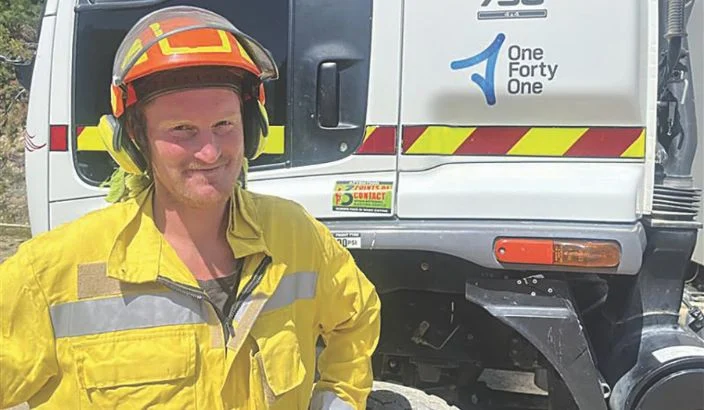
Kylie Reeves - OneFortyOne
As summer approaches and fire season begins, OneFortyOne is making sure its forestry crews are trained and ready to respond to wildfires.
After the devastating July storms that caused widespread windthrow damage across the region’s forests, the last thing the area needs is a fire.
With crews already working around the clock on the windthrow response, OneFortyOne is taking a proactive approach to fire prevention – equipping silviculture contractors to support initial fire response efforts.
In early November, eight silviculture contractor crews took part in fire response training at Tapawera, Eves Valley and Marlborough.
The training focused on organising their workforce and leading them through initial attack procedures if a fire is reported in the forest.
“The crews respond as they would in a real situation,” forest protection manager Craig Brown says. “Everyone gets hands-on with the equipment, learns how to communicate during a fire response, and follows the command structure.
“For some, that means brushing up on skills from previous fire seasons. For others, this is their first introduction to firefighting.”
Craig is clear that the training is not about replacing professional firefighters.
“These are the people who are already in the forest, often in remote areas where they are the closest to any fire outbreak,” he says.
“Minutes matter in fire suppression. If we can respond in that critical first 15 to 30 minutes, we can prevent a small ignition from becoming a major incident. They buy crucial time until Fire and Emergency New Zealand (FENZ) arrive.”
Forestry’s silviculture workers have unique advantages as firefighters. They are physically fit, used to challenging terrain, and skilled with tools that can be used in fire suppression.
More importantly, they know the land – the access routes, water sources, and fuel loads specific to each area. The forestry industry works closely with the Rural Fire Network, Fire and Emergency New Zealand, Department of Conservation, and local councils through regular stakeholder meetings during fire season to coordinate response strategies and assess risk levels.
“We share a landscape and we share responsibility,” Craig says. “The Build Up Index guides our decision-making.
“When conditions reach certain thresholds, we adjust our operations, increase vigilance, and ensure our crews know exactly what to do if they spot smoke or flames.”
Silviculture worker Craig Barker, who has several seasons under his belt, understands the responsibility that comes with working in the forest during fire season.
“You are always watching,” Craig says. “You learn to notice things – how dry the undergrowth is, which way the wind is blowing, any sign of smoke. It becomes second nature.
“The training gives you confidence. You know what to do, you know how to work as a team, and you know your limits. This is not about being a hero – this is about protecting the forest we work in, the communities nearby, and keeping your mates safe.”
For Craig, being able to respond effectively means more than just doing a job.
“This is our workplace, but this is also part of the community. People live here, recreate here. If we can stop a fire before it becomes dangerous, that matters. That is something you can feel good about.”
OneFortyOne’s investment in fire preparedness training reflects a growing trend toward recognising forestry workers as essential support when there is a fire.
Craig believes the forestry industry has a responsibility to lead.
“Prevention is better than response. Training is better than hoping. And partnership is better than working alone. That is what we are building here.”
With fire restrictions likely to be in place across the region this summer, OneFortyOne reminds the community to check current fire status before any outdoor activity.
Visit www.checkitsalright.nz for current fire danger ratings and restrictions in your area.
If you see smoke or fire in any forest area, call 111 immediately.
