
ROBYN PARKES
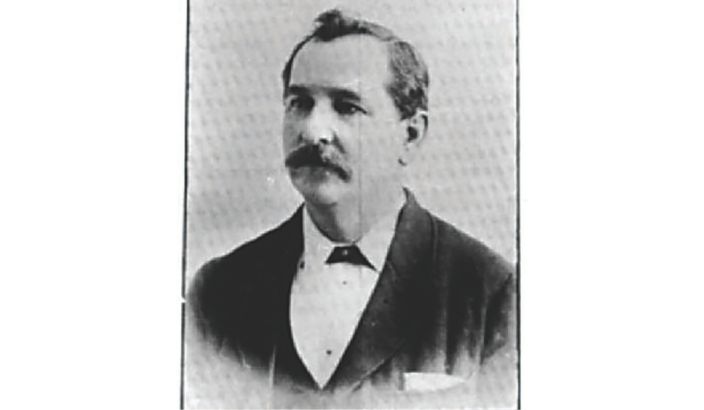
A man of many talents – that’s how to describe Edward Edridge of Wai-iti.
In April 1874, he married Catherine Scott and soon immigrated to New Zealand, settling briefly in Nelson where he ran a pianoforte tuning business.
Edward then pursued teaching, securing the role of master at Blacks Point School in Inangahua.
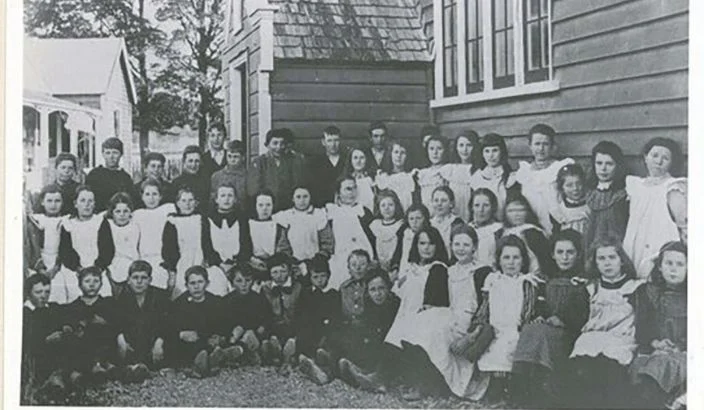
He quickly earned a reputation for success, and in late 1882 was appointed headmaster of Upper Wakefield (Wai-iti) School.
From the time he arrived in Nelson, Edward advertised his availability to perform at concerts as a bellringer, having previously led the Victoria Bell Ringers in England.
His first local concert was well received, with his pieces described as ‘sweet music’. He was soon in demand, performing not only as a bellringer but also on the organ and piano.
With a collection of around 52 bells, Edward formed the Wakefield Company of Bellringers, which included Messrs John Hunt, Walter Ladley, Joe Baigent and Dick Wallace.
In May 1883, and with an already busy life, Edward became treasurer of the newly-formed Waimea Teachers Association. He also helped establish the local Literary and Harmonic Society, tutored students in piano and singing, and performed at numerous events. One wonders how he managed to juggle his time.
Despite his busy schedule, the school thrived under his leadership with the children achieving good results in exams and the attendance rate being very satisfactory.
In 1884, the roll reached about 56 pupils. In December 1886, Edward resigned, sold his property and moved with Catherine to Taueru, Masterton, where he took up another headmaster role.
Two years later, he returned to Wakefield and resumed teaching in Wai-iti.
Catherine died in January 1903 after a seven-year illness, a devastating loss for Edward and their three sons – Henry Edward, Ernest Scott and Francis Claude.
In March 1905, Edward took a six-month sabbatical to England, returning in September aboard the Corinthic.
The following year, he married Caroline Lucy Tunnucliffe, who was 20 years his junior.
In 1909, Edward helped form the Wai-iti Tennis Club and was appointed its first president.
After 30 years of teaching, Edward retired in February 1912 and moved to Tahuna.
He remained active in community affairs, and the Wai-iti schoolroom was packed with residents and friends wishing him well.
Edward died at his Nelson home in February 1930, leaving behind a legacy of dedication to education, music and community.
