

As modern life pushes neighbours further apart, a growing movement is bringing them back together. Tākaka-based cohousing pioneer Simone Woodland and her team at Circle Living are taking their intergenerational neighbourhood model nationwide – with Nelson next in line to rediscover the lost art of community living, as Alistair Hughes finds out.
Photos: Josh Hutchinson and Carrie Dobbs
“Say, who are the people in your neighbourhood,” sang the assorted cast from the classic childrens’ educational programme Sesame Street, “the people that you meet each day?” The current paradigm of more compartmentalised housing means that many homeowners don’t know, or sometimes even see their neighbours.
Simone Woodland, Purpose and Partnerships Lead of Tākaka-based cohousing organisation Circle Living believes they are missing out, and so her team is taking intergenerational cohousing neighbourhoods nationwide, and Nelson is next.
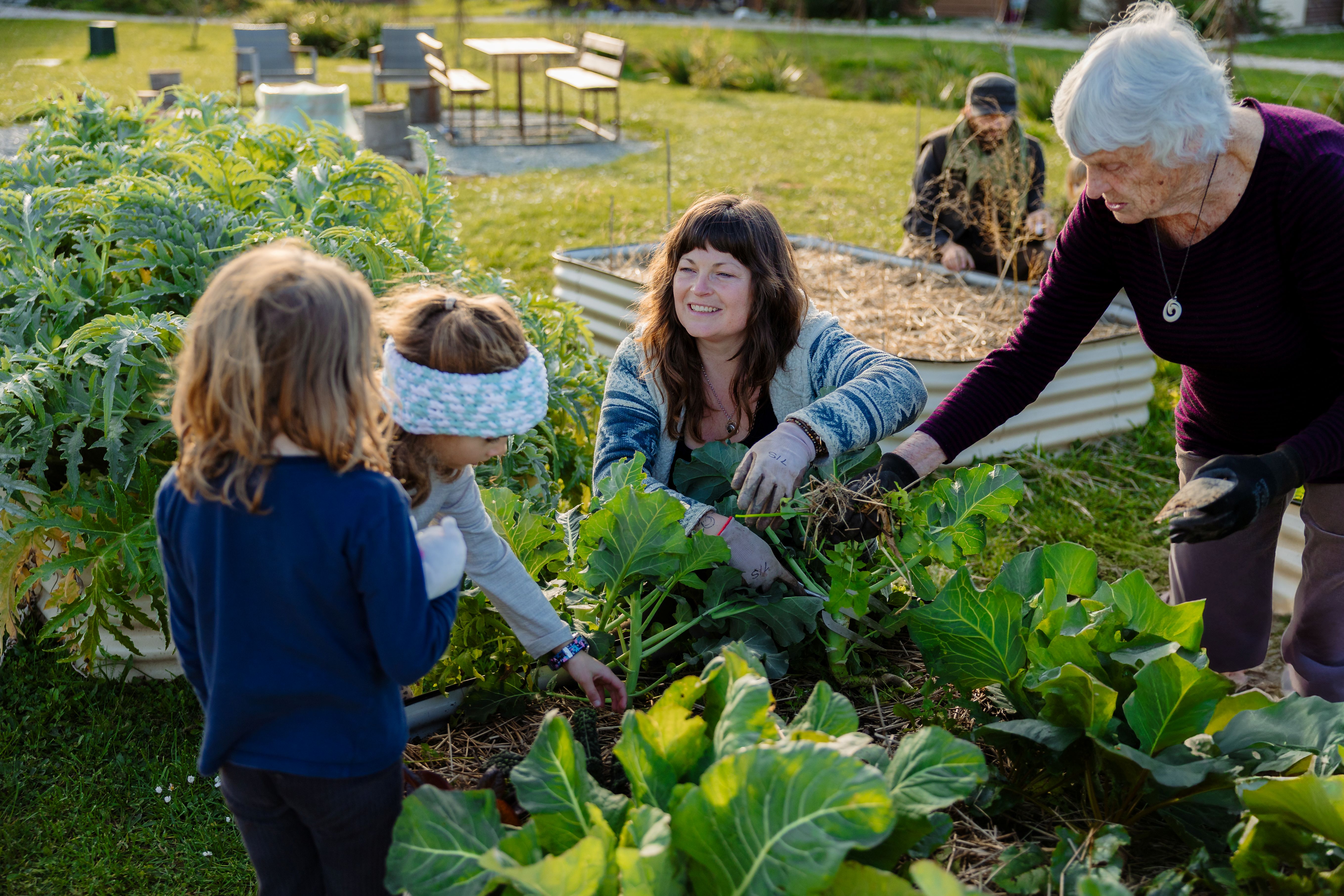
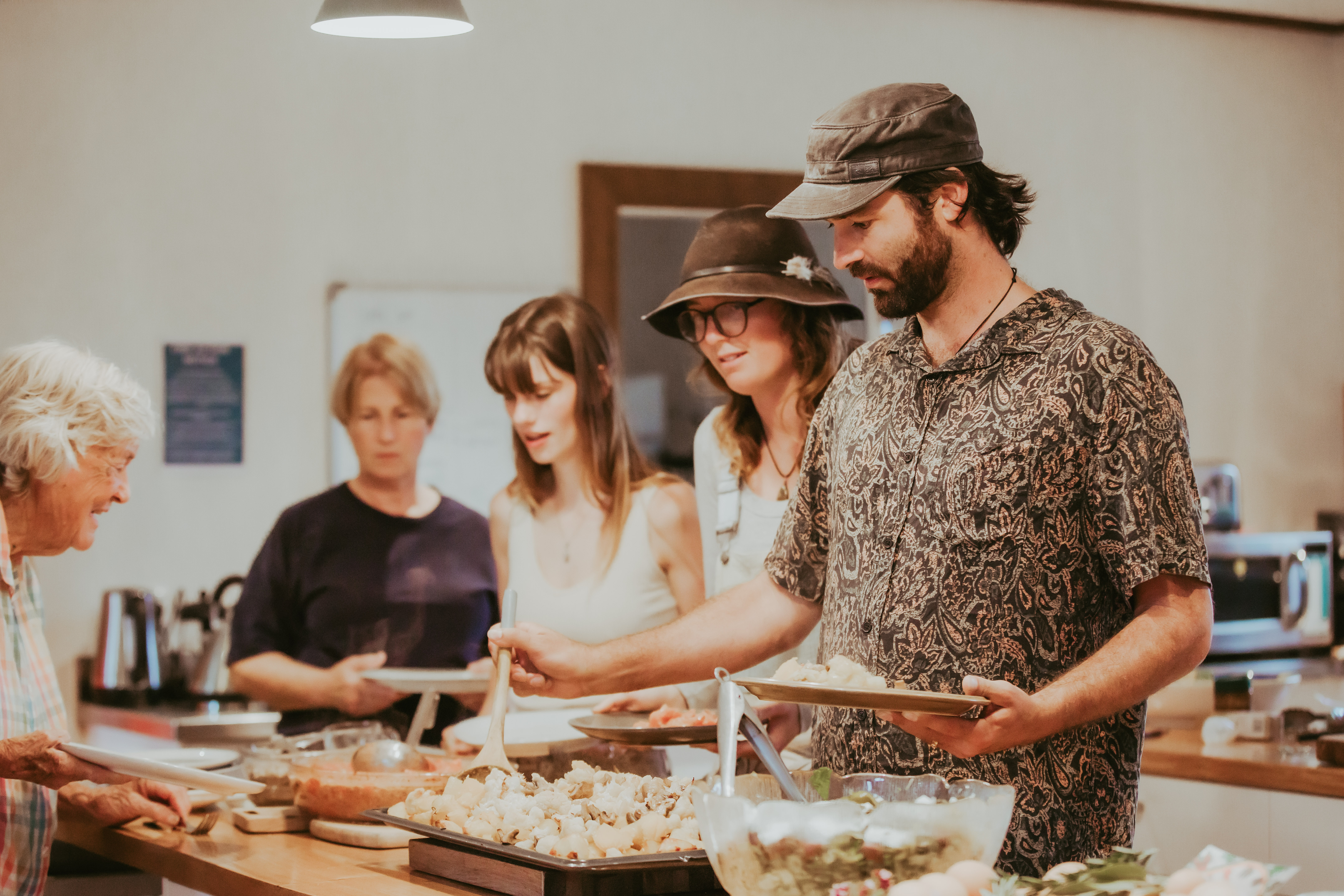
“Cohousing is about having inbuilt connection and community, and belonging where you live,” she says. And Simone should know, having been a resident of the 34 home Tākaka Cohousing Neighbourhood since 2023. “We build community before we build the buildings.”
Last month at the Mahitahi Colab, Circle Living gave a presentation about the Tahunanui Collective, their vision for a connected, intergenerational Nelson cohousing neighbourhood. A large gathering of 70 attended, demonstrating that interest certainly exists. 30-40 homes/apartments are envisaged, with shared gardens and green space, with a community solar project to reduce energy costs. This development is scheduled for completion in 2028.
“Nelson was a brilliant event, a great turnout, positive energy and lots of good questions.” said Simone afterwards. “It really felt like the audience was engaged and excited about the opportunity of a cohousing development in the region, and we were able to announce the location: 33 Muritai Street.”
Although still a new concept for many, from its beginnings in Zealand (Denmark) to Aotearoa/New Zealand, cohousing communities have been around for over 40 years. The movement advocates combining private homes with shared community spaces, designed and managed by the neighbourhood to counter the lack of connection symptomatic of modern housing.
The world's first cohousing communities were completed in 1972, and the founding principles of participatory decision-making and a culture of neighbourliness remained largely consistent as the philosophy spread across the globe.
Resident Deb Rolston moved into the Tākaka Cohousing Neighbourhood in 2024, and says it is a lifestyle she and her husband had been seeking for over 20 years. “Evidence seems to show that if you want to live to a healthy old age, you need to have purpose, meaning, interaction and contribution,” she says. “I now live somewhere where I literally know 34 households around me; we have fun and connection; working towards something together. It’s the most interesting and diverse group from different backgrounds, all at different stages of our lives.”
In the mid-2010s, Simone, with her background as an architect and urban planner, first came to Golden Bay on holiday with her family. A member of the Edmund Hillary Fellowship, which was formed to bring entrepreneurs to this country and foster environmentally aware ventures, Simone immediately saw the potential for something special. “I wanted to settle here because of all the amazing things that were going on,” she recalls. “And I started talking about wanting to build a tiny house village.”
Simone was advised to get in touch with Liv and Graham Scott, an enterprising local couple who had originally run an eco-sustainable homes business in Britain. It seemed almost inevitable that these three innovative souls with a penchant for alternative living options would join forces.
The result of this new partnership was Elemental Design & Build, a company combining their skills and experience to create natural, sustainable and traditionally built structures.
“It was important for us to have an example of the kind of home we wanted to build before announcing that we were going to create a whole village,” recalled Simone.
As 2020 arrived their residential plan was announced with a series of ‘conversation and curiosity picnics’. These informal social gatherings invited the wider community to take part in discussions around the establishment of a cohousing neighbourhood in Tākaka, and allowed the team to gauge interest.
The public response was hugely encouraging, and in February that year the team’s newly registered charitable development company, Mōhua Ventures Ltd, outbid other developers to win their ‘field of dreams’ – an ideally suited, residentially zoned 14.5 hectare tract of land on Tākaka’s Meihana Street.
A permanent community of smaller-sized homes was conceived, where residents would maintain independent incomes and lifestyles, with shared amenities and resources for mutual and environmental benefit.
This would be administered by the Tākaka Cohousing Neighbourhood Body Corporate, managed by the community, with Simone as managing director of Mōhua Ventures. “What makes us different from other developers is we're not looking at this as just for the people who will live there, but as something for Golden Bay,” she explained at the time.
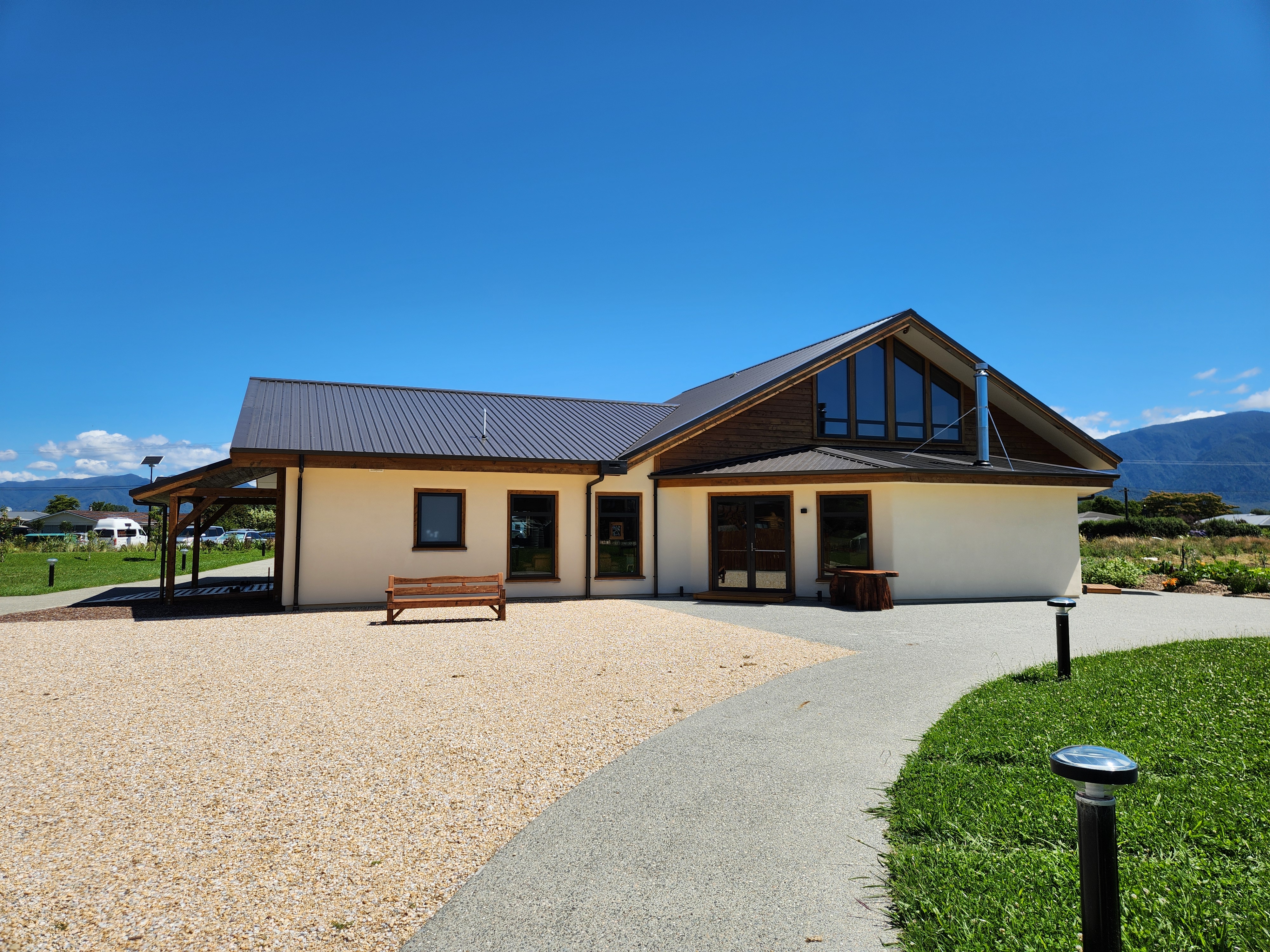
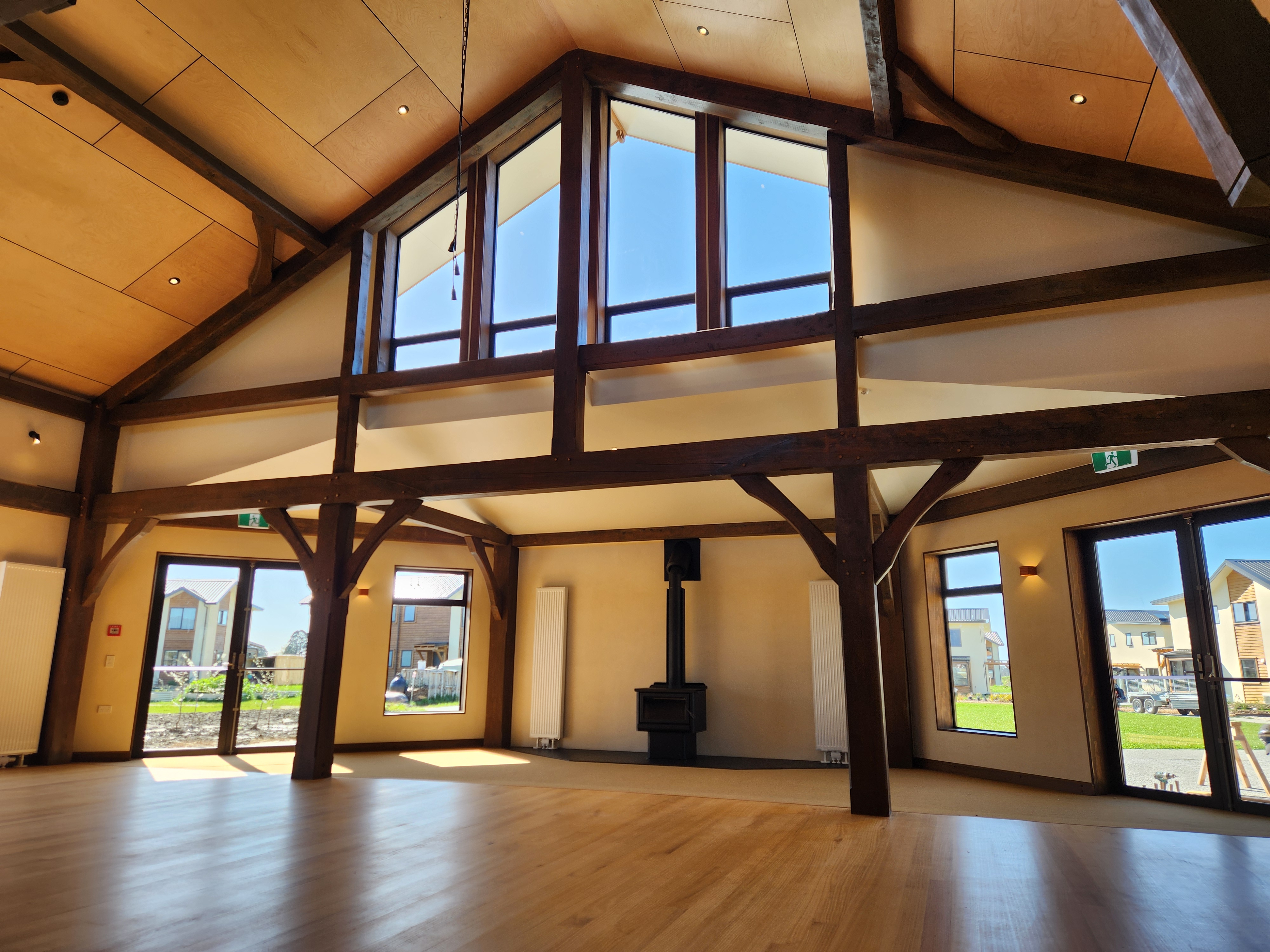
The homes she designed were double-storey duplexes with passive solar principles, incorporating sustainable insulation material. Residents would have their own freehold title for each unit, with a share in a common title across 2.5 hectares. A yearly body corporate fee would be required for the general upkeep and maintenance of common areas, including a Common House with a shared dining hall, a community lounge, laundry and a guest room. There would also be a shared workshop, community gardens and orchards.
Later that year, in the first of many public meetings, Simone was able to announce that 13 of the units in phase one of the neighbourhood were now reserved, with 18 investors on board.
As the long-anticipated vision began to coalesce into reality, she gratefully found the wider Golden Bay community to be very supportive. “People are keen to see more housing, and sustainability,” Simone noted. “We’re being as open and transparent as possible, so hopefully they feel that they’re coming along the journey with us.”
The next steps lay in the hands of Tasman District Council and a series of pre application meetings began, leading to a submission of consent in mid 2021. The encouraged cohousing team reported that “TDC seem interested in presenting solutions rather than problems.”
Simone and her team believed that, as residential land designed for housing, their proposal wasn’t radically different to the requirements of any other subdivision. But they were very aware that the cohousing model also presented some innovation, including keeping roading and car parking outside the immediate neighbourhood space.
But as December arrived, consent was granted, and Signature Homes were brought on board as the main contractor. The already nurtured community of new cohousing homeowners were about to get their neighbourhood.
In July 2022, the pouring of the concrete pads for the first four homes took place, an exciting moment for the cohousing board and residents. Several imprinted their handprints into the concrete to symbolise their connection with their new home.
From this small beginning, the site soon became a constant hi-vis hive of activity as the clean lines of five duplex buildings, comprising the first cluster of ten homes, steadily took shape – designed by Simone to blend into the landscape. As the Christmas break neared, the car park and road frontage became priorities with over 6,000 natives planted to initiate landscaping the area.
By May 2023, steady progress even allowed for an Open Day to be held, prior to residents moving in at the end of that month. “We feel like we can see the light at the end of the tunnel,” smiled a weary but elated Simone ahead of the public event. “Finishing touches like skirting boards, light fixtures and other little details transform a building into a home.”
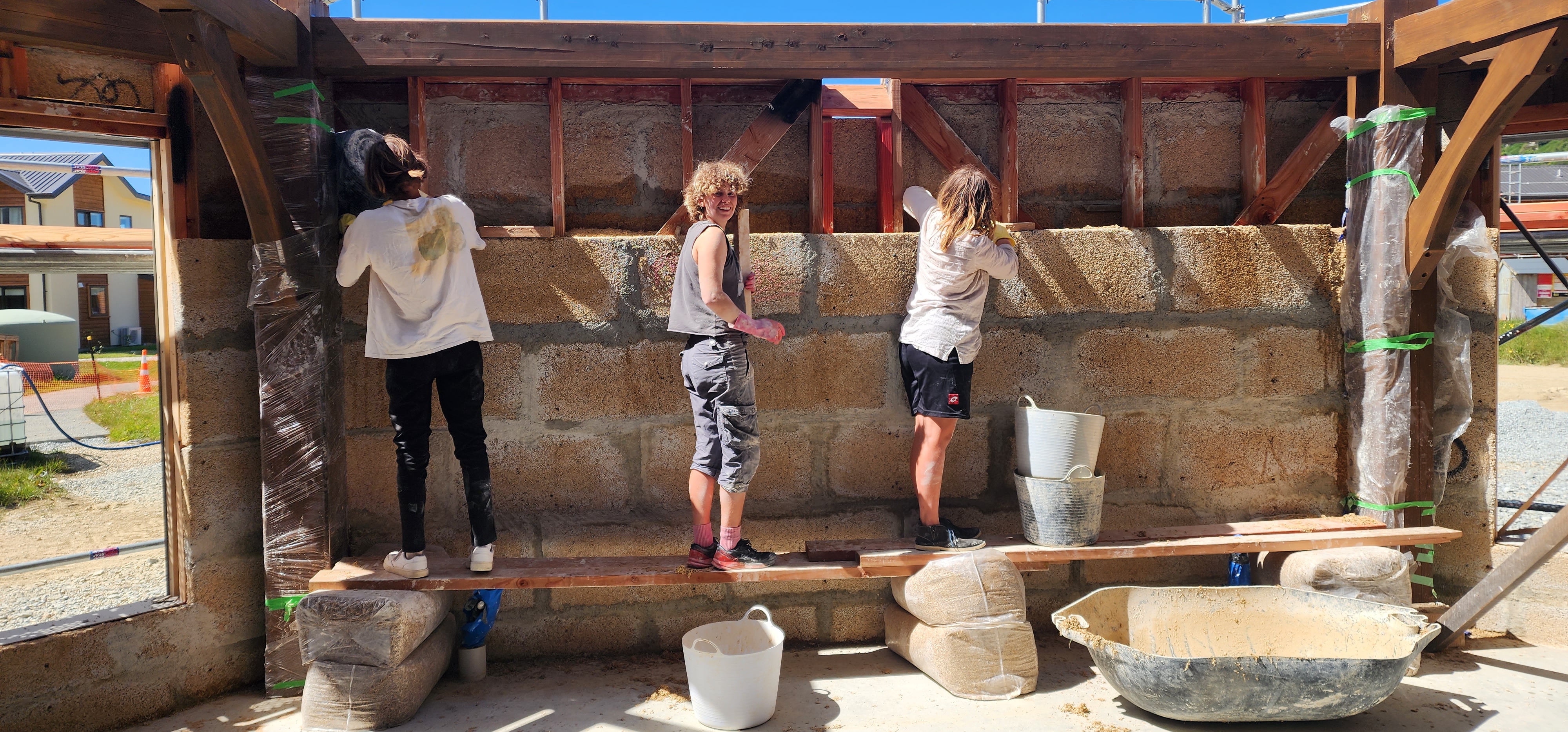
Meanwhile the Common House, designed by Simone in collaboration with Redbox Architects, was well underway. This future hub of the community was formed from locally sourced timber milled on site by Graham Scott, co-founder of Elemental Design and Build, with a revolutionary hempcrete monolithic wall system supplied by Antoine Tane of Kohu Hemp.
As the cohousing neighbourhood bedded itself in, it continued a close relationship with the Golden Bay community. A bustling Easter Fair last year saw the public throng to see the project, which they had watched come together from afar over the past few years. “It’s really exciting,” said resident and Fair co-organiser Mazarine Fitzgerald,” because we have finally got to the point where we can actually host some people and show them the shared spaces and living spaces.”
This was stage one of the Tākaka Cohousing project, and the team barely paused for breath before preparing to develop Neighbourhood 2, situated on the West side of the completed phase.
However, Simone soon became aware of some resistance – not to cohousing itself, but the location of the project. “We get about 8,000 people a month on the Tākaka Cohousing Neighbourhood website,” she says, “and this made us realise that there's still a huge need. But in conversations with people, we discovered the lack of employment opportunities and a hospital here are barriers they have to relocating their lives to Golden Bay.”
Simone and her team decided that if people couldn’t come to the cohousing neighbourhood, they were going to take it to them. “What we're trying to do is fulfil the need of people who want cohousing, but don't want to completely transform their whole world for it. So, taking it to Nelson, and other places across the country to provide that opportunity seemed a good option.”
Going nationwide necessitated the founding of Circle Living. “It’s the same team,” explains project manager Vincent Revell, “but now we're a company that's taking on Aotearoa.”
Circle Living commercial manager Bonnie Powers believes there’s a huge demand for the built-in support of community and family that cohousing offers.” There was momentum behind more alternative or progressive housing models pre-covid,”she recalls. “There's a lot of people still wanting it, but not knowing how to get there.”
The fact that recent presentations similar to the Nelson event, held in Christchurch and Wellington, each attracted over 50 people for projects with 30 planned homes, appears to bear this out.
Taking a typically inclusive approach to financing this initiative, Circle Living launched an equity crowd-funding campaign last month, raising almost $130,000 in its first week. They are offering a 10% stake in their company Circle Living for $385,000.
“We've decided it's better to have a community of people to invest in building a community, rather than looking for just one or two investors,”says Simone. “Our aim is to carry out eight to ten projects over the next five years, which could be 200 homes. Not everybody knows what cohousing is, but a lot of people understand the idea of a neighbourhood. We want to create intergenerational neighbourhoods with all the benefits of living in a community.”
From a vision of founding a tiny house village to creating hundreds of houses in cohousing developments across the country, ‘living large’ could come to be defined by community rather than isolation. And knowing the people in your neighbourhood, who you meet each day.
