The Government has proposed the largest shake-up of local government in decades, but not much is expected to change in Nelson Tasman.
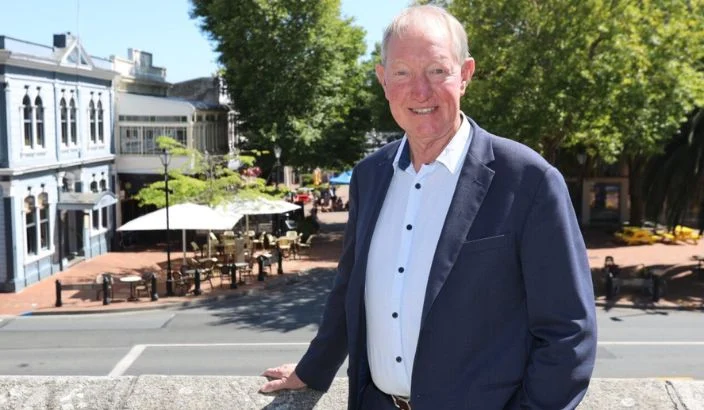
Nelson Mayor Nick Smith says the proposal is an endorsement of the Top of the South’s single level of local government, which had worked “very successfully”.
The status quo was not always the best option, and New Zealand didn’t have the population to sustain three levels of government, he says.
“Change is needed. In fact, it’s overdue. We need to be completely focused on what will work best for the public.”
Local Government Minister Simon Watts and Resource Management Act Reform Minister Chris Bishop announced plans on Tuesday last week aimed at simplifying local government.
There are currently two layers of local government across most of the country: territorial authorities (the city and district councils) and, sitting above those, regional councils.
Territorial authorities’ responsibilities include roads, parks, libraries, water, and waste, while regional councils deal with public transport, emergency management, and environmental matters like pest control and water quality.
The last local government reform in 1989 created this structure, but the Nelson-Marlborough Regional Council was disestablished just three years later.
While Kaikōura joined Canterbury, the Nelson City, and Tasman and Marlborough District Councils became unitary councils, which have the responsibilities of both regional councils and territorial authorities.
The Government’s proposal would see regional councils and their councillors replaced with a board made up of the region’s mayors.
Those boards will be responsible for governing the region and developing a plan to reorganise their region, which could involve greater sharing of services or structural changes, like amalgamation.
Being free from a regional council, Nelson and Tasman have no such obligation, though the Government has specified that unitary councils can still create a reorganisation plan if they wanted to.
But Nick says there is “no merit” in Nelson Tasman voluntarily undertaking the formal reorganisation process, as he and Tasman Mayor Tim King already engaged weekly.
“We are actively exploring where there are benefits to both areas from areas of shared services.”
The two councils already collaborate widely, including on public transport, landfill, wastewater, and pest management, but discussions continue for furthering co-operation in building consenting, responding to climate change, and harbourmaster services.
Signals from the Government also indicated the region would have a single resource management plan under the Resource Management Act reform.
Nick says having a single plan would be a “huge change” for Nelson Tasman, and that likelihood reinforced his view that amalgamating the region would be best for residents.
“That’s effectively living de facto, albeit I’d prefer to do the whole deal and get married.”
As the Government was taking consultation on the proposal until 20 February, and the legislation wasn’t expected to be passed until mid-2027, after the next national election, many details could still change.
Until those details were finalised, Tasman Mayor Tim King says there was no driver for investigating formal reorganisation of regional services.
“The option remains open, and it may well be that it provides an easier pathway to what can often be quite complicated.”
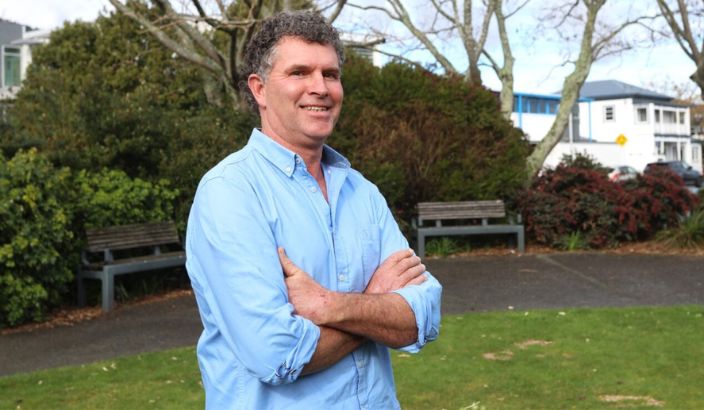
Tim says that the current proposal wouldn’t inherently make amalgamation any more likely or unlikely.
However, if the region eventually opted to amalgamate through a reorganisation process, he said it could be easier to achieve as the Local Government Minister has the final say, rather than the public via a poll – though consultation on any reorganisation plan would be a requirement.
Tasman voters rejected amalgamation in a 2012 referendum, though Nelson residents had voted in favour.
Unitary councils’ holistic view and responsibility to balance a wide range of competing priorities were both their greatest strength and greatest challenge, Tim says.
“Creating a unitary… [isn’t] somehow going to magically be easier, simpler, or necessarily cheaper. But I do believe it is better to look across all of the different things at once, not split it between two different entities.”
He adds that local government reform had long been discussed within the sector.
“It’s good to get something on the table for everybody to debate,” he says.