
ROBYN PARKES
As early as 1863, there was talk of linking Buller with Nelson via a railway line through either the Tadmor or Wangapeka valley, but the wait was long, and 37 years later, in 1900, it was still being discussed.
The Midland Railway contract, signed in 1886 between the New Zealand Midland Railway Company and the Government, aimed to build a line connecting Nelson to Christchurch. The company struggled to secure enough capital and faced difficulties managing the project from its London-based head office. The Government grew increasingly concerned about progress and financial stability, leading to disputes and negotiations.
Ultimately, the issues escalated to arbitration, where the Government and the company presented their cases before an umpire. The umpire’s award, delivered in 1896, largely favoured the Government.
With that issue resolved, the Government authorised an extension from Motupiko to Tadmor in late 1900, which required bridging the Motueka River for trains and road vehicles.
On 14 March 1901, the Minister for Public Works instructed work to begin. By April, work was well underway with a gang of men employed on the formation work between the Motupiko and the Motueka Rivers where the bridge would cross and another gang working on the Tadmor side. Hopes were high for completion within 18 months.
Sixteen thousand pounds was allocated for a combined cart and railway bridge over the Motueka River at Tadmor.
However, work slowed, and frustrations grew over delays to both the railway and the bridge. It was not until August 1902 that the Government accepted a tender for the combined bridge. Napier firm Messrs C Dixon, Langlans and Co. secured the contract for £8681.
The bridge was meant to be finished by November 1903, but by August 1904 it was still unusable.
One issue was the embankments on either side of the river which were taking up a lot of time.
The settlers were concerned about the size of the embankments as they narrowed the river path and it was feared that in times of floods the river would become backed up and break through, carrying devastation with them.
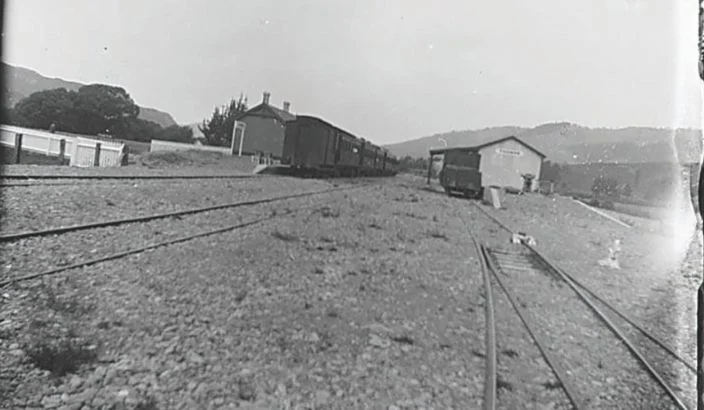
In October, the bridge was finally ready for use. The Nelson side of the extension was complete, and rail laying on the Tadmor section was underway. John Stringer of Nelson successfully tendered for the station buildings at Tadmor.
The line had been approved 30 years previous and was two years past its completion date.
The line had been approved 30 years earlier and was already two years past its completion date. Progress remained slow, but by April 1906 plans were in place for an official opening on 24 May, with ministers invited to attend.
Unfortunately, to everyone’s dismay a telegram from the Acting Minister for Railways arrived stating that the engineer sent to inspect the railway was not prepared to certify it as being fit for traffic, so the opening was postponed.
An unofficial opening took place on 6 August 1906, with the first passenger train travelling from Nelson to Tadmor on the new 10-mile section from Kohatu to Tadmor. About 600 people gathered for the event, presided over by Motueka MP R. McKenzie.
The official opening planned for 9 November appears never to have happened.
