Stretching like a golden ribbon into the Tasman Sea, Onetahua Farewell Spit is one of the world’s longest sandspits and a place of deep cultural and environmental significance for many New Zealanders. Internationally recognised as a sanctuary for birdlife, it is home to treasured native species that rely on its fragile ecosystem to survive.
Now, a dedicated group of local organisations and volunteers is working to strengthen its protection even further – but they cannot finish the job without community support.
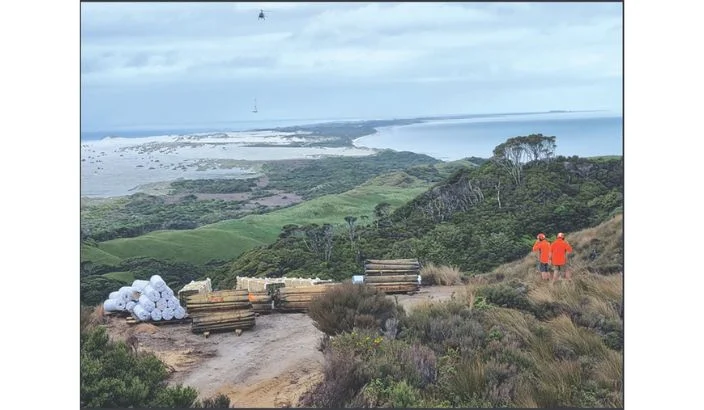
In recent months, the HealthPost Nature Trust, alongside Manawhenua ki Mohua, the Department of Conservation (DOC), Pest Free Onetahua, and a committed team of volunteers, has been building a 4km predator-proof fence at the base of Onetahua Farewell Spit. Once complete, the fence will safeguard 2,000 hectares of habitat and 50km of coastline for threatened native species, creating a secure, predator-free sanctuary.
Fence materials have already been funded and delivered, and construction is underway. So far, $300,000 has been raised for the build. However, due to the unique challenges of the project, there is a shortfall of about $100,000, which the group hopes the wider community will help cover.
Lucy Butler, a trustee of the HealthPost Nature Trust, says the unique terrain has made the construction process challenging.
“It’s quite gnarly terrain and not a small project,” Lucy says. “We’re trying to exclude predators right down to tiny pests like mice, which means the construction needs to be meticulous so they can’t get through.”
The $300,000 already raised covers the cost of the materials, but rugged ground conditions and specialised fencing requirements make construction very expensive. Lucy says getting this far has been a true community effort. All suppliers have discounted their invoices.
“It’s been the most exciting thing to see the community mobilising around this cause. I have been blown away with the groups and individuals coming on board – their support has been such an encouraging sign.”
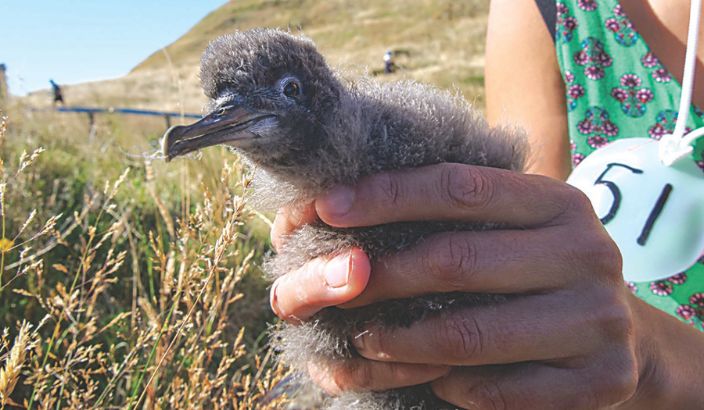
That encouragement is reflected not only in volunteer hours and donations, but also in signs of ecological success. One of the brightest developments is the return of pakahā (fluttering shearwater) to the region. Nearly 200 pakahā were reintroduced to the Wharariki Ecosanctuary, and Lucy says they have just begun returning to the sanctuary to breed – a milestone, as this is the only mainland colony of its kind.
Onetahua Farewell Spit is home to taonga species including great spotted kiwi, banded rail, little blue penguin, and the at-risk Nelson green gecko. Many seabirds and migratory birds depend on its internationally significant wetlands, including the extraordinary godwit, which refuels here before its famous journey back to Alaska.
Introduced pests remain one of the biggest threats. In response, the team has contributed more than15,000 volunteer hours in trapping, planting, seabird care, and restoring native habitat for Wharariki and Onetahua Farewell Spit. The predator-proof fence is the next vital step.
To support this cause, please head to PledgeMe here before 20 January.
