
ROBYN PARKES
James Scrimgeour of Ferntown arrived in Nelson with his brother William in November 1861 after spending time on the Otago goldfields.
Seeing an opportunity, James set up as a general storekeeper at Ferntown and remained there until about 1894.
Tenders were then invited to build a new store for him in Tasman Street, Collingwood.
By the following year, James was well established at the new shop but retained ownership of the Ferntown store.
In Collingwood, the new shop sold groceries, miscellaneous stores, drapery and clothing, new season garden and vegetable seeds, shrubs and bulbs, and even had a dressmaker on site. James also offered a packing and delivery service for all goods.
The Ferntown property, consisting of 35 acres of land, a dwelling and general store, was sold in July 1897.
James then turned his attention to cultivating grapes and tomatoes. In early 1898 he advertised his early local tomatoes at sixpence per pound, noting that imported tomatoes could not be found for less than ninepence per pound.
He regularly entered Agricultural and Pastoral shows and horticultural competitions, winning first place for grapes or tomatoes on numerous occasions.
In January 1899, James became one of the founding members of the Collingwood Horticultural Society.
Such was his passion that, with the assistance of T. McNabb, James built a large hothouse at his residence behind the old parsonage. The structure was 60 feet long by 22 feet wide, using over a ton of glass.
Its main purpose was to grow large quantities of early tomatoes and grapes to get them into the market when prices were high. The hothouse could house 500 tomato plants and 40 grape vines, and to force the maturity of the fruit, it was artificially heated by a coke stove connected to 120 feet of piping that encircled the structure.
By February 1900, James had erected a second hothouse and was growing and selling large quantities of fruit, despite many tomato plants having to be destroyed due to disease.
That same year, James decided to concentrate on cultivating not only grapes and tomatoes, but other garden produce, so he sold his general store in Collingwood to Mr F. Stevenson.
James continued his association with the Horticultural Society and at its December 1900 show he led the Collingwood Brass Band.
Alongside these commitments, he also sat on the Collingwood Road Board and led a busy life.
In October 1905, however, he was suddenly laid up with an attack of paralysis. Although he recovered and continued to grow and show produce, he appeared somewhat weakened.
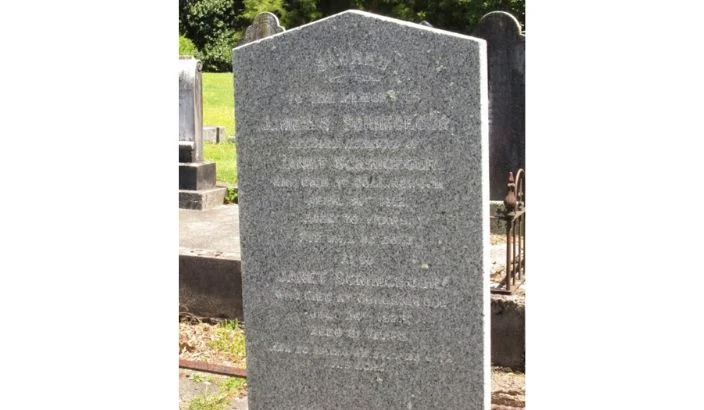
James passed away on 21 April 1912 and was buried in Collingwood Cemetery.
