
ROBYN PARKES
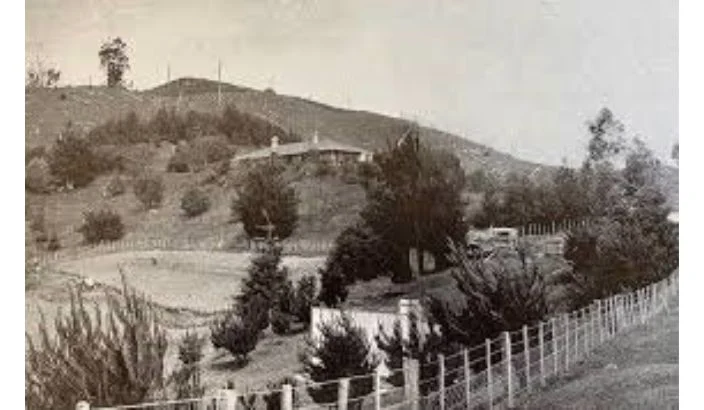
In 1910, Herbert Henderson bought land on Tākaka Hill, built the family home named Kairuru and began farming.
Herbert and his wife Mabel wanted their children to receive an education without leaving home. At the time, the only option was Riwaka School, which meant boarding during the week.
To avoid this, they successfully applied to the Nelson Education Board to establish a household school.
A small building on the Henderson farm was made available for the new Kairuru School, starting with five to eight students.
Miss Wells taught for just over two years, followed by an American, Miss Tromp.
The small building, known as the tin shack, was far from ideal. It was extremely cold in winter and very hot in summer. Teachers had to be resourceful due to isolation, lack of flat ground and limited resources, so activities were adapted to the rugged landscape.
Miss Baigent was the next teacher and remained until late 1932 when the school closed due to low numbers. By April 1935, Kairuru School reopened with eight students, and the Education Board was approached to move the school to a more central site.
In August, the Board approved a £35 grant for a portable school building near the Canaan turnoff. Alice Bush of Pangatotora became the next teacher.
To raise funds, the small community held its first dance in September 1935. The room was decorated with yellow and green streamers and spring bulbs.
On 31 March 1935, Alice suffered an injury in unusual circumstances. Around 9.30am, she was teaching while Public Works employees were working nearby.
After being warned that explosive shots would be set off, Alice moved the children away from the window. Several shots went off, and the next thing she remembered was lying on the floor, bleeding from her head. A rock had come through the window, striking her.
Alice was treated in Nelson but suffered lingering headaches and distress from loud noises. She sued the Public Works Department for £100, claiming negligence in firing explosives that caused her injury and permanent scarring.
The case was heard by Magistrate T. E. Maunsell, who ruled in her favour. In March the following year, the school’s name was officially changed to Tākaka Hill School.
Over the years the roll fluctuated, often depending on the number of workers on the hill. It closed from time to time, with students travelling to Riwaka for schooling. Once the school bus service was introduced, Tākaka Hill School closed permanently.
