
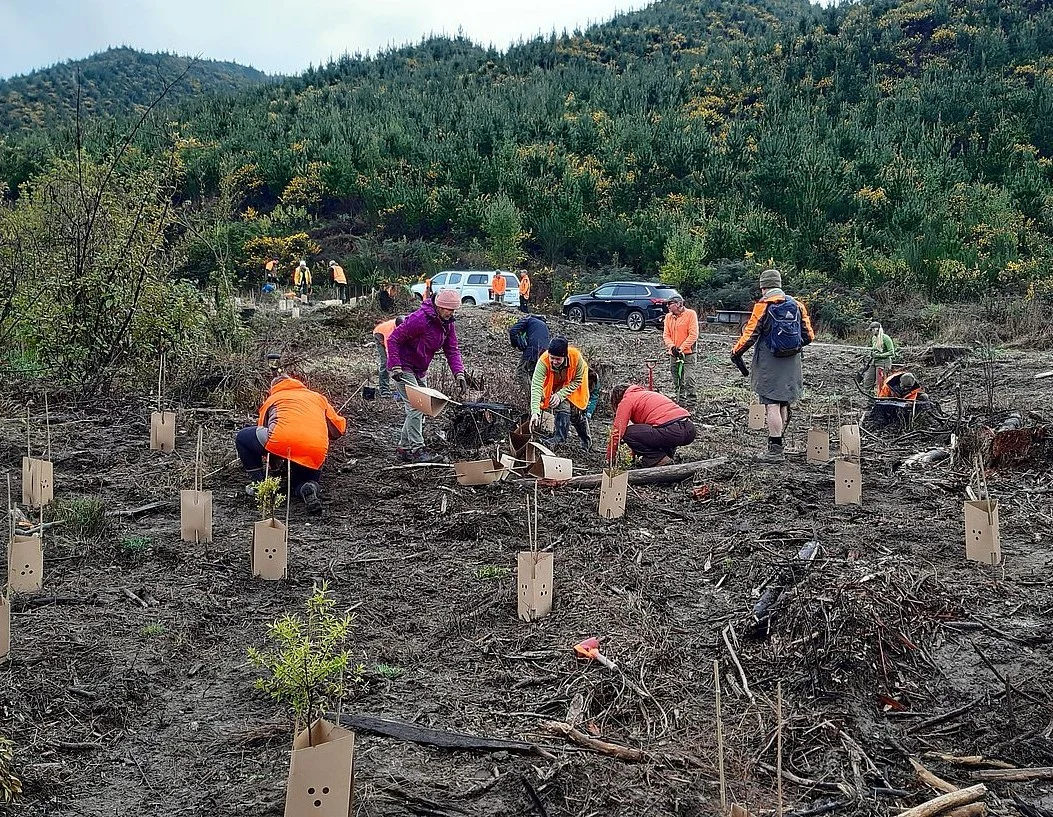
Nearly seven years after the devastating Pigeon Valley fire, the restoration project around an ecologically significant area of native bush in Teapot Valley has been completed.
The project began after the fire destroyed bush on the hillsides, leaving only the gullies and valley floor with the original bush.
Project manager Fiona Ede says the beech-podocarp forest was one of the largest remnants in the Moutere ecological district and replanting the burnt hillsides will speed up natural regeneration of native plants and better protect what survived the fire. The new plantings also help link the remaining patches of bush in the gullies.
“We don’t have much of that (forest) left locally and to some extent nationally,” she says.
“It’s a significant area of native vegetation and because it’s so rare, we do need to protect those areas. The idea is that when you’re doing this sort of restoration, you try to increase the size of your fragment because it makes them healthier and more resilient.”
The project was primarily funded by Te Uru Rākau – New Zealand Forest Service and Tasman Pine Forests Ltd, with restoration work undertaken by Tasman District Council and its contractors.
In total, 33,192 native trees, shrubs and wetland grasses were planted, plus weed control across 44ha of the site as Fiona says some of the first plants to sprout after a fire are weeds.
During the project, she designed a trial to assess the natural regeneration of native species and found 44 native tree and shrub species, with about 33,000 plants regenerating per hectare.
A second trial involved sowing seed directly into small areas cleared of weeds as an alternative to planting with good results.
Although planting is finished and natural regeneration is underway, Fiona says it will take decades for the area to fully recover.
“We have (ecologist) reports from 2011 when the hillsides were completely covered in forest,” Fiona says.
“Mainly beech forest and some rimu and other podocarps. The trees that were felled after the fire were some big trees with a decent girth that were many decades and potentially a century old. When you lose a forest to fire, you lose a lot.”
