
Golden Bay’s Lisa Bradley and her husband Andrew are putting their corner of the South Island on the map, not with sheep or cattle, but with miniature goats that have captured hearts everywhere - the Pygmy goat.
Originally from Africa, the compact goats made their way to Europe in the early 19th century, before being shipped to the United States in the 1950s, where they first appeared in zoos.
Their popularity soon spread as quirky pets and show animals. A dwarf strain of domestic goat, Pygmies are known for their achondroplasia, resulting in short legs, round bodies, and appealingly small faces. Fully grown, they stand around 40-50cm tall and weigh between 25-40kg.
“A 40kg Pygmy would be a big one - most adults are more like 25-30kg,” Lisa laughs.
Her journey with the pint-sized animals began as a simple hobby.
“I love animals, absolutely love them. I just wanted a project me and my husband could do together,” she says. “I came across the Nigerian Dwarf goats, but they were already here in New Zealand. I was after something with a point of difference, something new.”
That curiosity led her to the Pygmy goat, a breed not yet seen in New Zealand. After months of research and video calls with Australian breeders, Lisa made the bold move to import the country’s very first Pygmies - one buck and two purebred does - sight unseen.
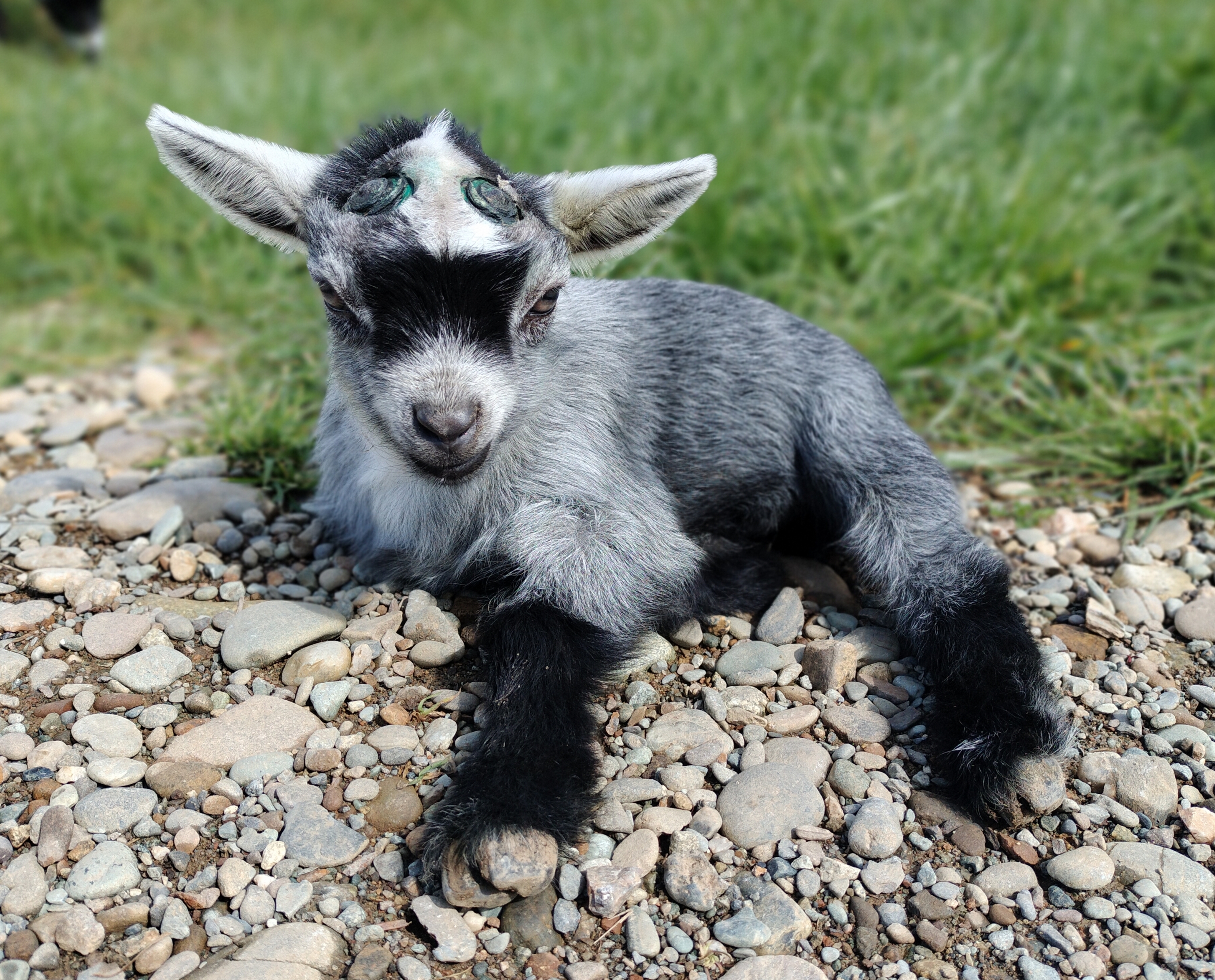
“I bought them blind,” Lisa admits. “I built up good relationships with the people breeding them in Australia and got as much knowledge as I could from the people already with them.”
Three years later, Lisa’s small herd is thriving, and demand is far exceeding supply.
“They only breed once a year, with a five-month gestation, and I kept most of the early kids to build up the flock,” she explains.
“Last year I finally had enough to offer a few to people on the waiting list, but I’ve still got over 200 people waiting.”
To meet demand and maintain genetic diversity, Lisa has recently imported another fully-bred buck and two does, as well as partnered with new breeders in Timaru and Palmerston North who share her passion and experience.
“It’s really exciting to see others getting involved,” she says. “We want to keep the bloodlines clean and grow the breed properly here.”
While their small size and playful nature make them highly appealing, Lisa is quick to caution that Pygmy goats aren’t suitable for every home.
“They’re browsers, not grazers — they won’t live happily on grass alone,” she says. “They need a varied diet of hay, leaves, fruit, and vegetables. And if you let them near your garden or books, they’ll eat those too. They’re definitely not a household pet - they need space, good fencing, and the right diet.”
For those with farms or lifestyle blocks, however, Pygmy goats make fantastic companions.
“They’re fun, lively, full of energy, and love human interaction,” Lisa says.
Interest in Pygmy goats is booming, particularly among grandparents looking for something special for the grandkids to enjoy on rural properties.
“People are attracted to their cuteness, they’re different, and they just make you smile,” Lisa says.
“They say there’s a recession out there, but people are still spending thousands on pets. I think over the next ten years, you’ll start seeing a lot more Pygmies around New Zealand.”
With her pioneering efforts, Lisa Bradley hasn’t just started a hobby, she’s sparked a whole new kind of farming fun in the Top of the South.
