
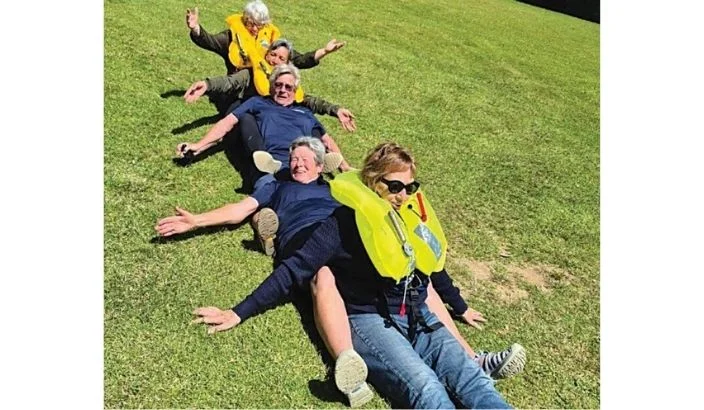
Eight local wāhine are buoyed up by a national Coastguard course that equipped them with pre-launch checks, boating safety knowledge, and optimum response to emergencies like incapacitated skippers.
Steered by female volunteers from the Nelson branch in mid-December at d’Urville Island, where the eight participants regularly venture to or have property, the eight navigated the waters to no longer be just the passengers.
Inflating lifejackets, survival swimming, setting off distress flares, deploying rescue equipment, operating VHF radio and tying knots were all in the day session.
Rosie Musters, a 25-year Coastguard Nelson veteran and current senior instructor, says the Suddenly in Charge course was important as d’Urville Island boat trips were a family affair but still male-dominant.
“People we know at d’Urville Island have suggested that the guys are always the ones who run the boat… and sometimes the women don’t really get a chance to learn very much, because he’s on the helm and he’s calling the shots,” she says.
“Women were saying this is a family boat, we would like to learn a little bit more about it, in case something happens to [the male skipper]... so we thought a course run by women would be the perfect answer.
“The day after the course, one of the women had said to her husband, ‘could you please check the lifejackets on board?’ - and he discovered that two of the four jackets were actually not serviceable, so a win for her.”
Rosie adds, d’Urville Island’s remoteness, weather-dependent, could take more than an hour for help to arrive.
“If anything does go wrong, [the eight participants] will be able to call for help more quickly than they would have done perhaps otherwise.”
A permanent d’Urville islander for 12 years, Sheryl Elkington understands potential boating risks and incident responses through her husband’s charter boat business.
She says that the women-led course made waves. “The men tend to do things so quickly and do things their way, and sometimes aren’t the best teachers, whereas learning from ladies, they’re more patient,” she acknowledges.
Richmond boatie Anne-Maree Teece also liked the course’s feminine touch. “Being on the boat, everyone is with their husbands, and I hadn’t learned a lot about what to do if there was an emergency, if someone fell overboard, or how to make the mayday calls,” she says.
“So it was very informative, there was so much involved in the course, and the ladies put a lot into it.”
When asked if the course had thrown her that life buoy to check gear and respond to potential incidents on the water - “absolutely”.
