
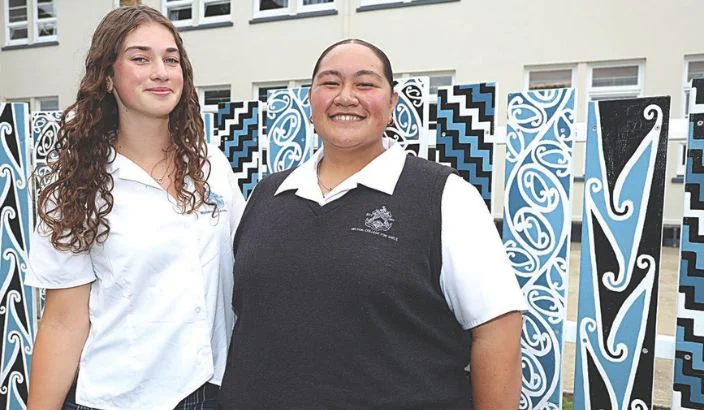
“We're ready to take on any challenge that comes our way.”
That’s Chali Routhan and Salote Filiai’s aplomb as they go forth as the pillars for the 1100 Nelson College for Girls (NCG) students in 2026.
The wāhine toa (female leaders) both aspired to be head girls from their influential predecessors and were relieved to be named in the pivotal roles last October to a standing ovation from their whānau and the sea of girls who they’ll represent this year.
“The fact that I'm actually [head girl] now, being able to be that person that's helping lead and make decisions and change, is really exciting,” Chali rejoices.
“It’s a role that I’ve looked up to since Year 9, so it was a proud moment, and it made my parents proud as well,” Salote enthuses.
Principal Claire O’Fee says the pair “exemplified” head girl qualities.
“They're both here to provide better experiences for the other students,” she says.
“They both believe in leadership through service, and it's not about them being in the position, it’s about what they're able to achieve for the other students in the school.”
Chali and Salote have been part of the fabric at NCG with Chali an integral part of the hockey, touch rugby, and netball senior A teams, and having a Silver Fern dream.
Salote has been a guiding light in Te Ao Māori, teaching waiata and kapa haka to juniors, and travelled with the college’s kapa haka group, Ngā Aho Rau, on a 2024 cultural exchange to the United States.
Above all their triumphs, both say manaakitanga is at the centre of their leadership approach.
“When I first came here as a Year 10, the difference was that people would smile at you in the hallway, the teachers would say hi to you, people would take the time to get to know you, and they'd be very welcoming,” Chali says.
“I sat down on my first day with a group of girls, I had no idea who they were, and three years later, now they're all my best friends.
“So, we’ll work to make sure that everyone at the kura feels comfortable, safe and excited to come to school.”
Salote also wants to boost the morale for Māori and Pasifika.
“My main goal is trying to keep them motivated through school, because I know that we always have some that tend to feel uncomfortable at school,” she says.
“There're diverse groups here that they can come to, and there's safe places here for them as well.
“I'm really happy that I got this role, because now I can be a voice for them and be a support person that they can come to if there’s any problem.”
University is the ambition for both head girls when the book closes on their 13-year routine.
