Golden Bay Community Health has been singled out for its innovation as the government completes the first phase of its nationwide rollout to strengthen urgent and after-hours care in remote communities.
Golden Bay was one of six rural prototype sites selected to test a new national urgent and after-hours framework, alongside Tūrangi, Twizel, Te Kūiti, Coromandel and Great Barrier Island. The programme is funded through $164 million allocated in Budget 2025.
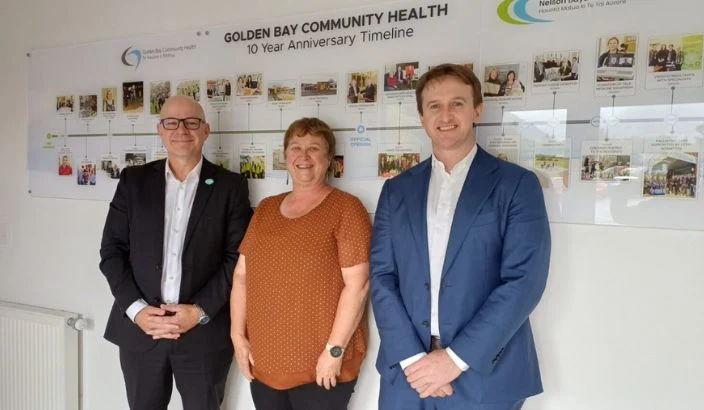
Associate Health Minister Matt Doocey visited Golden Bay this week to see how the prototype has been implemented on the ground.
“It was proposed to me that it was probably one of the most innovative health services providers, where they’ve really worked hard to break down the barriers between primary and secondary care and also work with a more generalist model that allows the healthcare professionals to work with a very wide scope,” Matt says.
The initiative aims for 98% of New Zealanders to be able to drive to urgent or after-hours care within one hour. Matt says the six prototype sites are now operational and will help shape the rollout to 70 rural and remote communities by the end of 2027.
In Golden Bay, the changes include point-of-care blood testing and point-of-care ultrasound, both of which allow clinicians to carry out diagnostic work immediately rather than sending patients elsewhere. Nurse prescribers, improved after-hours access to medicines and an integrated emergency response workforce form part of the model.
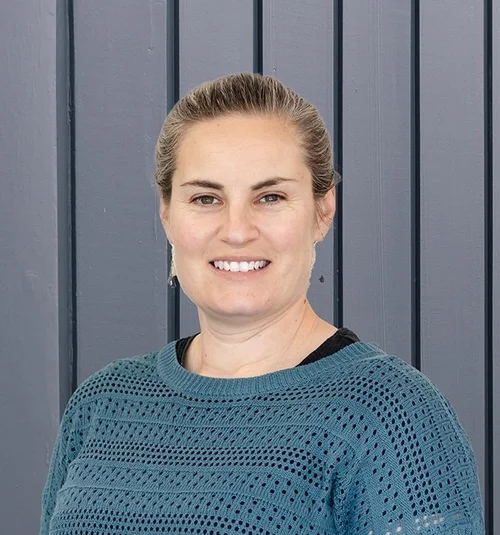
Golden Bay Community Health general manager Sarah Hoyle says the initiative will make a “big difference for our community”.
“Rural health isn’t one‑size‑fits‑all,” she says. “Each community has its own geography, workforce challenges, cultural context, and ways of working. Because of these nuances, it’s essential that systems aren’t built using a cookie‑cutter model.” She says the process has been collaborative and flexible, with the team involved in the design right from the start.
“This is rural health designed with rural communities, not for them—and that makes all the difference.”
Matt says he is “very impressed” with how the Golden Bay healthcare provider has implemented the changes. “It’s a real team effort.”
He describes Golden Bay as a “flagship” for what future rural health services could look like.
“It’s real kudos to the local community here and the Golden Bay health centre, because they are really the flagship of what will be an absolute game changer for rural health in New Zealand,” he says.
Golden Bay’s involvement in rural medical training programmes is also seen as a strength.
“They’ve got the rural medical immersion programme, which is medical students from Otago University,” Matt says. “They’ve also expressed interest in the government’s new medical school in Waikato, which is based primarily on primary care or GPs and rurality.”
As part of the prototype, paramedics are now integrated into day-to-day operations rather than being based off site, strengthening local capacity.
The next stage of the rollout will see 30 more rural areas strengthened this year.
