
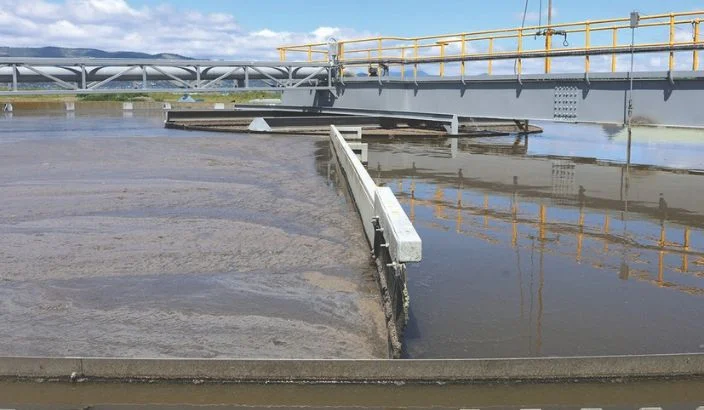
Some residents living around the Waimea Inlet were left with a recurring wrinkled nose after odour complaints were left unactioned for weeks.
During the six months ending on 31 December, the Nelson Regional Sewerage Business Unit (NRSBU) received six odour complaints.
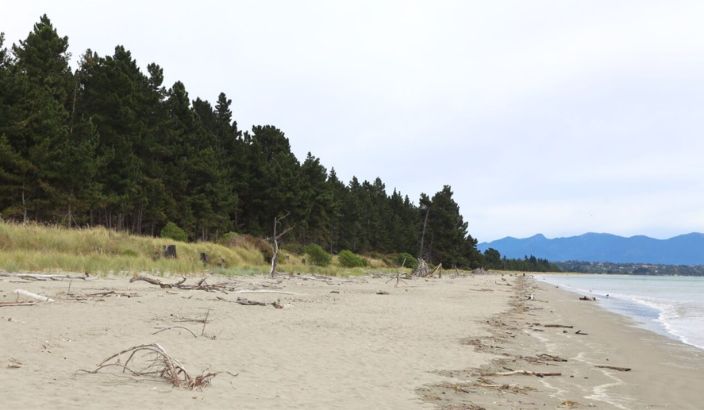
Two were found to be unrelated to sewerage activities, and another was unable to be verified, but three related to the same application of biosolids on Rabbit Island.
The business unit operates the region’s joint wastewater treatment plant on Bell Island, which generates “biosolids”.
Wastewater goes through several treatment systems that result in a sludge being separated from the water.
That sludge then goes through a self-heating pasteurisation process which kills pathogens and organic matter to create the treated biosolids.
Some of those biosolids are spread on Tasman District Council pine plantations on Moturoa/Rabbit Island as a fertiliser that significantly increases tree growth.
Spreads of biosolids are typically coordinated with the weather forecast to ensure that the wind will not carry the scent to nearby residents, and the operation has been described as “nimble” and able to shift to a different location within 30 minutes if the wind changes or a complaint is received.
But the recent offending spreads occurred in an area that was recently replanted and therefore applied at a heavier rate when compared to previous applications over the last few decades.
The result was an unexpected odour that affected residents living around Hoddy Rd, adjacent to the Waimea Inlet.
However, their complaints took weeks to reach the NRSBU.
Tasman District Council group manager for community infrastructure, Richard Kirby, traced the delay back to a “misunderstanding” from council staff who did not realise the complaint was related to sewerage activities and did not pass it on, he said when discussing the incident at last week’s meeting of the region’s joint sewerage committee.
“We’ve actually spoken to our customer services now… if it’s from Rabbit Island, it goes straight through to the [Nelson] City Council.”
The NRSBU is administered from the Nelson council.
General manager for regional sewerage and landfill services, Nathan Clarke, has apologised about the delay in responding, but also said that the issue was resolved “almost immediately” once the NRSBU was made aware of the complaints.
“We’re trying to put in processes that are more streamlined and less likely to fail,” he said.
“We have worked diligently to reduce the impact of the wastewater plant’s operations on nearby residents and, when we’re called out, it’s now to much less intense odours than we have experienced in the past.”
During the meeting, Nathan added that the increasing population around the estuary was seeing odours becoming a larger issue.
“It’s something that we have to keep an eye on and work towards having a resolution or having some sort of alternative method of disposal, potentially, in the future.”
Since July 2022, there have been 14 odour notifications related to spreading biosolids at Rabbit Island.