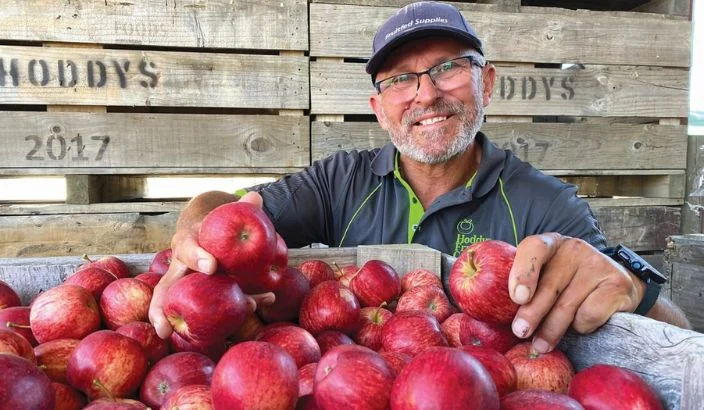
The region’s apple harvest is underway, and for Richard Shelling, it marks 44 years since he walked across the road as a teenager to begin work on the local orchard.
He is one of 120 people, mostly locals, harvesting and packing at Hoddy’s Fruit Co in Hope this season and it’s the same orchard, albeit with a slight name change, where he began his horticulture career all those years ago. In between, Richard worked on other orchards, but today he is operations manager back on his first orchard.
Where once there were also blocks of stonefruit, sour cherries and berries as a teenager, there is now a dazzling assortment of modern-day apples grown on 2D and intensive spindle systems, which were still at the experimentation stage back when he first started.
Richard is one of about 3,000 people employed for the region’s pipfruit industry, including both permanent and seasonal labour. Last year, according to New Zealand Apples and Pears, the region’s pipfruit crop generated an estimated $367 million in total revenue, with around $171 million injected into the Nelson-Tasman economy.
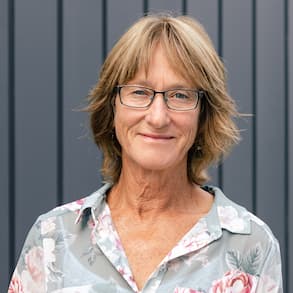
At Hoddys Fruit Co, general manager Jos Bell says that after a slow start in spring, the crop is shaping up well.
“Sitting here right now, we’re very, very happy with the crop – good volume and good quality.”
Royal Gala is first up for harvest on the orchard, and between now and early May, the team will pick eight varieties of apples for both local and export markets. While newer licensed varieties such as Dazzle and Kanzi are in the mix, Jos says they are increasing production of good old-fashioned Granny Smith which customers continue to love for its vivid green colour and tart taste.
Many of the orchard’s seasonal staff are locals who return year after year. Jos says that’s rewarding because “there’s nothing like welcoming people back”.
“A wonderful part of the job is to be able to offer consistency to locals – we offer work for most months of the year.”
While all apples will be harvested by early May, the packhouse will continue to pack fruit through to November.
Despite the increasing use of artificial intelligence (AI) and technology, Jos says people will always be central to the orchard’s success. Being a smaller sized orchard allows the team to focus on “top-of-the-line quality”, achieved through the combination of local staff and digital tools.
“We want to employ people for every season. It suits us - being a positive part of the community and providing jobs where we can. And it’s still a genuinely good way of doing things. Our location is good because we have people close to where we are. And philosophically, we want to continue to employ as many people as we can.”
