Anyone who has visited the Gridiron rock shelters in the Kahurangi National Park will know the “magic” that was typical of Max Polglaze’s work in the backcountry.
The 85-year-old passed away last month after a lifetime spent in the backcountry he loved, helping to open it up for others to enjoy. His engineering feats and quirky additions to tracks throughout the Kahurangi National Park continue to captivate trampers decades after they were created.
Dave Barton first slept in the Gridiron rock shelters as a 10-year-old and he has marvelled at Max’s work ever since. It was Max’s vision and natural engineering skills that transformed overhanging limestone rocks into sheltered sleeping quarters, complete with a cantilevered roof.
“He understood the park was there for people to enjoy and not just the fauna and flora,” Dave says. “He also understood not everyone could walk eight hours a day. But they could walk one or two hours and enjoy some amazing country.”
Several years ago, Dave proposed the idea for the unofficial Polglaze Trail, linking the Flora Carpark to the Gridiron rock shelter and on to Salisbury Hut and Asbestos cottage - an area where Max “worked his magic”, though his influence extended much further.
While the track remains unofficial, Dave and more than 300 followers of the Polglaze Trail Facebook group continue to hope the Department of Conservation’s will give it formal recognition.
“We’re trying to keep those stories alive because they’re part of New Zealand’s history in the backcountry.”
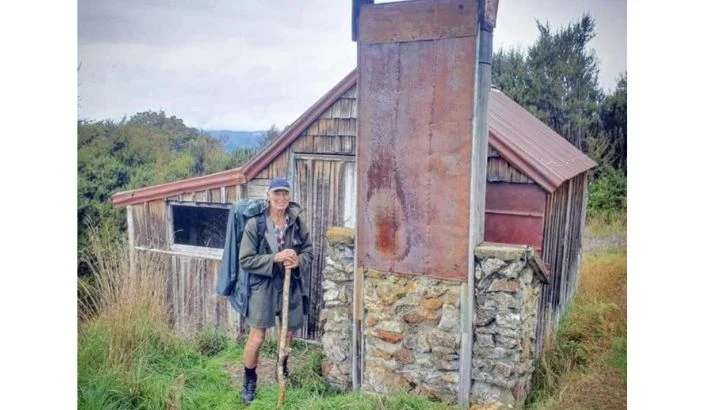
Max began working for the New Zealand Forest Service in the late 1960s, when the area was known as North-West Nelson Forest Park and later worked for the Department of Conservation. Over the decades, he led teams that developed more accessible tracks into the backcountry, built five iconic rock shelters and led the restoration of Cecil King Hut, Riordans Hut and Asbestos Cottage.
His partner of more than 30 years, Beverley Johnson, says Max used hand-held tools and historic methods to restore huts – milling dead beech trees and shaping timber with adzes.
“It’s the breadth of his work and the uniqueness or it that has made it stand out as something exceptional,” she says. “He didn’t like the fuss though. He was a very private man. He always said: ‘it wasn’t just me – it was all the men’.”
In later years, dementia took many of his memories, but Beverley says his love of the backcountry never faded. On one visit from the rest home, she decided on impulse to take him up to the Flora Carpark in the Kahurangi National Park where “he just came alive”.
“He was out of the car that fast and looking around. We walked up to the old gateway where he had built a shelter made of shingles and stonework, and he stared at it for a long time and said: ‘that’s very fine workmanship’.”
