If it feels like kittens are everywhere right now, rescue groups across Tasman and Nelson say you are right. What used to be a seasonal rush has become a constant flow of kittens needing help.
Kitten season traditionally ran through summer, but Fiona from Tabby’s Kitten Rescue says warmer temperatures mean litters are appearing in spring, summer and autumn.
“I have had kittens all year round for 2025, and it has been a busy start to 2026 as well,” she says.
Fiona’s rescue work began with a single mistreated kitten. More soon followed, including litters from feral cats in Tāhunanui. With nowhere to rehome them, she and her daughter launched Tabby’s Kitten Rescue on Facebook about six years ago.
“It has just got busier and busier. A lot of people do not understand the effort involved in taming and supporting wild kittens. It is a full-time job and takes a huge amount of energy.”
Tabby’s Kitten Rescue now focuses on saving and rehoming wild kittens and desexing feral adults, but Fiona believes the community, not the cats, is at the root of the issue.
“It is not the cats that are the problem, it is the people. With cats, more hatred grows instead of solutions. We need a change in mindset and culture.”
She points to overseas examples, such as Greece and Israel, where stray cats are treated as community animals and residents share responsibility for feeding and desexing them.
“The biggest problem here is desexing. We need ways to encourage people to desex their own cats and to care for and desex strays.”
Fiona supports the internationally used TNR method, where cats are trapped, desexed, vaccinated and ear tipped before returning to their original location with a caretaker.
“This method stabilises colonies, reduces fighting and spraying, improves the cats’ health and gradually reduces numbers. It actually works.”
In rural areas, she says, removing cats can have unintended consequences.
“People are now dealing with rats eating bird eggs instead. Cats tend to go for ground prey like rats before birds.”
Her advice to locals is simple. “If you have a stray cat, talk to your neighbours, do a collection, get it desexed and care for it. Do not just get rid of it.”
Richmond Town and Country Vet’s Annette McFadgen says anyone adopting a cat needs to think long term, as “pet ownership is becoming more expensive”.
She says adopting desexed and microchipped animals from the SPCA, applying for the SPCA’s snip’n chip programme when it is running, setting up a savings plan or getting pet insurance can help with costs.
Annette says they continue to desex many cats, but microchipping remains low.
“Having your pet microchipped lets you be reunited with lost and injured animals quickly. Unlike tags and collars that can slip off or be removed, a microchip lasts a lifetime.”
“Cats are great companions,” she says. “But a pet is a long-term commitment, and planning ahead is important.”
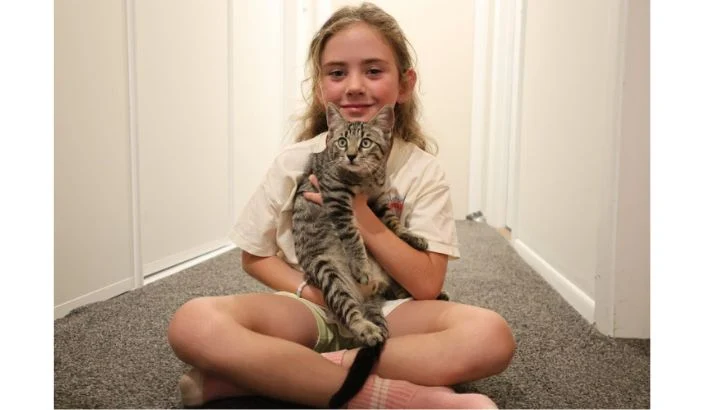
Richmond’s Georgina Lilleyman, who recently adopted kitten Lorry, says the main discussion in her household before adopting was around pet insurance.
“We have faced huge expenses in the past and it would be heartbreaking if you could not afford to save your beloved family pet,” Georgina says.
“We love our pets and know all the work that comes with them.”
