
The “remarkable” growth in population of critically endangered kākāriki karaka/orange-fronted parakeet at Nelson’s predator-free sanctuary means the population will now support others around the country.
For the first time, kākāriki karaka eggs have been retrieved from Brook Waimārama Sanctuary and flown to Christchurch for hatching.
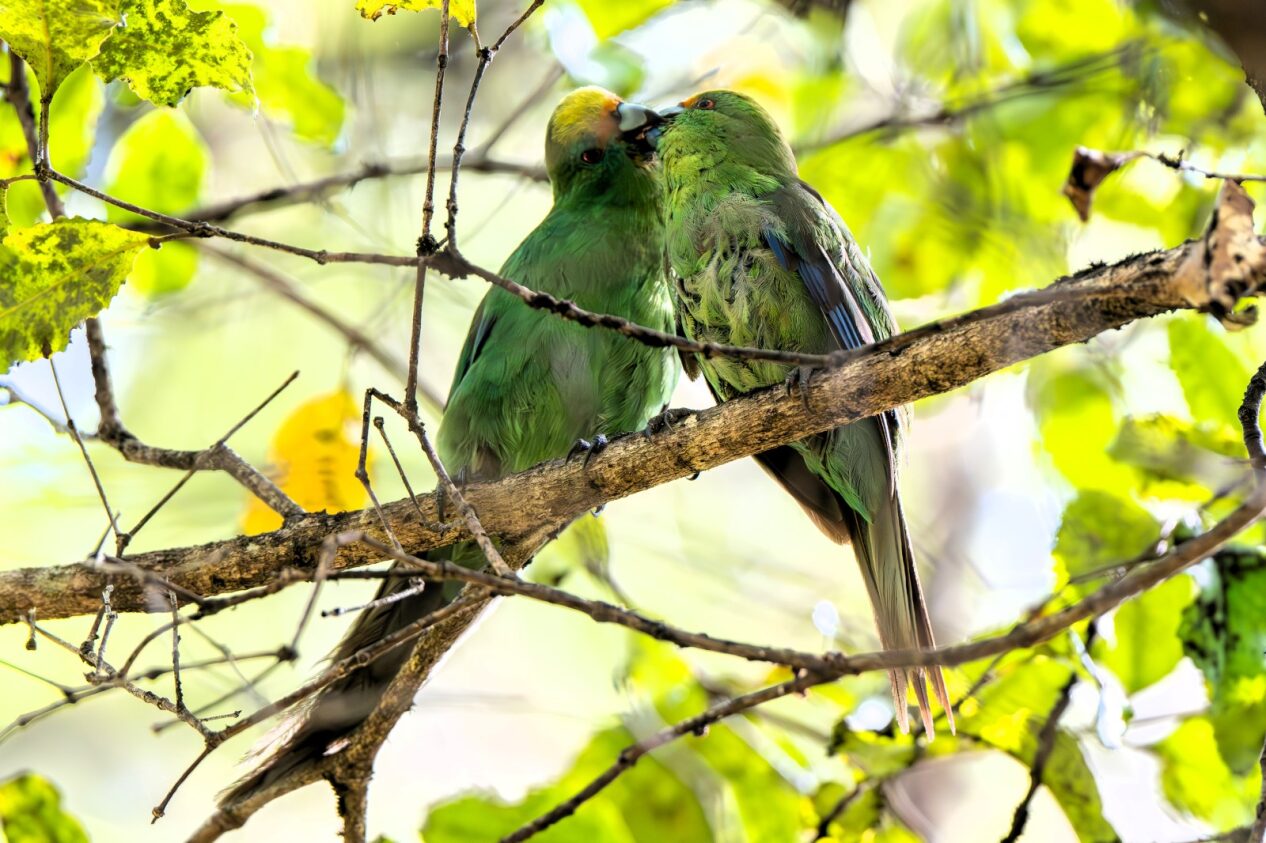
Between 2021 and 2023, 125 kākāriki karaka were released at the sanctuary and that population has now grown to between 300 and 400.
With 12 nests confirmed in the sanctuary this season, the decision was made to delicately retrieve five eggs to send to The Isaac Conservation and Wildlife Trust (ICWT) in Christchurch where they were placed under surrogate mother Daisy.
Three of the five have since successfully hatched.
Department of Conservation kākāriki karaka recovery programme lead,Wayne Beggs, says it’s a milestone moment in the battle to increase the numbers of the country’s rarest parakeet.
“The species would probably have gone extinct if wasn’t for organisations like The Isaac Conservation and Wildlife Trust and the wonderful team at the Brook Waimārama Sanctuary. It’s such an intensive team effort for these manu (birds),” he says.
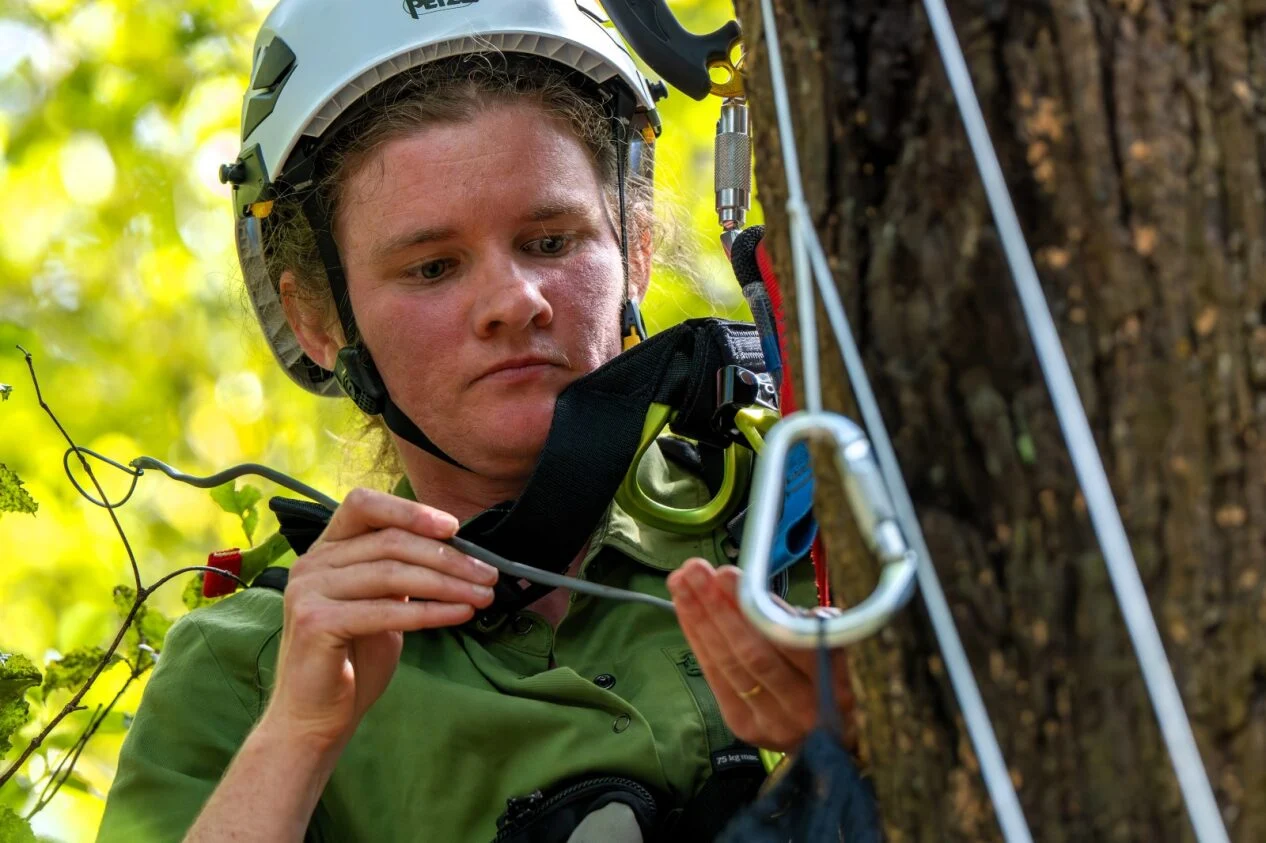
High up a tree inside the sanctuary, DOC ranger Megan Farley carefully extracted eggs one at a time from a nest cavity with a small scoop on the end of a pole.
The eggs were then placed in a pouch, lowered down via a rope, put into a special padded case and then quickly transported to catch a flight to Christchurch.
Chief executive of the Brook Waimārama Sanctuary, Chris McCormack, says the first egg retrieval took a huge effort, from monitoring where the kākāriki karaka nests were, to co-ordinating the operation to get the eggs safely to Christchurch.
“It was a very special moment that made us all very proud. Since their translocation here in 2021, we’ve seen remarkable growth in the population. Thanks to an incredible group of staff and volunteers, we now support one of the largest populations of kākāriki karaka,” he says.
“These kinds of collaborative partnerships are critical if we are going to see species like kākāriki karaka recover and thrive in the wild,” says ICWT chief executive Rob Kinney.
Wayne says the two wild populations in the Hawdon Valley near Arthurs Pass and the Hurunui South Branch can fluctuate wildly, peaking in 2020 and 2021 at around 300 before plummeting due to the impact of predators. Current estimates have between 50 and 60 birds in each valley.
DOC, along with its recovery programme partners, have recently transferred 22 birds from The Isaac Conservation and Wildlife Trust and Orana Wildlife Park to the South Branch in North Canterbury.
Te Rūnanga o Ngāi Tahu kākāriki karaka species representative, Yvette Couch-Lewis, says it’s fantastic the population at the sanctuary is at the point where it can support the genetic diversity of the wild populations.
“While Ngāi Tahu fully supports the need for this mahi currently, it is our aspiration that one day the wild populations of these manu can grow to the point that there will be less need for these kinds of interventions.”
