
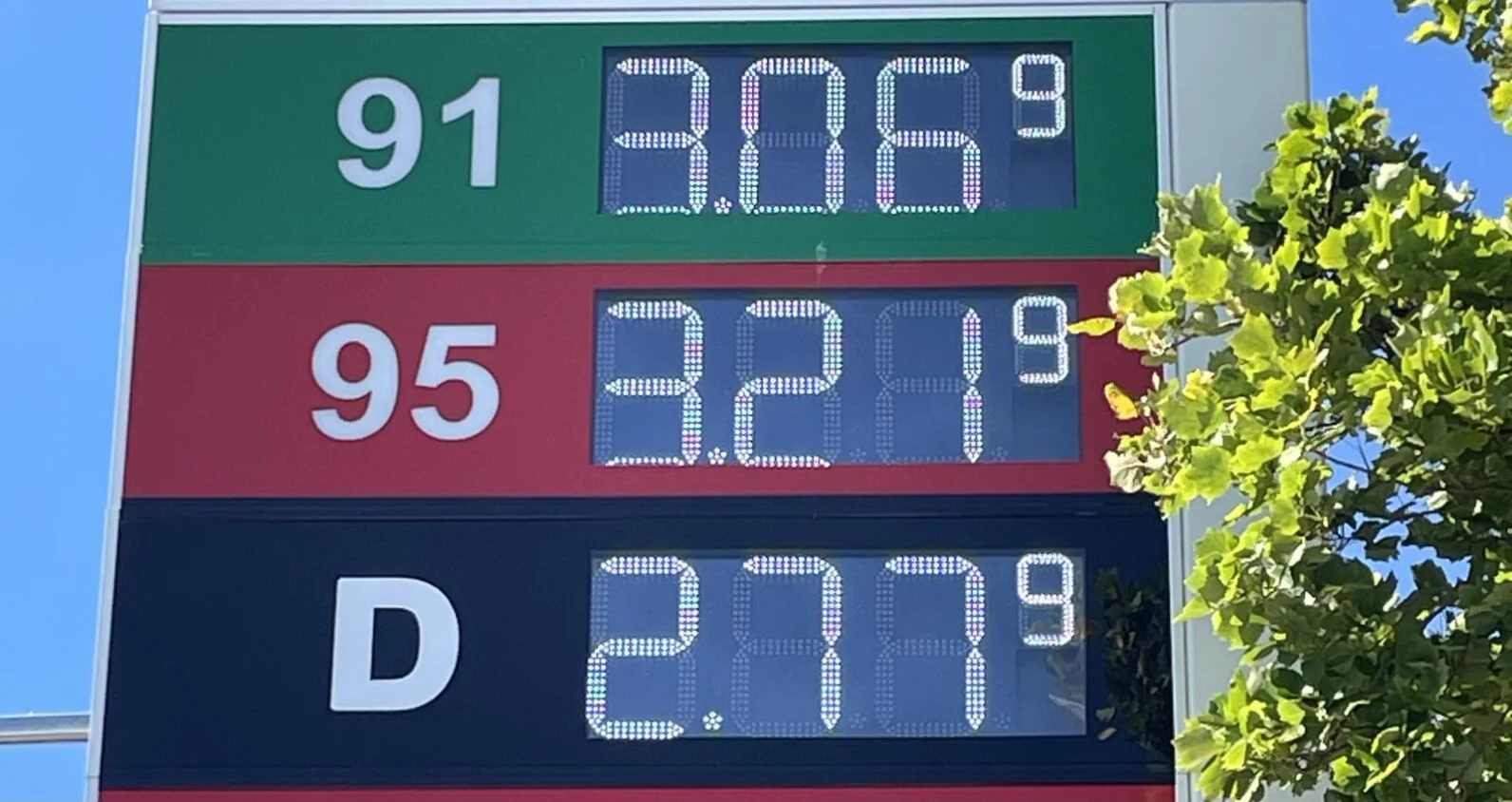
Just as the region was beginning to see an economic upturn, the fuel crisis is already making a dent in the recovery, and no-one knows how long it will last.
Fuel prices have been volatile as the United States-Iran conflict disrupts global oil markets and shipping routes, and despite international claims it will be short lived, Nelson-Tasman Chamber of Commerce Ali Boswijk thinks otherwise.
“I don’t believe it is short term and I don’t believe that anybody can say it is. We hope it’s not, but I think we need to plan for it being longer term and the repercussions being longer.
“I think the saddest thing is we were already starting to see an upturn after various blows that we know this region has had,” she says. “I think everyone is going to naturally become a little bit more cautious until we know what is happening. That means people don’t hire new people, people don’t invest in the same way.”
She says the unpredictability of the situation is the hardest thing to deal with, for both business and individuals.
Interest rates have dropped to a comfortable level for business owners, but she says rising fuel costs could push inflation higher again. It’s brewing as winter approaches and Ali says that time of the year is always a little bit harder for Nelson being a seasonal economy.
Retail and hospitality sectors are always among the first to feel an impact, she says, because people become more cautious about their spending and businesses lose patronage.
Fuel prices have been rising at the pumps since the conflict broke out in the Middle East, hitting more than $3.05/l for Unleaded 91 this week.
Local fuel company NPD chief executive Barry Sheridan says, as a distributor rather than a fuel importer, the company purchases refined fuel from suppliers at current market rates.
“Those prices move in line with international (Singapore) refined fuel prices, and when global costs increase, those changes flow through to wholesale prices in New Zealand very quickly.
“Retail pricing needs to reflect the cost of replacing fuel at today’s prices so we can continue to secure supply and maintain normal operations across our network.”
While businesses are bracing for the impact, the rising cost of fuel will also hit household budgets. Salvation Army’s financial mentor for the region, Wayne Jackson, says there “isn’t enough money to go around” and something will have to give if petrol prices continue to rise, and that is usually food.
“Fuel for families is often a necessity,” he says. “Public transport does not always represent a good substitution for them. (Fuel) is part of the core living expenses rather than discretionary expenses. If it gets up to that $3.50, you’re starting to really bite into people’s budgets because they are simply not running a surplus. They’re using every dollar they’ve got.
“Other areas of the budget get squeezed and often that’s food which is seen as being more flexible. Which is not always a good thing in terms of food security and nutrition. And-or, people can put it on the credit card and build the debt levels up with high interest rates which again becomes unsustainable after a while.”
Wayne says it will lead to increased prices in other areas and if prices continue to climb, he says there may be more requests for food parcels.
At a regional level, Nelson Regional Development Agency chief executive Fiona Wilson says the agency is watching the fuel crisis unfold, with concern.
“We don’t know how long this is going to go on for and how big the impact is going to be.”
She says they are in touch with tourism businesses to see whether there are cancellations due to travel costs and are looking at extra ways to incentivise visitors from Christchurch through autumn and winter.
“It’s going to make a dent. We don’t know what or for how long, or to what degree, but obviously in a regional economy, it’s very dependent on our fly and our drive market. Any disruption makes a dent – and both the region and wider economy are still in recovery.”
One business that relies heavily on fuel is Sollys, a trucking company that covers everything from livestock and fertiliser spreading to freight.
Managing director Merv Solly suspects there has been profiteering going on among fuel companies lifting prices early. He is hoping the fuel crisis will be over in two to three weeks and however long it lasts, the costs will have to be passed on to customers.
“The company can’t absorb anything because the last 12 months have been very tough for the industry and don’t have any profit to take it out of. We don’t have a choice.
“It all ends up back on the producer. It’s money lost from other developments.”
As the cost of freight increases, he says the cost of living will go up because freight costs are on everything.
It’s a challenging time for airlines faced with escalating fuel prices. Originair managing director Robert Inglis says strength had been coming back into the market following Covid, with good support and good load factors. Now, the company is being forced to consider cost-cutting options including cancelling the weakest schedules, reducing flight frequency, increasing fares or reducing the number of highly-discounted fares.
“It is disappointing to have to consider options because the last quarter, especially for our airline, has been a really strong quarter. It appears that the economy has just started to struggle out of low gear and that really seems to have added strength to the market.”
If the fuel crisis only lasted two weeks, he says the company wouldn’t make those changes and upset its customer base – but no-one knows how long it will last. In the meantime, he says Originair is watching the situation.
