Natureland Wildlife Park have added to their animal encounter experiences, so Nelson Weekly editor Sara Hollyman went and checked out the black-and-white ruffed lemur encounter.
After meeting meerkats up close at Natureland Wildlife Park, I was buzzing to head back for the brand-new lemur experience, although I thought the meerkats brushing my hair would be hard to top.
When I first met Natureland manager Leah Foster, she had recently arrived from Australia Zoo, an establishment known for its close encounters with animals.
One of the first things Leah told me was that she wanted people to be able to connect with the animals at Natureland, and she has worked hard to make that happen.
“People can come in and see the goats every day, we do a kea talk every day where people can have kea on their arms (as long as the kea want to do that), and we’ve got our meerkat and now lemur experiences,” Leah says.
“It’s still always in my mind to get people up close and personal to animals, because I feel like that connection creates more interest and more enthusiasm for the animal itself.”
Black-and-white ruffed lemurs are a critically endangered species, with only an estimated 10,000 left in the wild, an 80% drop during the past two decades, senior keeper Hani Fern explains.
The species has the second-loudest primate call after howler monkeys. It is a sound that can cause alarm to those outside the park, with Leah occasionally fielding concerned emails from people who think the lemurs must be fighting.
But the call is perfectly normal and is loud because it needs to carry across the lemur’s entire territory, which often spans several kilometres. I am warned to block my ears if I hear it coming.
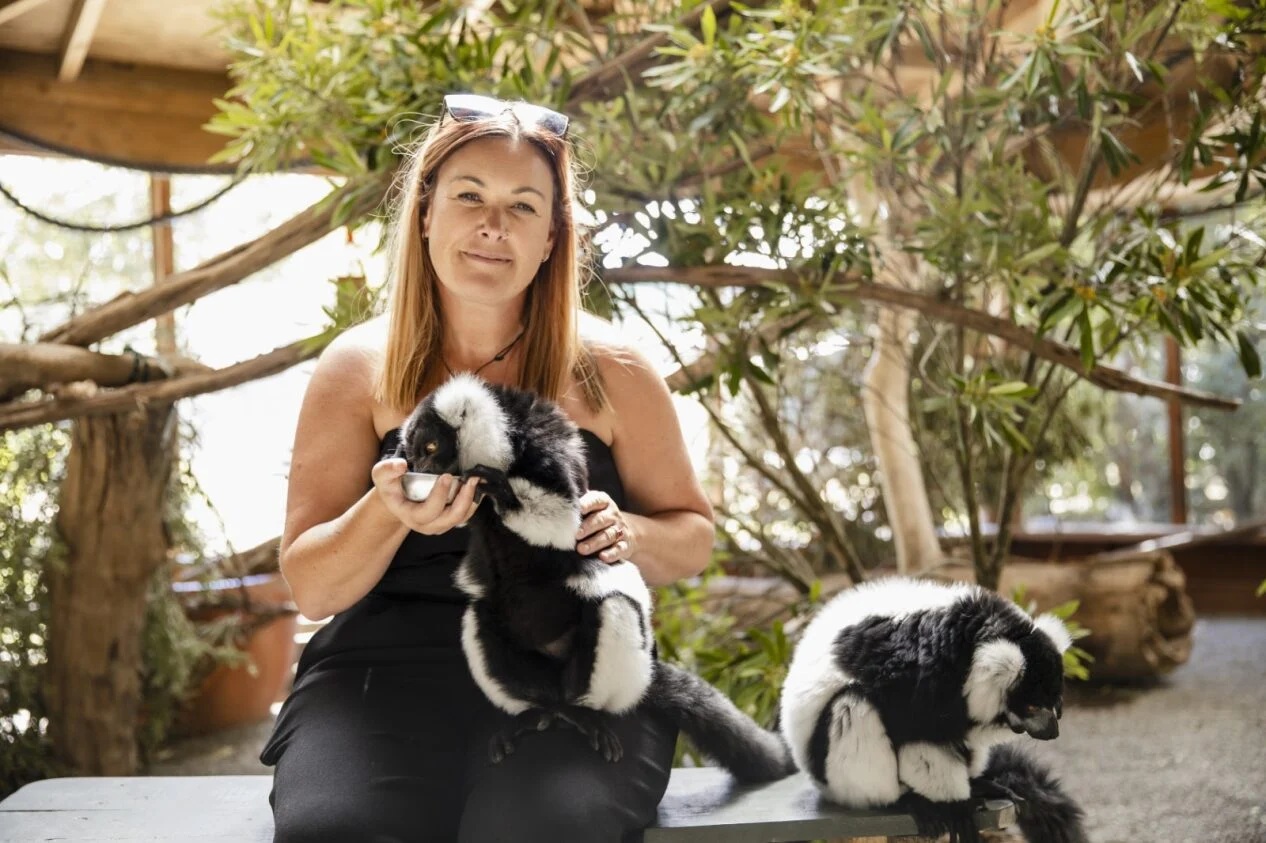
Today I am meeting Tsia, a female who arrived from Christchurch’s Orana Park last year, and Mafy, one of the resident males in the local troop.
Before Tsia’s arrival, the troop had been without a female for many years. Ngarly had claimed the role of boss of the Madagascar natives, but had been known to be “pushy”, Leah explains, often snatching food first and pushing the others around.
Tsia’s arrival has brought a more harmonious dynamic.
As I enter the enclosure, the first thing I notice is Mafy, eagerly awaiting my arrival and the food I bring with me.
I stand in front of a high branch, strategically placed at shoulder height. Leah hands me a small bowl and warns me to hold it tight so I do not lose it to Mafy’s strong hands.
Before I know it, Mafy has climbed onto my shoulder, nestled up to my cheek and is happily snacking on fruit and tamarinds.
I notice his perfect little hands, which mimic our own, right down to tiny fingernails. Leah points out one long fingernail on the back foot, known as the grooming nail.
They are soft, like a living teddy bear, calm, clean and inquisitive.
Natureland’s lemurs are part of a strictly monitored international breeding population and, now that there is a female, the hope is that in the near future there will also be babies.
“We’re not ready for her to do it just yet, but they’ve been having a good go,” Leah says.
Next, I move to a bench seat with another bowl of food, where both Mafy and Tsia are waiting.
They waste no time climbing onto my lap and clearing out the bowl.
I can picture having a pet lemur joining my mini farm far more easily than a meerkat.
The 20-minute encounter is well worth the $95 fee and will definitely be going on my Christmas present list for the whānau.
