
A mother accused of ill-treating her child during medical treatment has been found guilty on all seven charges.
The 11-member jury of six men and five women took close to six hours to reach a unanimous verdict after a seven-week trial in the High Court at Nelson.
There were tears of despair from the mother, who throughout the trial has shown scant emotion. Family, including the defendant’s parents, friends and other relatives have been present in support throughout.
The jury foreperson cried as Justice Lisa Preston told the jury immediately after the verdicts were delivered it had been an arduous and exacting task.
“It’s never easy to sit on a criminal trial, and particularly difficult to sit on long, complex trial,” she said.
Today’s verdict brought the jury’s duty, including time spent deliberating, to almost eight weeks after hearing evidence and cross-examination of 57 Crown witnesses, and one witness from the defence.
The trial followed the woman’s not guilty pleas to four charges of ill treatment of a child and three charges of infecting with disease during lengthy and complex diagnosis and treatment throughout 2019 and 2020 for what was considered to be a gastrointestinal disorder.
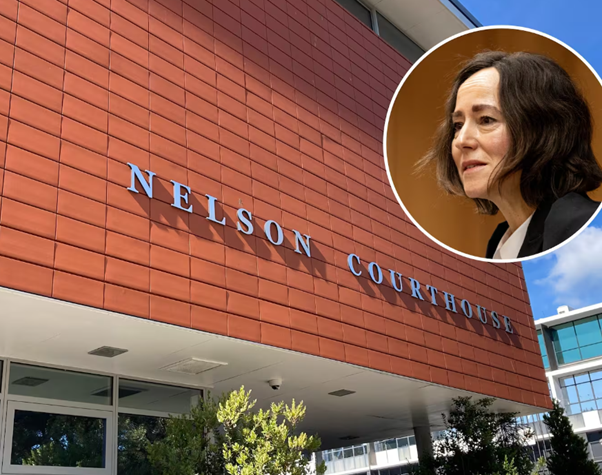
Today’s verdict was the culmination of a five-year police investigation and subsequent legal process after a senior doctor diagnosed medical child abuse as the likely source of the child’s problems, in early 2021.
Medical staff who gave evidence at the trial said the child rapidly recovered after being removed from the mother’s care.
The woman, who has permanent name suppression to protect the child’s identity, was charged in April 2023 following a police investigation.
Child X was taken to the family’s local hospital in 2019 with symptoms of failing to thrive. It led to multiple admissions and interventions by many doctors, specialists and nursing staff in hospitals nationwide over the next 19 months.
None of them were able to get to the root of the problem, including reasons for the child’s apparent inability to eat by usual means.
Medical child abuse was a recognised diagnosis, described as a form of child abuse where a child received “unnecessary, potentially harmful medical care” at the instigation of a caregiver.
A report of concern to Oranga Tamariki led to the removal of Child X from the mother’s care, and into the care of an aunt, although supervised visits were allowed.
Within the charges there were multiple ways she was found to have mistreated the child.
In broad terms, the Crown alleged she made the child sick and kept the child sick, one reason being she wanted to avoid a successful feeding trial, which would show Child X had no underlying serious condition.
The charges of ill-treatment were framed around the mother allegedly “intentionally engaging in conduct” likely to harm her child’s health, that being a major departure from the standard of care expected of a reasonable person.
The sub particulars of each of these four charges included that she exaggerated and fabricated the child’s signs and symptoms of illness, induced illness by stopping feeds, and tampered with medical lines and tubes used to deliver food and medicine to the child, causing them to break, disconnect, become dislodged and infected.
On three separate occasions in 2020, the mother allegedly caused illness in the child, through wilfully causing a polymicrobial sepsis.
This was done through deliberate contamination of the child’s central (feeding) line, which on two occasions caused a serious blood infection.
The charges of ill treatment carried a maximum 10-year prison penalty while the charges of infecting with disease carried a maximum 14-year prison term.
The Crown argued the “gross contamination” was most likely deliberate rather than accidental, based on several points, including recurrences while the child was in hospital where cross-contamination was less likely, and the multitude of bacterial organisms found on occasions that one expert described as being “like a jungle”.
The defence argued hindsight and “confirmation bias” had altered and shaped witness views over time.
There was no direct evidence of wrongdoing, defence lead Marie Dyhrberg, KC, said in her closing address.
It was a case built on what someone might expect to find and how that might influence recollections of what happened, she said.
The defence argued clinical records showed the defendant was a concerned, attentive, hyper vigilant mother of a medically complex child and that medics, unable to get to the bottom of the problem, began looking for answers and suspicions grew to assumptions.
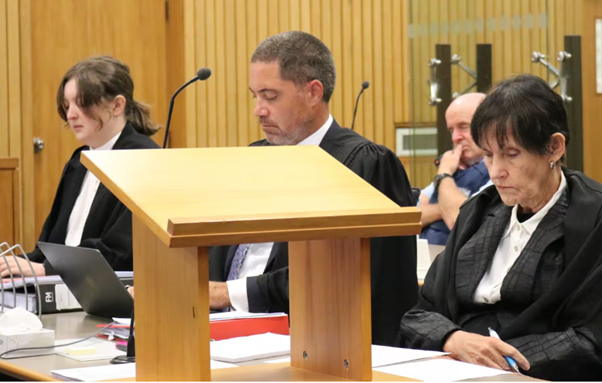
However, the jury was swift to deliver guilty verdicts on all seven charges.
The mother was convicted and was to be sentenced on July 8.
Justice Preston once more thanked the jury for its careful consideration before releasing them to return to their daily lives.

