
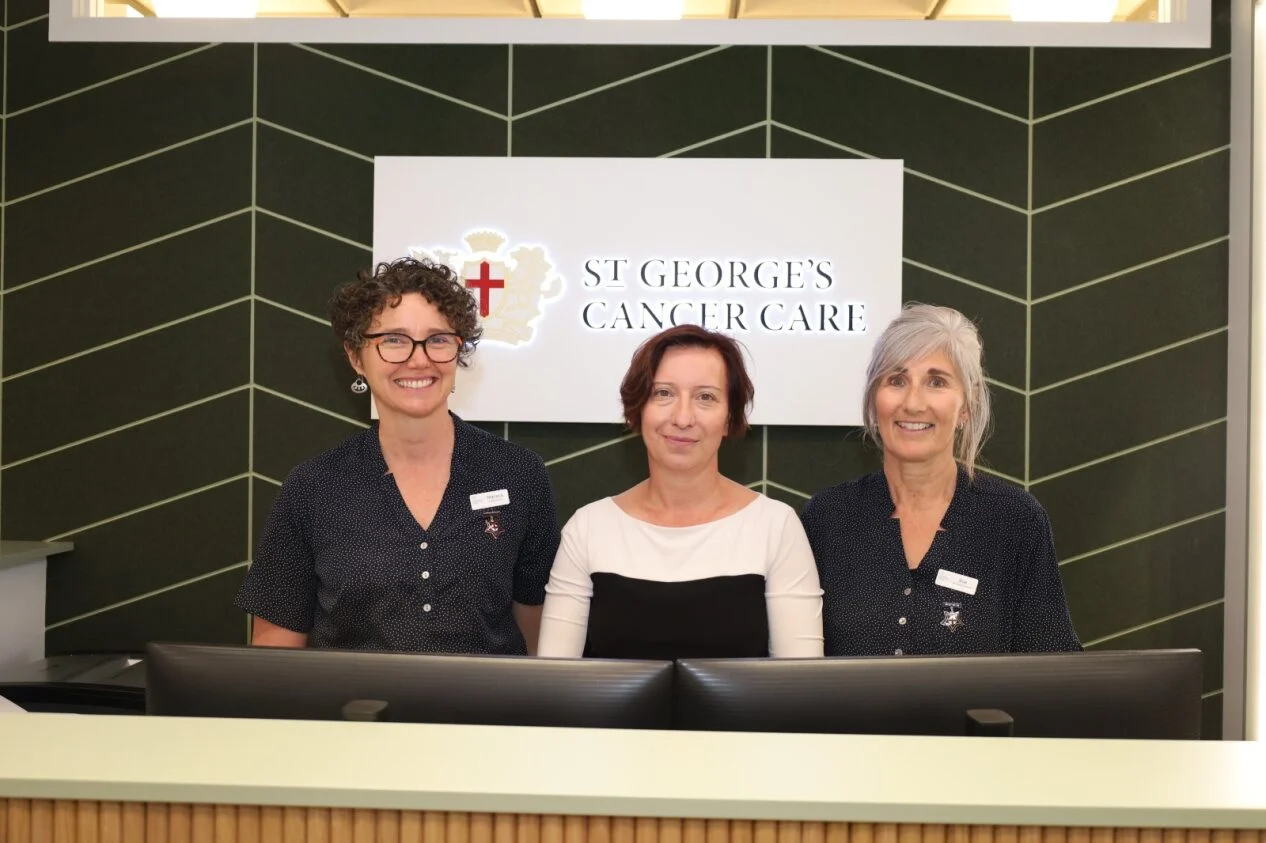
The opening of the region’s first cancer care clinic has been hailed an “amazing milestone” for local patients and their cancer care.
St George’s Cancer Care clinic in Stoke was officially opened during a visit from Prime Minister Chris Luxon on Thursday.
The Nelson clinic offers specialist oncology and haematology treatment, removing the need for many patients to travel to Christchurch.
The new service provides medical oncology and haematology care locally, including chemotherapy, immunotherapy, blood disorder treatment and specialist consultations. It marks St George’s first regional site outside Christchurch.
For 72-year-old Nelson patient Roger Cooke, the change is significant.
To receive specialist cancer treatment, Roger has been flying to Christchurch, often returning the same evening to avoid overnight accommodation costs.
“It’s really a two-day exercise just to get out of Nelson,” Roger says. “You’re checking the weather, hoping the flight goes. The minute it takes off, you relax.”
The travel adds hours to what is already a physically demanding day.
“After treatment, I just want to be at home in my own bed with a cup of tea,” he says. “When you’re flying back, you’re exhausted. Sometimes it’s not the next day that gets you, it’s a couple of days later.”
That journey has now reduced to a 30-minute drive.
Cancer Society Nelson Tasman manager, Venus Guy, says it’s an amazing milestone for the entire region.
“We are really looking forward to working together with St George’s. For the first time, the Top of the South is pretty well covered. Having this facility, it’s mind blowing, a very exciting day.”
Nelson-based medical oncologists Dr Kate Gregory and Dr Anna Wojtacha will lead the clinic, working across both the new service and the public health system. They will be supported by visiting Christchurch specialists and St George’s multidisciplinary team.
St George’s Cancer Care clinical director and medical oncologist Dr Jim Edwards says the most important aspect of the new clinic is what it means for patients.
“For many patients in the regions, they have to travel a long way for treatment, often when they’re feeling pretty low and vulnerable,” Jim says.
“Chemotherapy and other treatments are pretty demanding on the body, and adding the travel, the time away from home, family and support networks just makes that a whole lot harder. This clinic is going to change that for a lot of people. It allows patients to have their treatment here in their own community, surrounded by their own support network, without the worry of travel.”
The clinic includes special technology including a scalp cooler and ultrasound-guided cannulation equipment for drip insertion, both of which make a big difference to patient care, Jim says.
St George’s Hospital chief executive Blair Roxborough says the clinic responds to growing pressure on the health system.
“Cancer is touching more New Zealand families than ever before, and whilst our health system faces growing pressure to keep pace, that’s why this clinic really does matter,” Blair says.
“It brings care closer to where people live. It reduces the burden on patients and the whānau. It strengthens the wider health system by working alongside it. Importantly, this clinic is designed to complement the public system, not replace it.”
He says the Nelson clinic will operate under St George’s established shared care model with the public health system.
“This approach enables patients to receive funded treatments from within the public service whilst accessing unfunded therapies through our centre. Close coordination between the teams ensures treatment is delivered safely, seamlessly and with comprehensive support,” Blair says.
The $1.2 million investment in the centre and local jobs is expected to see about 300 local patients treated each year once fully established, with capacity to grow.
The clinic will initially operate three days per week, with plans to expand as demand increases. Radiation oncology consultations will be available in Nelson, with radiation treatment continuing in Christchurch where specialist equipment is required.
