
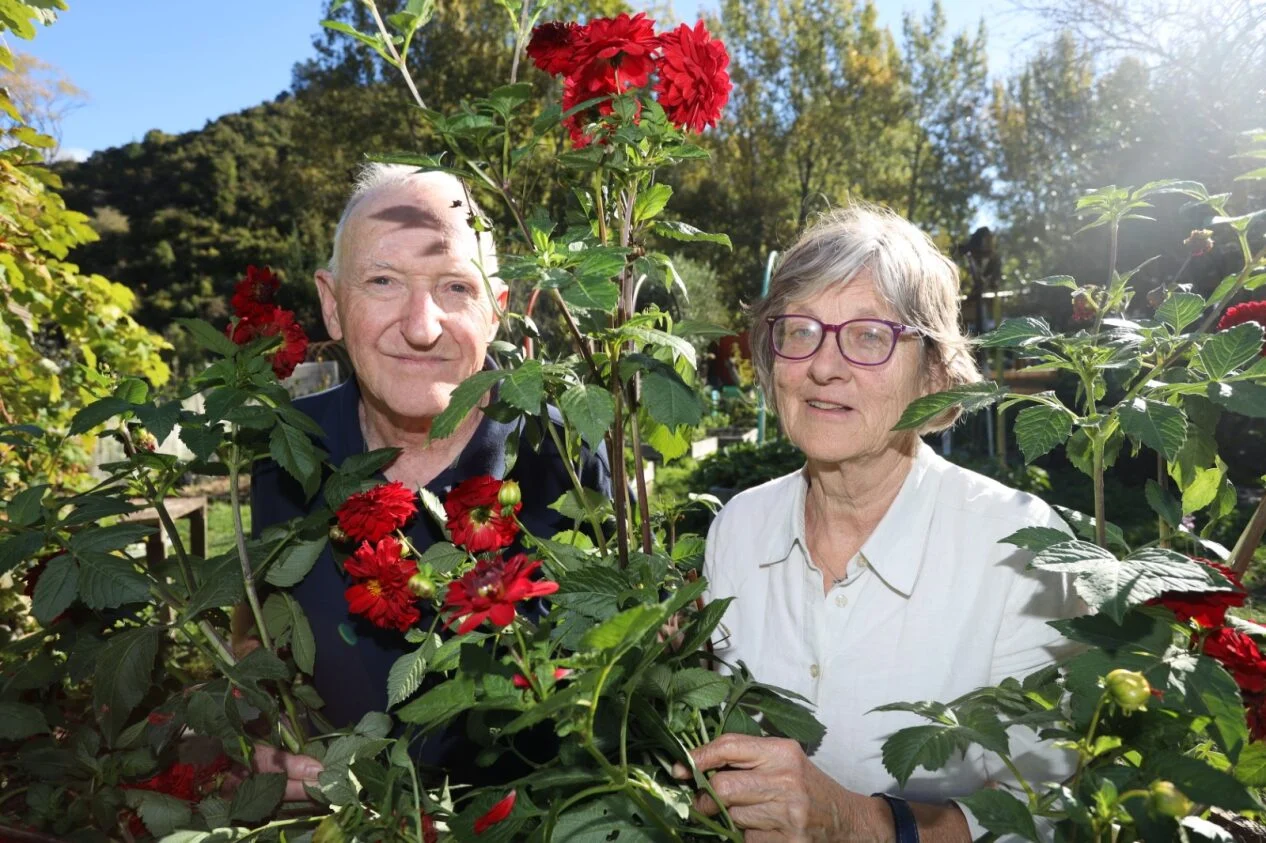
Waimārama Community Gardens is still growing strong in its 30th year.
First laying roots in what was an “underutilised” space in The Brook in 1996, it’s now a 4800 square metre salubrious environment where social connection and wellbeing flourish.
Cultivated by the Nelson Community Organic Gardens Trust, it boasts 40 plot holders, more than 20 volunteers, and schools, disability groups, vocational providers and other community organisations enjoy the fruits of their labour in its workshops, seedling propagation and composting education.
These activities reduce the bad apple that is cost of living and poverty, by improving access to healthy, and affordable kai and honing practical skills that sow the seeds for household resilience.
The gardens, which are leased on council land, were originally established by the Beneficiaries & Unwaged Workers Trust and were based up the Maitai for three years.
During that time, they taught unemployed people how to grow their own food and maintain a healthy diet, before flooding prompted a relocation to the former farm site in The Brook.
Board of Trustees member Amanada Anderson, a new addition to the gardens, says today its operation is far from the garden variety with the Nelson Compost Club, a seed library, a Matariki event, and a “famous” annual plant sale.
“Turning it into an organic garden that produces so much variety and diversity in produce, we have tamarillos growing here, hazelnuts, so much produce comes out of such a small area,” she says.
“Seeing each Wednesday, 20 diverse members of the community coming together, everyone brings a plate and shares and shares their produce, shares something they've made from the garden.
“The community togetherness is really impressive.”
The gardens will apply the finishing touches to its wattle boundary fence this year and is currently implementing a permaculture garden refresh for growth and progress in the next three decades.
Trustee and gardens coordinator Sally Rees says a book containing recipes from volunteers, whose dishes are made using produce from the gardens, is also expected to be available to the public later in the year.
