
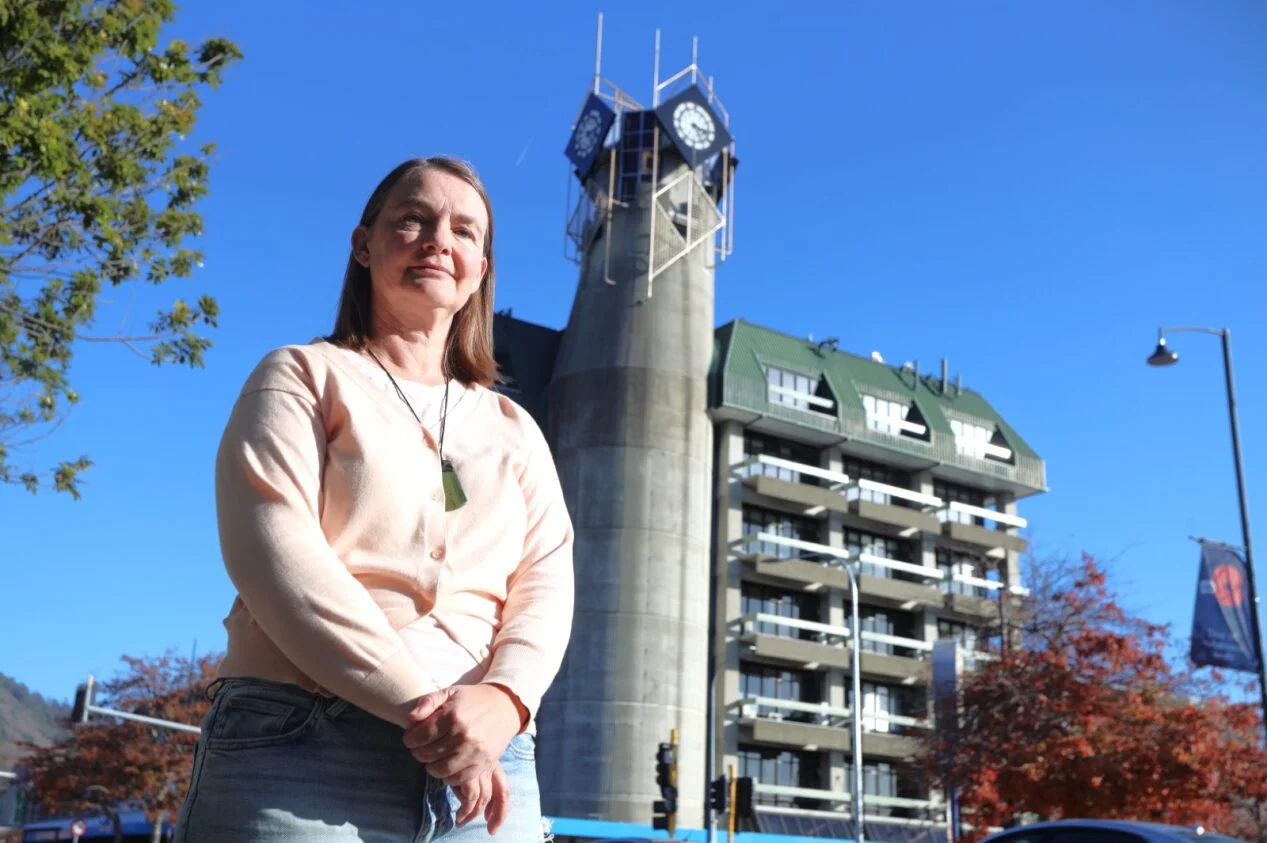
One community organisation has been left surprised and disappointed after Nelson City Council backtracked on a $15,000 grant.
Lisa Bridson, a steering committee member for Timebank Whakatū, says she was “thrilled” when the group received notification from the council in February that its funding application had been successful.
The $15,000 that the organisation expected to receive from the council’s Climate Change Grant programme was less than what they had applied for, but the grant would still enable the group to employ a coordinator.
“Timebanks that succeed tend to have a coordinator,” Lisa says.
The role would provide a boost for the new organisation, enabling it to establish itself more quickly and make the timebank accessible for those with disabilities and language barriers, or who struggle with technology.
Timebanks allow people to exchange hours of work instead of money, allowing those less financially able to still access external labour for jobs or tasks they can’t do themselves or pay others to do for them.
“They help people meet everyday needs by sharing skills and services, reducing costs to support households under pressure.”
For several weeks, Timebank Whakatū prepared to receive the grant, ensuring the organisation had the appropriate structure and strategies.
But in early April, the group received further correspondence which says the funding would not be progressed, despite the grant already being published on the council’s website.
The council’s executive leadership team had since reviewed the grant’s funding outcomes and determined that, in a fuel crisis, priority needed to be given to projects which demonstrated “clearer and measurable contributions to emissions reduction and climate resilience on a broader community scale”, and Timebank Whakatū did not make the cut.
The news left Lisa “gutted”.
“There was a bit of anger and frustration, disappointment – I suppose disappointment was the big one, and frustration,” she says.
Timebank Whakatū had sought other funding sources but had only seen limited success, so the $15,000 grant from the council would have had a significant impact.
Lisa doubted the final decision would change but was now seeking clarity as to why exactly the group had received confirmation only to have the money seemingly taken back.
“It takes a lot of time to put in an application and to then have that decision overturned… we’d like to know why, what’s happened?” she says.
“We’re just unclear about what the process and what we need to do differently next time. So, I’m trying to ensure that there’s a fair and reliable process if we apply for funding again.”
Nelson City Council chief executive Nigel Philpott says it is “unfortunate” that the organisation’s communication with Timebank Whakatū about their application did not reflect the final outcome.
“Council has reached out to them to apologise and reiterate that this change is not a reflection of the role of their work in our community.”
He says the remainder of the Climate Change Grant fund had been accepted by an organisation whose project reflected the council’s priorities.
“The full allocation of grant funding now focuses on pragmatic projects which support electrification and emission reduction,” Nigel says.
“Council’s funding has been matched by other applicants, which is a great result for practical sustainability and value for money.”
The grant’s criteria have since been made clearer and more closely aligned with the council’s strategic direction, and next year’s funding round will also include a requirement to match funding.
Urban Prototype also received an indication that it had been successful in its grant application before being told otherwise.
Their application sought funding to expand the scope of their game focused on climate adaptation.
The Climate Change Grant is an annually-contestable $50,000 funding pool the council offers to enable local business and community initiatives that reduce greenhouse gas emissions and increase resilience.
Four projects secured grants from the 2025/26 funding round.
Grassroots Recycling and Community Compost received $15,000 for a co-owned electric van to deliver services diverting materials from landfill, Ekos secured $15,000 to undertake climate risk assessments for 10 smaller local businesses, the Green Collective was awarded $999 for a cargo bike to transport materials, while the remaining $19,001 has gone to a fourth group which has yet to be publicised.