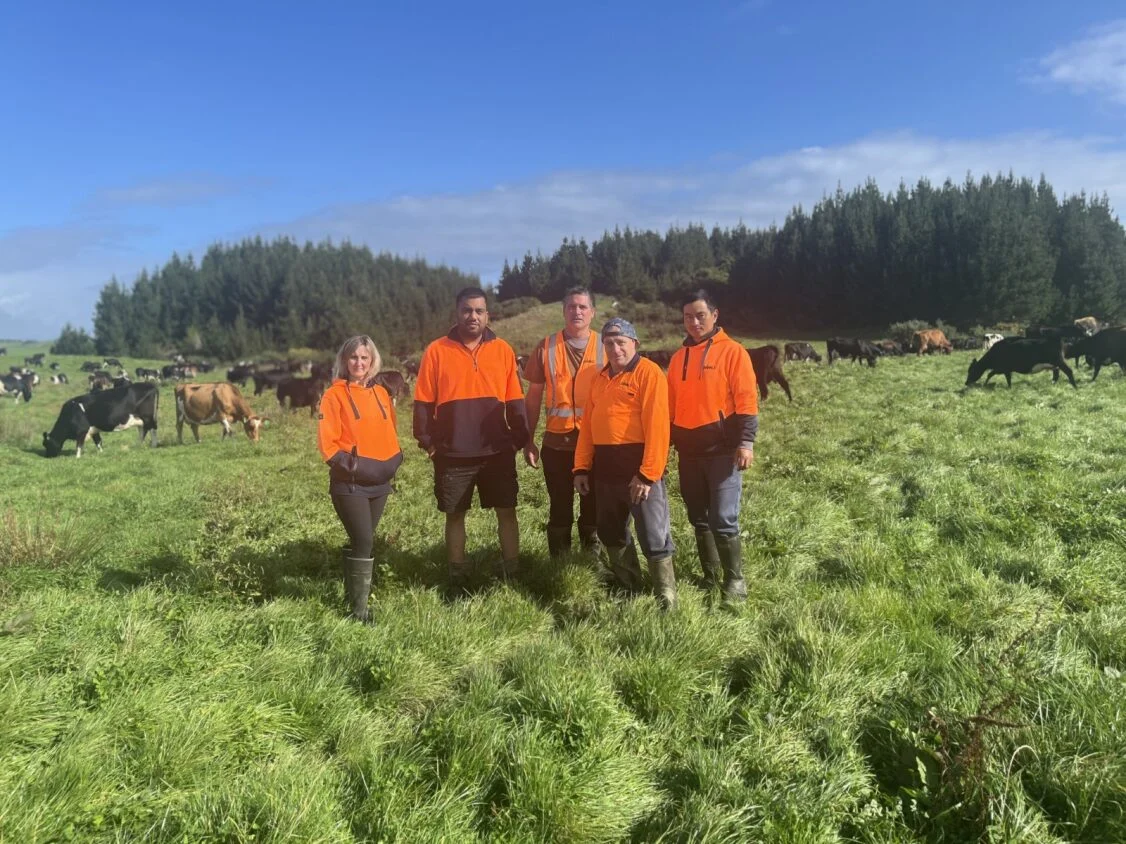
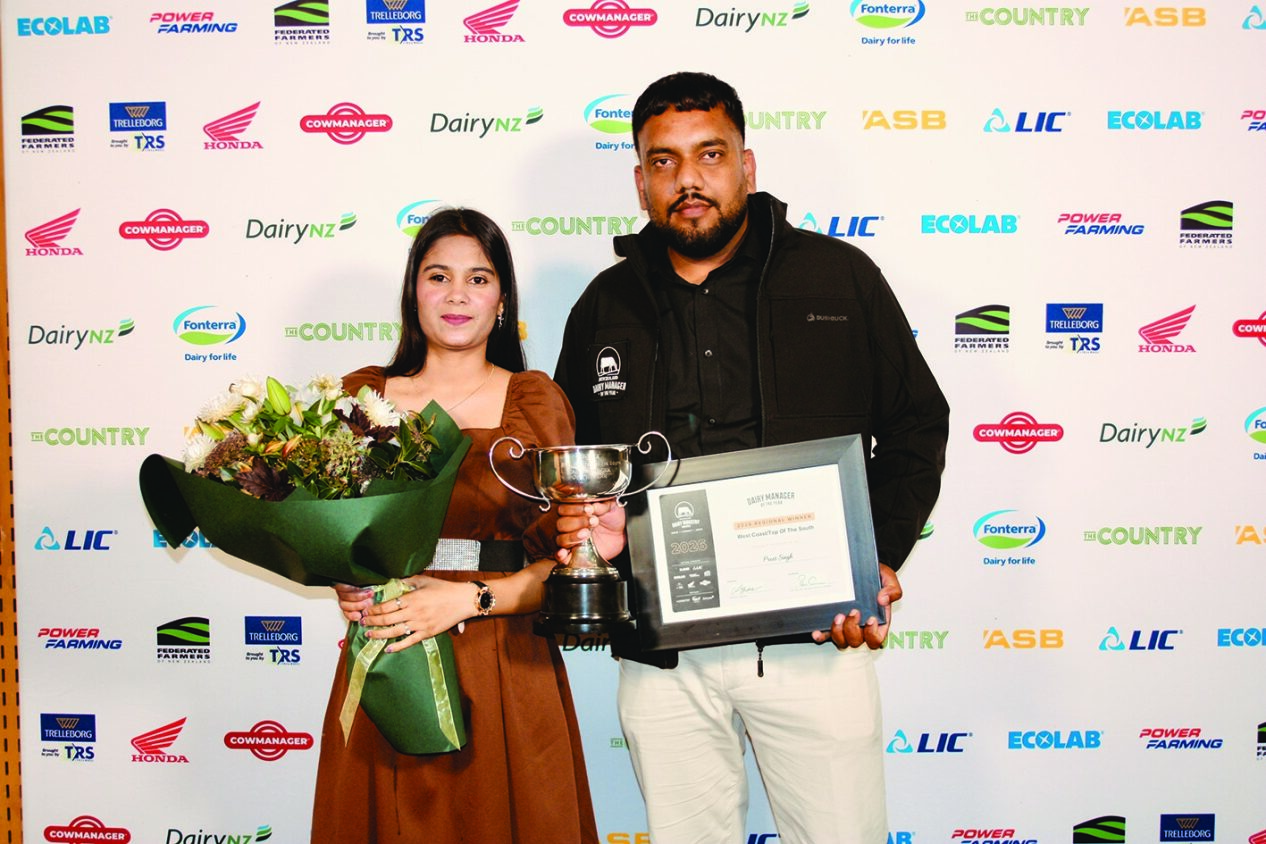
Westport dairy manager Preet Singh has won the West Coast and Top of the South Dairy Manager of the Year title at this year’s New Zealand Dairy Industry Awards.
He also won a merit award in livestock management, after a closely contested competition against his farming neighbour.
Farming at Cape Foulwind on the rugged West Coast, Preet describes the contest as a tough one. “I thought I was going to lose, but I won, so no complaints,” he says.
A key focus of the competition was detailed work around Halter, the electronic halter collars that monitor cow activity, feeding and health. With a fellow contestant and neighbouring farmer also experienced in Halter, Preet genuinely felt the result could have gone either way.
First entering the awards two years ago, Preet says re-entering this year was about recognition for consistently achieving strong on-farm results, particularly in production and reproductive performance. Mating results reached 78%, with a low empty rate of 9%. And he also had lowest empty rate in Pāmu farms last year in tough drought conditions.
Managing a peak of 950 cows through a 60-bail rotary, Preet emphasises careful herd management and attention to details on farm. “Somatic Cell Counts (SCC), production, and observing how the plant and milking system are running tell you a lot,” he explains.
The operation uses Milkhub, an electronic system that tracks individual cows’ milking, health, and production data. It also provides insights into how the milking plant is performing. “Milkhub also tells you about the plant, the wash, and even details like whether there’s too much air going through a cup.” Preet saysthe system is extremely helpful for staying on top of herd milking performance.
Strong results, he says, start before mating. “It’s essential to get blood tests and accurate BCS of the herd before pre-mating, so we know what our cows are lacking,” he explains.
“With low BCS cows we put them on OAD[1.1] so they can recover well and recycle, especially two and three-year-old cows. They are the hardest ones to get in calf. We use PG shots on all our heifers to get better results through them too. Once those cows recycle you can put them back on twice a day.”
He also stresses the importance of mineral management in spring. “Don’t compromise feeding minerals to cows in springtime. Especially in those heavy rainy days in spring, if you think cows are not getting enough minerals through Dosatron or water supply (Cows drink less water in wet conditions) buy some of pre-mating lick blocks and put them in laneways so cows can lick it on the way to the shed and out.”
Preparation for this year’s awards focused on refining practices highlighted by previous judges’ feedback. “One of the judges from last time I entered asked if I had done anything new. They said: ‘I don’t want to see the last presentation, I want to see something new’. That feedback helped me present myself better,” Preet says.
He says the guidance encouraged him to focus on improvements and present his achievements more clearly.
Preet also acknowledges the role of his Pāmu team and corporate support in achieving results.
“Working for a corporate you get support, people working in different areas being able to share and support. Working in a corporate is really beneficial,” he says.
It has been almost five years since Preet started on the Pāmu farm at Cape Foulwind. Before that, he spent five years dairying in Waikato, two years in South Canterbury and two years further south.
While the West Coast brings its share of wet weather, Preet says it also offers generally warm conditions, which he enjoys.
This month Preet is travelling to Rotorua to compete at the national New Zealand Dairy Industry Awards, where he will go head-to-head with other regional winners.
