
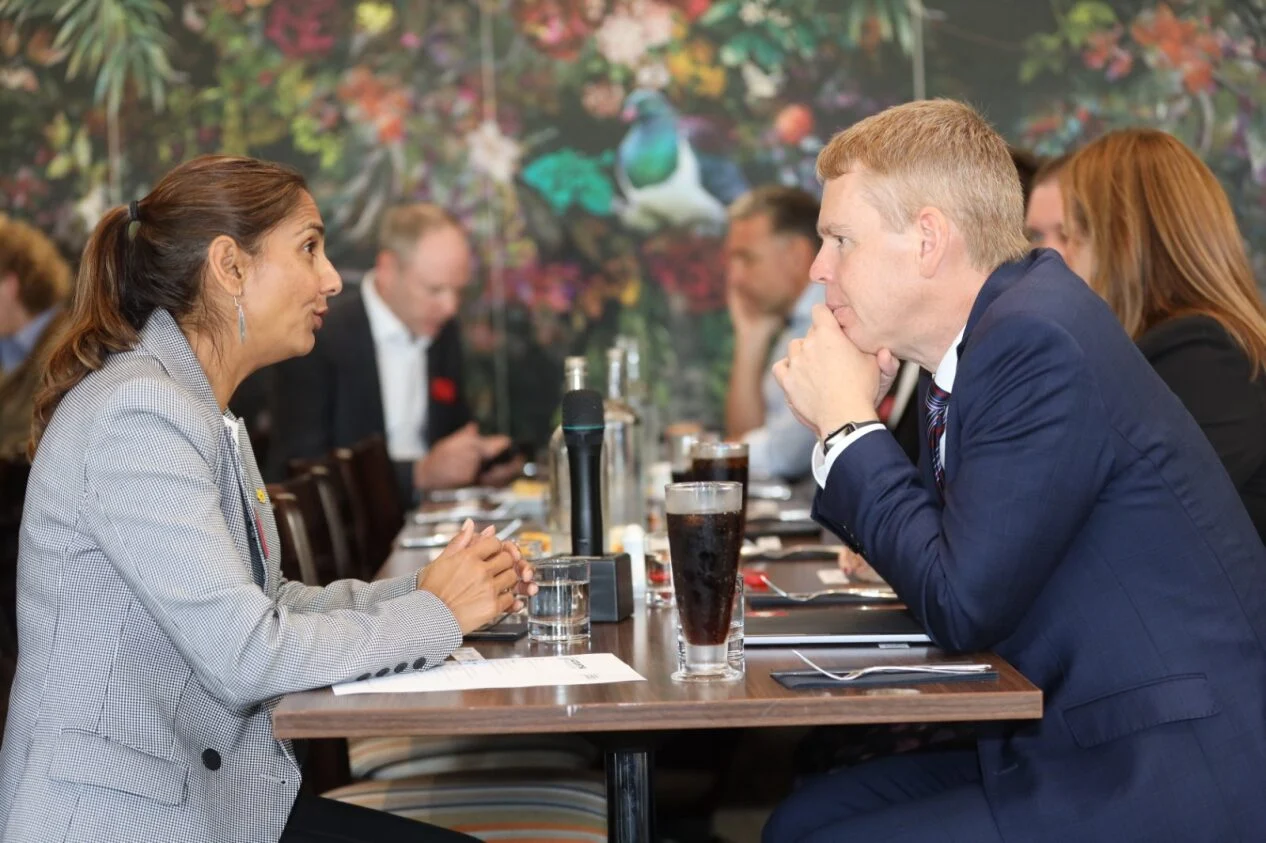
“Making sure that we've got the renewable energy generation and that we're supporting businesses to make that transition, we'll have more policy on that coming shortly.”
That indication from opposition leader Chris Hipkins after pledges to business leaders at last Tuesday’s Nelson Tasman Chamber of Commerce event as the local economy feels the pinch from eye-watering fuel prices driven by unrest in the Middle East and ongoing low productivity.
While no formal policy announcement was made, Chris says jobs in sectors such as manufacturing in Nelson are less vulnerable if energy costs are reduced. Chamber chair Venus Guy also raised concerns about low productivity, which Chris says could be improved through renewable power sources such as solar.
Nelson Tasman’s productivity sits 18 per cent below the national average, according to the Nelson Regional Development Agency.
Electricity costs were also a factor in Eves Valley Sawmill closing last year, resulting in 142 job losses.
“Focusing on solar panels, focusing on supporting businesses, focusing on an electricity market that doesn't incentivise windfall profits, which we're seeing at the moment,” Chris says.
“A renewable energy focus is one of the best things for a region like Nelson, where you have such a strong presence of those types of industries and businesses here, food processing, forestry processing, huge opportunities for this region.
“If we want to keep those jobs that are associated with manufacturing, that are associated with food processing, we're going to have to de-carbonise our energy needs.
“You can have a strong industrial economy based on renewable energy and not based on fossil fuels, and if we don't make that transition, that's what's going to drive deindustrialisation.”
Plugging on when there’s changes in government so that long term continuity and stability around big investments remain is also on Chris’s radar.
“The reason things cost so much money for us is that we're constantly reevaluating things, and every time you reevaluate them, every time you do another business case, you're adding more dollars onto the other end of it,” he said.
“We won't be changing things that don't need to be changed, we'll be focused on building from where we are now, and we'll have a really clear sense of our priorities going into government should we win the election.”
