
Architecture that puts people first is being celebrated across the region. From a humble parklet on Queen Street to a carefully crafted hill‑side home and a culturally grounded school block, three local projects have claimed honours at the Te Kāhui Whaihanga New Zealand Institute of Architects’ Regional Awards.
Queen Street parklet wins architecture award
Intimate, humble, and a “creative response to a car-dominated area” that “supports more sustainable urban living”.
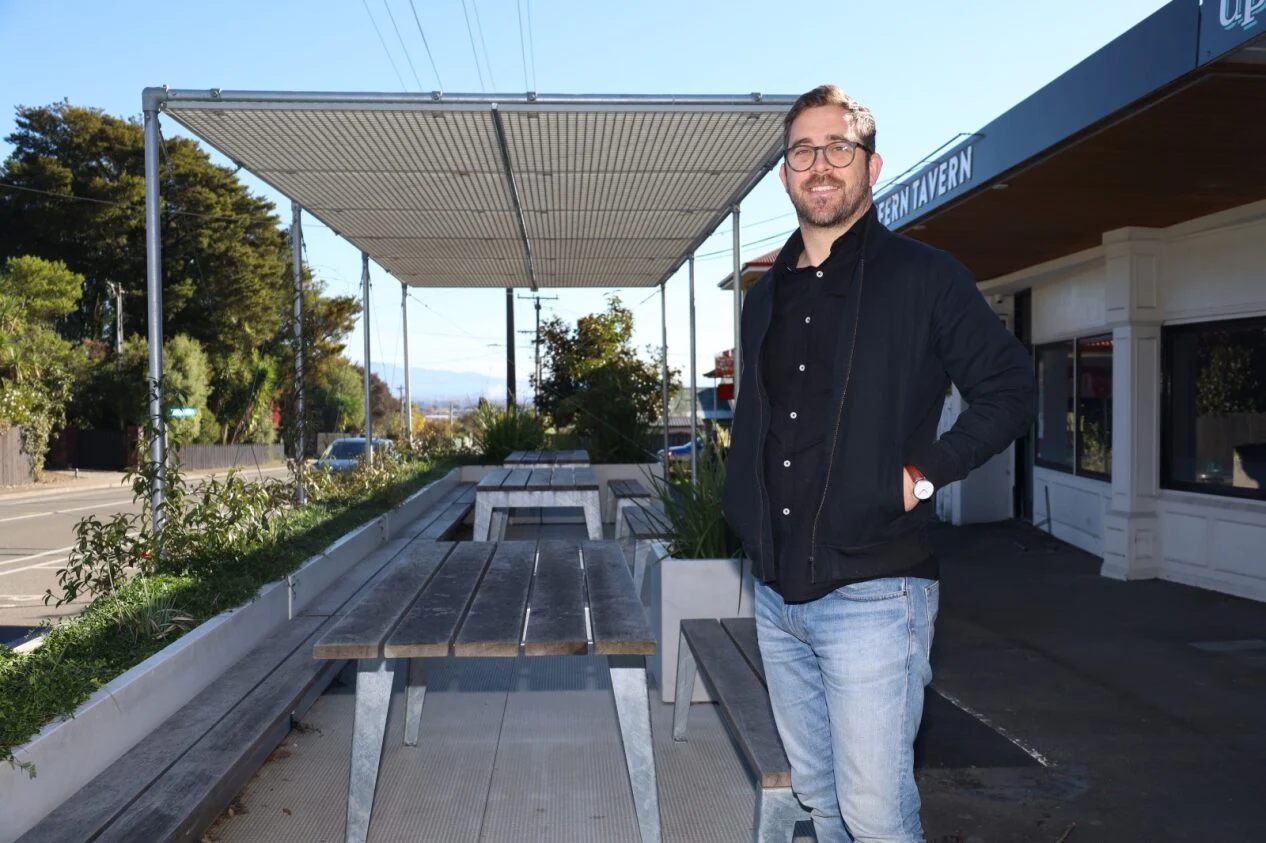
Queen Street Parklet located outside the Sprig + Fern and fish and chip shop was decorated at the recent Te Kāhui Whaihanga New Zealand Institute of Architects’ Regional Awards.
Designed by Nelson architect William Samuels, it was one of fourteen recognised top of the South Island architectural projects.
The project was delivered as part of the NZTA Waka Kotahi Streets for People programme, alongside Tasman District Council’s introduction of dedicated cycle lanes on key Richmond roads.
William says the parklet was designed as a flexible, human-scaled space that enriches street life and invites people to pause, connect and enjoy their surroundings.
“This is a project which is quite humble in nature and with a limited budget, so to be recognised within the public architecture category was very special, because that category is usually reserved for much larger, civic-scale projects,” William says.
“It is an exploration of an unusual way to use the streetscape, but it provides value to the community.”
The parklet includes a small seating area, bike parking and space for a coffee cart, which is expected to arrive in due course.
A key design intent was to introduce greenery to the street.
Large planter beds coil around the parklet’s outer edges, providing planting space while also acting as a safety buffer from the roadway.
Low groundcovers cascade over the sides, climbers extend across the canopy and larger trees provide additional shade.
The canopy is formed using proprietary mesh panels designed to filter light and cast soft, dappled shadows.
A linear lighting strip through the centre of the canopy allows the space to be used safely after dark.
Queen Street Parklet has been designed so it can be removed or relocated if required.
Central Nelson's Flow House wins architecture award
Nestled on a central Nelson hill is an infill architectural marvel demonstrating sustainability and how unnoticed sites can be transfigured, with every nook and cranny reflecting its owners’ lifestyle.
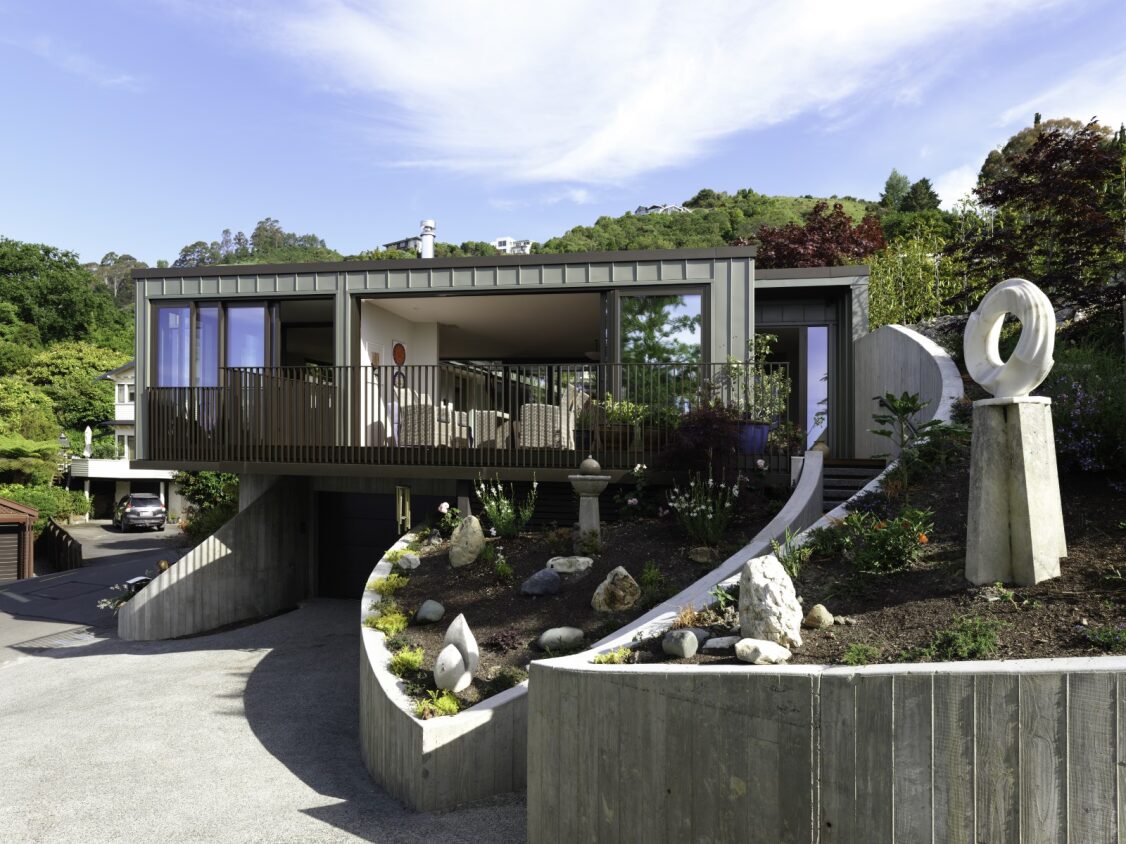
Flow House, designed by Nelson’s JTB Architects, was decorated in the housing category at the recent Te Kāhui Whaihanga New Zealand Institute of Architects’ Regional Awards, one of fourteen recognised top of the South Island architectural projects.
It also collected a Resene Colour Award.
Humbled by the gongs, JTB director Simon Hall feels fortunate that Flow House exemplifies the quality that is possible in complex infill housing.
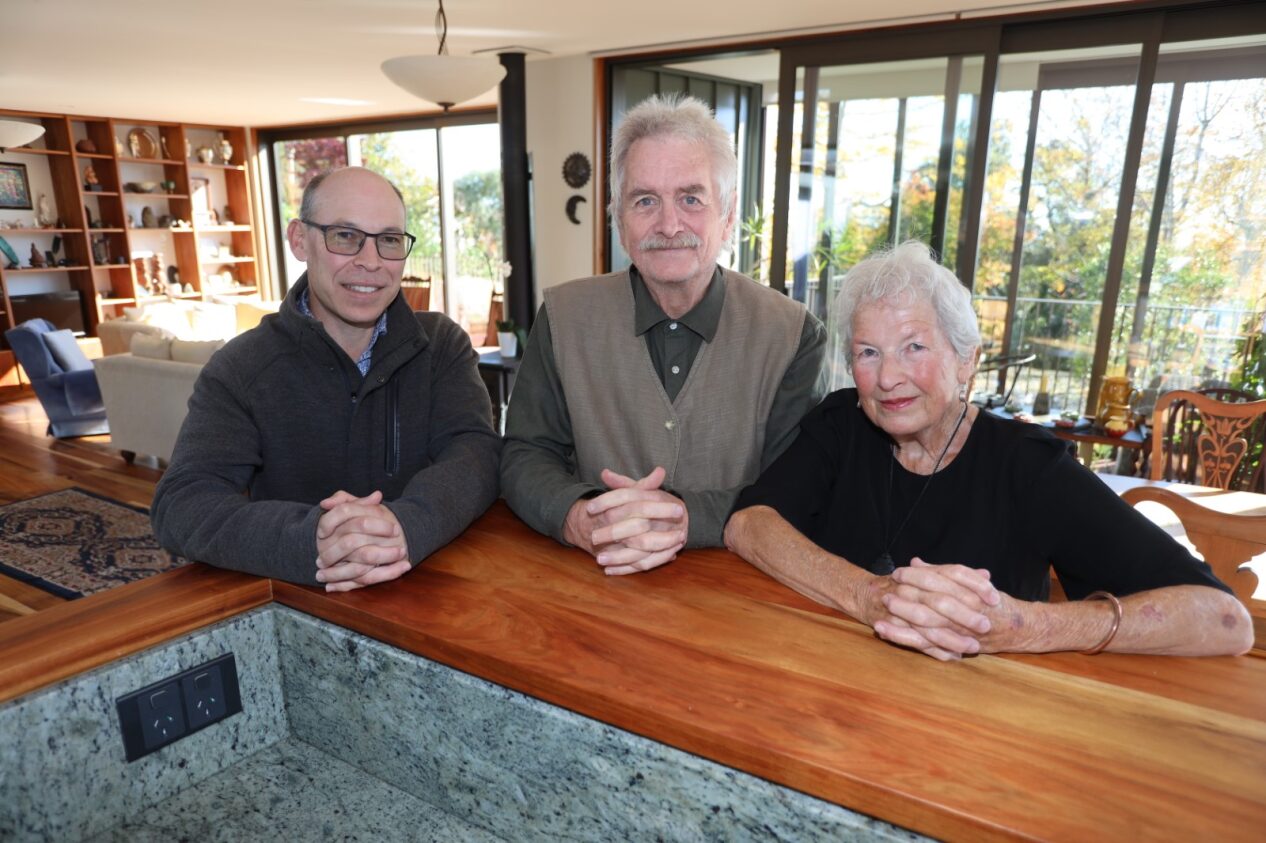
Flow House owners Burke Hunter and Susan Hawthorne shaped plans for the urban oasis for their twilight years in 2020.
The site posed challenges with a 21-month build on the steep terrain getting underway in 2023.
Drawing on their overseas experiences particularly in Mexico, the design evolved into a courtyard layout centred on a water feature that collects rainwater from the roof via a rill from the covered deck.
Every detail was carefully considered, from the warmth of timber underfoot to framed views of the sky from the shower.
The courtyard layout improves airflow and comfort, provides privacy to bedrooms, and brings natural light, shelter and passive ventilation into the home.
Solid blackbutt timber is used throughout for flooring, cabinetry and trims, selected for its durability and timeless character.
Large thermally broken windows offer views across the Maitai Valley, Kaka Hill, Nelson Haven and the Western Range, while a north-facing winter garden helps manage seasonal change.
Off-form concrete shapes both the building and the surrounding terraces, with curved lines echoing the natural rhythm of the terrain.
The green zinc cladding is designed to patina over time, blending with the natural surroundings.
Burke says the trapezium shaped space he and Susan put their stamp on was also a “spirit house”, and one his architect father would have approved of.
“A trapezium, in Native American geometry, is sacred, where the four directions, north, south, east and west, earth, fire, water and air, come together in spirit,” he says.
“Simon and his creative team helped us to have a spirit house that my dad would be delighted about. Building a trapezium house is guaranteed to be a challenge, but there are great rewards that come.
“On behalf of Simon and the team, the electrician, the plumbers, the joiners, everybody was pushed to their absolute limits of self discovery, and they all did.”
Block’s top marks
Arthouse Architects really knows its onions when it comes to designing award-winning buildings.
One of the Nelson-based firm’s latest installments, which it collaborated with Christchurch-based Sheppard and Rout Architects to achieve, was decorated at the recent Te Kāhui Whaihanga New Zealand Institute of Architects’ Regional Awards for elements which grew on the judges.
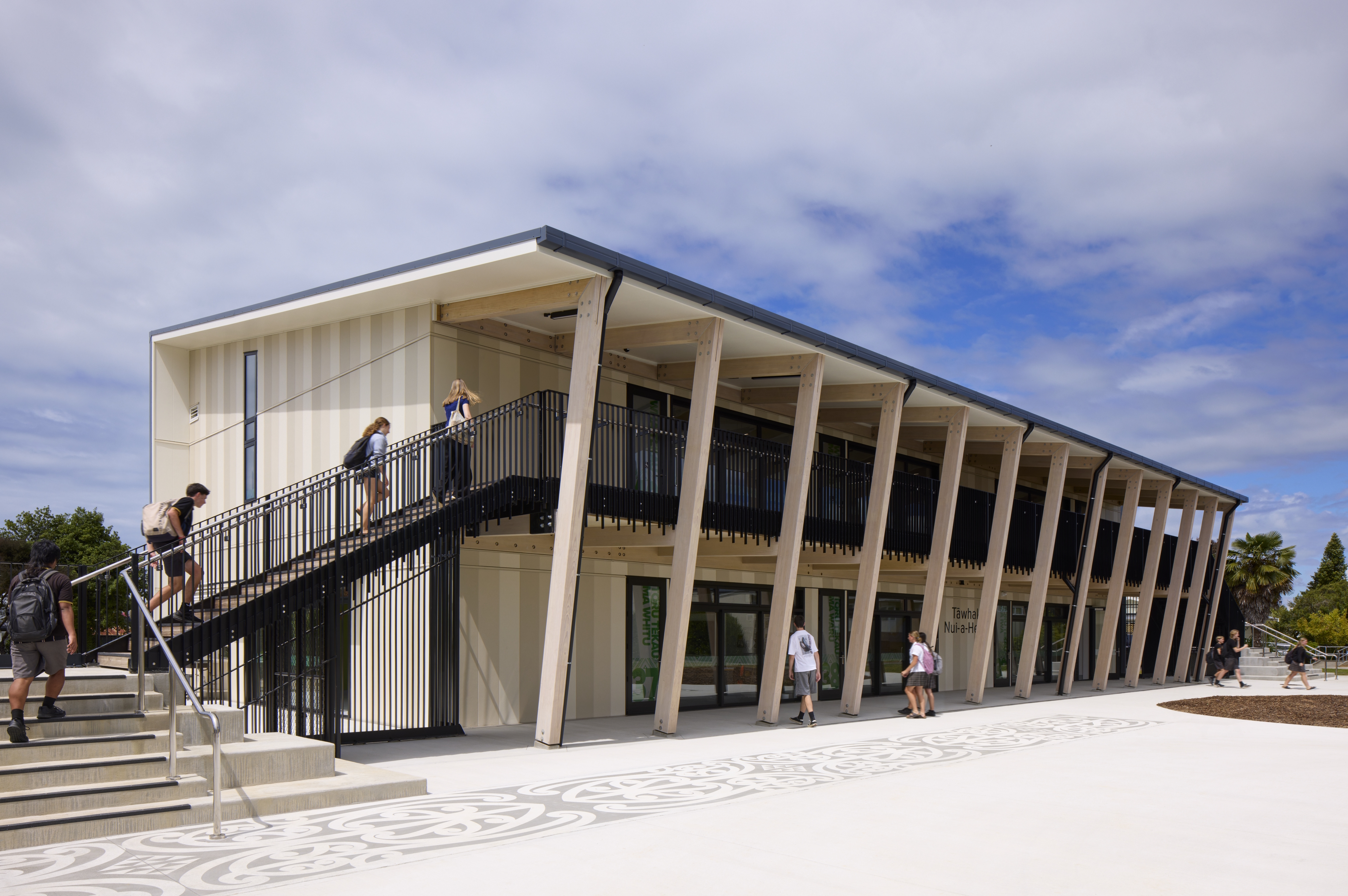
Motueka High School’s maths and horticulture block (Tāwhaki Nui-a-Hema) which opened in early 2025, drew on a cultural narrative and the two-storey modular building celebrates carbon sequestration with its chosen materials and its natural light cultivates an inspiring space for maths and horticulture knowledge.
Arthouse Architects director Renée Williamson says receiving another award was appreciated, particularly for a school project.
“The fact that school buildings can achieve such amazing outcomes in terms of sustainability and carbon capture through the use of mass timber, which offsets a lot of carbon, was really rewarding,” Renée says.
“There’s a lot of hard work that goes into these projects and it’s important that people take time to acknowledge that.”
The block houses six classrooms, unisex and accessible toilets, a lift, a staff resource room and practical interior spaces that connect directly to greenhouses and gardens.
Renée commended the input of local iwi representative Rōpata Taylor for the building’s design aspects to make it more bespoke to Motueka.
Its design draws on the legend of Tāwhaki Nui-a-Hema, weaving cultural storytelling into both form and material choice.
“Because the use of the building was maths and horticulture and the legend of Tāwhaki, it was a lot to do with the counting of kūmara and the growing of vines related to mass, so the way we represented that in the building was the tonal changes around the cladding,” she says.
“These were vertical boards representing the long tendrils coming down from heaven. In the Māori legend, they counted in factors of ten, so each classroom has 10 hexagons on the wall to represent the 10 kūmara that were counted.
“We also tied in local history around the native forests that once covered the Motueka area, where crops were grown beneath large trees for protection.
“The roof form rises like a tree canopy, while the columns along the front represent tree trunks and the crops below. The growing of produce relates to students inhabiting and growing within the space.”
Others involved in the project included Arthouse Architects director Rachel Dodd, technician Jonnathan Callaghan and Ella van der Lingen from Sheppard and Rout Interiors.
Port Tarakohe Management and Amenities Building at Tākaka, holiday homes at Tata Beach and Kaiteriteri and a home at Kaiteriteri were also among the award winners.
