
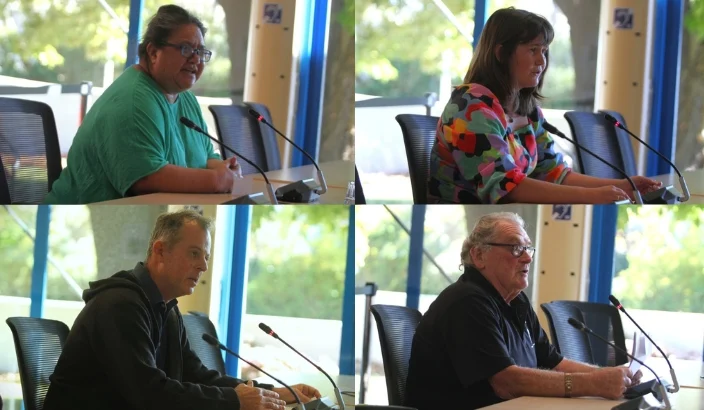
It took five hours to get through the 43 presenters who fronted Tasman District Council on Thursday to give their thoughts on its draft plan for the coming financial year. Here’s what they had to say.
Rates
Perhaps unsurprisingly, the proposed average rates increase of 9.9 percent was unpopular with many.
Peter Radford, representing the Tasman Community Group, said that fuel and food prices were already “crippling” residents.
“And you expect them to wear 10 percent more on their rates bill. If this isn’t stopped in its tracks now, there won’t be a ratepayer base to fleece.”
Citing the Bible and the national anthem, Sarah Priest thought the rates proposal was “actually corruption”.
“I can’t keep affording to keep paying these rates at this increase because I don’t get a 10 per cent PAYE increase in my earnings every year.”
Council operations
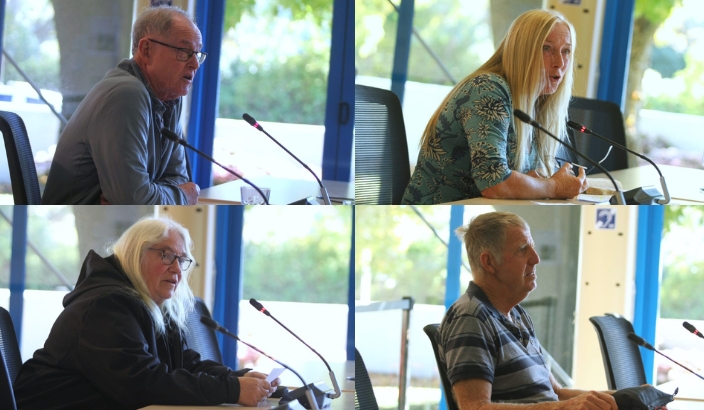
The way the council runs itself came under fire from several submitters, with several lambasting the council’s debt, staff, transparency, and communication with residents.
Richard Johns, who unsuccessfully challenged Tim King for the mayoralty last year, said there was no public trust in the council.
“You’re not going to make anything work until you actually build efficiency into TDC, and there is no incentive at the moment and, I presume, no will to do it.”
“Elected members must ensure the CEO makes drastic changes to the financial management and operations and the culture of departments in a fully accountable manner,” added resident Marion Satherley.
Tapawera Community Hub
The draft annual plan proposes moving forward with several community facilities but suggests pausing the Tapawera Community Hub.
The project has divided the small community, as shown by Thursday’s submitters.
Trish Palmer, representing the Tapawera and Districts Community Council, said a “briefly-run private survey” showed 222 residents wanted the project stopped, with just two supportive.
“Time needs to be taken to consult using correct and transparent information.”
Rachel Moffit, who works for community development organisation Tapawera Connect – which was driving the hub project – said the village’s existing facilities were not fit-for-purpose.
“We still do not have a safe, warm, accessible, flexible community space that can properly support multiple activities and services at the same time.”
Former deputy mayor Stuart Bryant agreed, saying the hub was “really important” and that Tapawera risked losing $500,000 of Government funding.
However, opponent Gary Polwart said the projected $156,000 annual operating cost of the hub would not be able to be met and said “granting wishes to small sections of the community” was not core council business.
“Instead of thinking about pools, hubs, play areas, and staff benefits, really concentrate on the people who can’t pay [their rates], and how you have set them up to possibly lose their home.”
Community facilities
Current economic conditions prompted several to oppose the other planned community facilities.
“As much as we support and would like the pool in Motueka, the Tapawera and Wakefield hubs, to go ahead, it’s a luxury the region cannot afford,” said Barry Evans.
However, the other facilities had their supporters too.
Richard Martin, representing the Wakefield Community Council, said that Wakefield had not seen significant council investment in decades, and that its residents had already contributed significant funds to its community hub through Reserves Financial Contributions.
“To deny the people of Wakefield this project is morally and ethically wrong.”
While Donna McLeod, in support of Motueka's pool, said the area's rivers and coasts weren’t safe due to debris and wastewater overflows, and that residents both needed and wanted a year-round, local, swimming option.
“We need this community asset. There is probably not one of my friends that I know of who hasn’t sold a raffle ticket or a sausage to us for this.”
Other matters
Adam Langley, representing the Split Apple Rock Owners’ Association, and Chris Rutledge, representing the Mārahau Sandy Bay Residents’ Association, separately submitted seeking a review and improvement of local forestry practices.
The area has been battered by storms in recent years, seeing slips and slash cause costly damage for residents and the council.
“The evident risks arising from commercial forestry on Separation Point granite are not matched by corresponding regulatory controls and mitigation measures,” Rutledge said.
Andrew Fenemor from the Eighty-Eight Valley Rural Water Supply Committee, and resident Robert Merrilees, also separately submitted about escalating costs for those who draw their water from the scheme.
Merrilees had been told that the costs were a result of Government regulations, but he said they were still impacting residents and grazers in the area.
“What’s the council going to do for those owners who can’t afford the water for grazing?”
Next steps
Tasman District Council is scheduled to deliberate on the submissions to its draft annual plan on Thursday 28 May.
The plan saw a total of 367 submissions from residents and groups.
Legislation requires that the council adopt its annual plan before July.