Community‑led restoration in the southern gateway of Abel Tasman National Park is getting a welcome boost, with Department of Conservation cadets pitching in to protect a small but ecologically important coastal catchment near Mārahau.
The Tinline Catchment, home to Tinline Stream, sits where native bush meets the park’s walking track network. It has become a focal point for collaborative restoration between the Department of Conservation (DOC) and the Abel Tasman Birdsong Trust.
The Birdsong Trust, a community‑led conservation initiative, has been steadily restoring the site for about six years, planting more than 3,000 native trees and shrubs. The aim is simple but vital, to rebuild food sources and habitat so native birdsong once again defines the landscape.
Trust coordinator Abby McCall says each planting season brings increased maintenance demands, making support from DOC both practical and deeply valued.
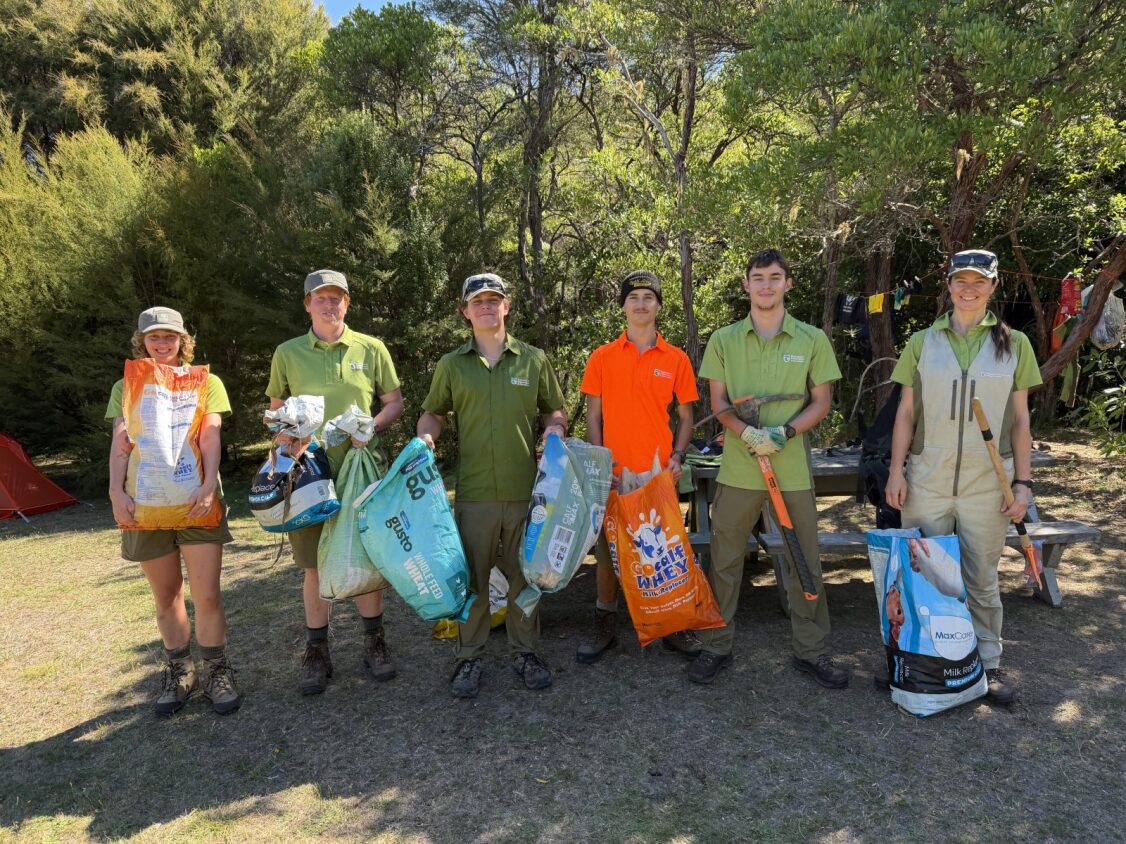
Recently, 10 Kaihonoa Taiao cadets from DOC’s Te Pū Hono programme joined the restoration effort, working alongside Trust volunteers and DOC staff. Led in part by Geordie Wilson, the cadets spent several days camping in the catchment and undertaking intensive site work.
Their mahi included removing about 60kg of montbretia bulbs, clearing invasive bracken and blackberry, treating gorse, and maintaining trap lines to support predator control.
For the cadets, the experience provided both hands‑on training and meaningful conservation work.
Geordie says that, only a few months into their DOC cadet three‑year programme, the experience has helped prepare the team for the work ahead.
“It was stunning country to be out in and really beneficial for us to go there and learn heaps,” he says. “The work we did was needed, the plants were struggling with all the weeds. It was great to make sure the volunteers’ hard work planting wasn’t for nothing.”
He also notes some native plants were shaded or cramped by weeds and not getting enough room to grow.
DOC cadet programme lead Lacey Beadle says the collaboration is a strong example of Te Pū Hono’s purpose, building capability while contributing directly to conservation outcomes.
“The team took great pride in the contribution they made,” Lacey says. “It was good, honest mahi and the outcomes were clearly visible across the site. They felt privileged to be able to strengthen the capacity of local teams and support community‑led initiatives.”
For Abby and the Birdsong Trust, the impact was immediate.
“The help from the DOC cadet team has taken the pressure off and reduced the need for contractor costs,” she says. “The more we plant, the more maintenance is needed, so this support has eased some stress off.”
Together, DOC, the cadet team and the Birdsong Trust are showing how shared effort can accelerate restoration in sensitive ecosystems like the Tinline Catchment, where every cleared weed and every planted sapling contributes to the long‑term return of native birdsong.
