
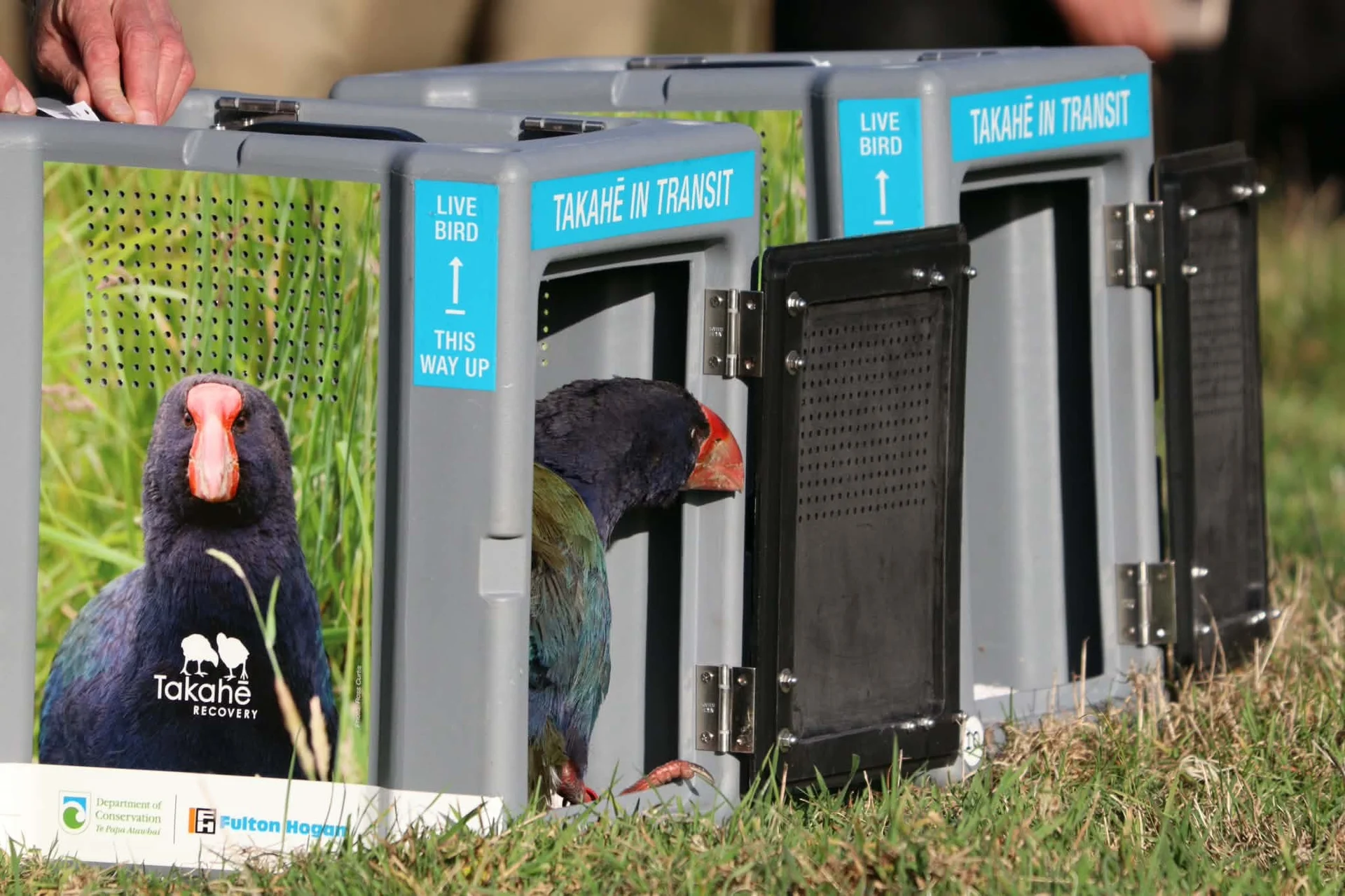
Takahē are now roaming at the base of Onetahua Farewell Spit in Golden Bay after eight birds were released there this week.
The relocation follows the completion of a predator-proof fence stretching across the base of the spit, alongside extensive ongoing pest control work, supported by Manawhenua ki Mohua, Pest Free Onetahua, HealthPost Nature Trust and the wider community.
Department of Conservation Golden Bay operations manager Ross Trotter says it is incredible to see takahē at Onetahua.
“Onetahua is an internationally recognised ecosystem with incredible biodiversity values, and it’s great to see the nationally vulnerable takahē added to the mix.
“It’s a popular visitor site with some fantastic walks and visitors having the chance to see takahē while naturing here will really add to that experience,” Ross says.
He says the project has been driven by a huge community effort, with major contributions from Manawhenua ki Mohua, Pest Free Onetahua and HealthPost Nature Trust.
“It’s through the work of many we’ve gotten to this stage, and it shows the difference we can make for nature when we all pitch in.”
Ross reminds visitors to give the takahē plenty of space, particularly during breeding time and when they have chicks, saying people play a crucial role in helping the birds succeed by keeping a respectful distance.
“This is a trial sanctuary site for takahē, and we’ll be closely monitoring the birds to make sure they are settling in well.”
Manawhenua ki Mohua, which represents three local iwi – Ngāti Tama, Te Ātiawa and Ngāti Rārua – has provided cultural leadership for the project.
Chair Margie Little says the group has brought whakapapa connections to place and the authority of kaitiakitanga to the work.
“This new location will also allow people to view this once-thought-to-be-extinct taonga species. Our hopes are that the takahē will flourish in their new home and ensure their survival for future generations in Mohua.”
Te Rūnanga o Ngāi Tahu and Ngāti Apa ki te Rā Tō also supported the translocation kaupapa.
DOC Takahē Recovery Programme sanctuary sites lead Phil Marsh says the eight takahē were moved from Gouland Downs in Kahurangi National Park to Onetahua on Wednesday.
DOC is winding down the Gouland Downs trial site, taking valuable lessons that will help guide future decisions about where to establish new wild populations.
“It was bittersweet to move these birds. Gouland Downs was the first wild trial site outside of Fiordland for takahē, which was a major milestone for the species’ recovery,” Phil says.
“First released there in 2018, Gouland Downs was chosen because it had low pest numbers, extensive trapping, reasonable habitat, a relatively mild climate and was fairly accessible for monitoring.
“However, the takahē didn’t thrive as well as we had hoped. The food sources weren’t as good as we thought they would be, adult survivorship was lower than expected and there were struggles with successful breeding to keep the population going.”
Phil says the silver lining is the impact those lessons have had on the recovery programme.
“Choosing new wild sites is a complex balance of food and habitat availability, predator numbers, climate, terrain and the logistics of moving and monitoring the birds, and we now understand these things in more detail.
“These lessons gave us confidence to set up new trial sites in the Greenstone and Rees valleys, where it looks like the birds are doing well.
“We’re excited to build on this knowledge at this new sanctuary site in Onetahua.”
DOC’s Takahē Recovery Programme, supported by national partner Fulton Hogan and the New Zealand Nature Fund, aims to establish multiple self-sustaining wild populations of the threatened native bird.
The programme works closely with Te Rūnanga o Ngāi Tahu, recognising the species’ special cultural, spiritual and traditional significance, and includes breeding, research and monitoring, identifying and establishing wild sites across the South Island, and advocacy for takahē protection.
