
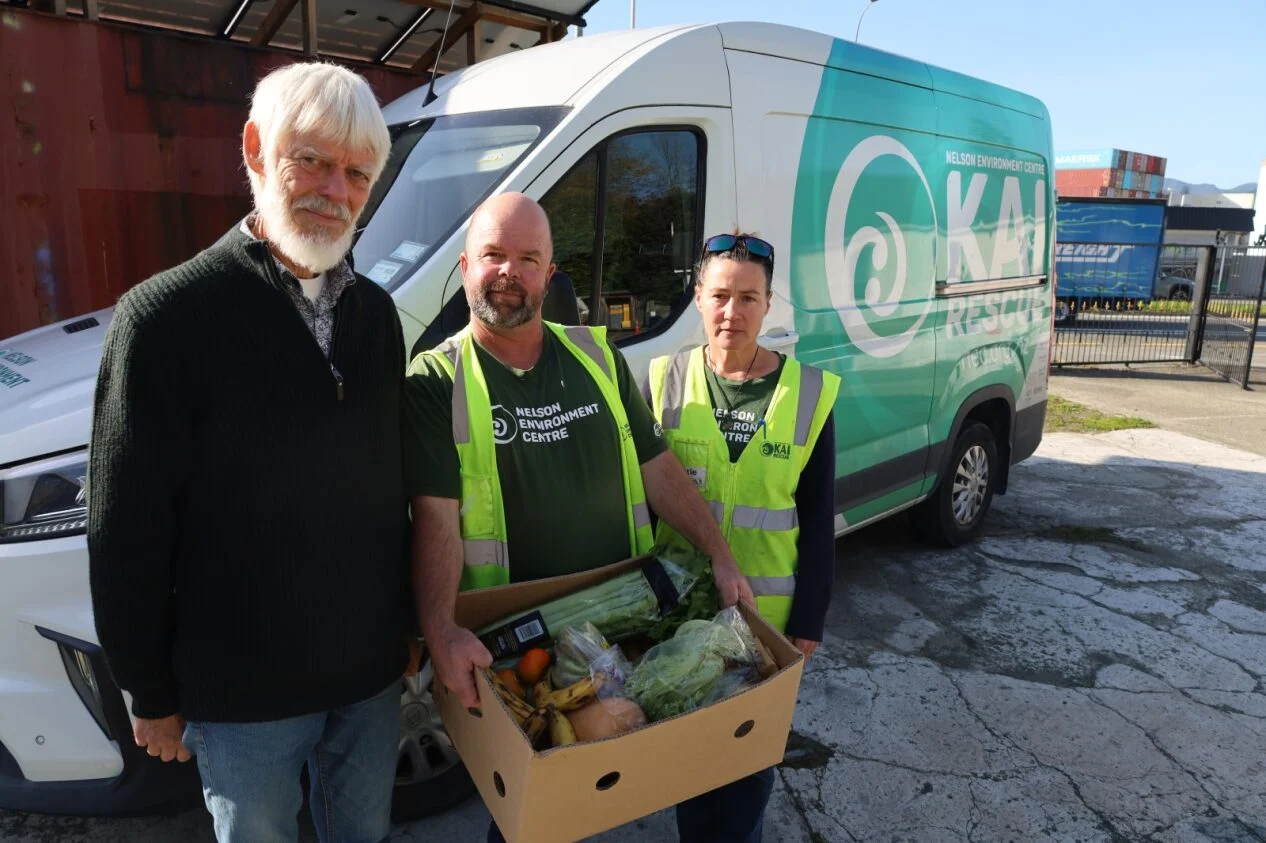
The Nelson Environment Centre’s Kai Rescue programme has stepped back from the threat of closure thanks to council funding and a surge of community support.
Last Wednesday, it was revealed that the food rescue service was at risk of shutting down at the end of June due to severe financial pressure.
However, as of Tuesday morning, funding from Nelson City Council and a wave of public donations has helped relieve the immediate pressure, although chief executive Andrew White says a long-term solution is still needed.
“We cannot find ourselves back in the same position. Absolutely not… Something’s got to change, this is a wake-up call.”
Kai Rescue was established in 2017 and rescues surplus edible food from supermarkets, growers, bakeries, manufacturers and other businesses before it goes to landfill.
That food is sorted and redistributed through more than 60 community organisations across Nelson Tasman, including schools, refuges, youth services and community centres.
Each weekday, about 60 volunteers move one tonne of food, helping feed about 3,000 people a week. Since launching, the programme has diverted more than 1500 tonnes of food from landfill.
“There’s a lot of people on struggle street, and we now have a waiting list of community organisations wanting to access Kai Rescue,” Andrew says.
He explains that Kai Rescue relies on funding, grants and donations, and has been operating with little financial buffer for several years.
“As we track our cash flow going forward, we’ve been on the edge with no reserve for a couple of years now, living week to week.”
He says the public response since the funding crisis was announced has been overwhelming.
“We’ve had an unbelievable response. The network is incredible. I’ve been blown away, quite frankly.”
In recent days, the organisation has secured $10,000 through Nelson City Council’s community investment fund, while community donations have also flowed in.
“We’ve received just over $20,000 from around 90 donors. We are just so chuffed,” Andrew says.
Their landlord has also offered discounted rent, which will save them around $2,500.
Despite the immediate relief, Andrew says a long-term solution is needed.
“I don’t think that this sector can continue to operate on a knife’s edge. I don’t think it’s right, and it’s not sustainable, so there needs to be a better model around how we deliver in the community and environmental sector.”
He says the challenges facing Kai Rescue reflect wider pressure across community organisations nationwide.
“The reality is hard. Across Aotearoa, charities like ours are feeling the squeeze as funding shrinks and community need grows.
“It’s really woken up our community about how vulnerable the environmental sector is, and that actually to keep these sorts of things going is really tough.”
Andrew says the organisation now needs to build resilience and secure sustainable funding.
“It’s important that we support our less privileged people in this community.”
Kai Rescue has an annual operating budget of about $270,000 and the centre is aiming to raise $40,000 by the end of June.
Nelson MP Rachel Boyack says losing the service would have major consequences.
“It would be a disaster for our community if the Kai Rescue programme had to close. If the service stopped operating, thousands of Nelsonians would be unable to access food, and a significant amount of food waste would end up in landfill.”
To donate or find out more visit www.nec.org.nz/donate or contact Andrew at andrewwhite@nec.org.nz
