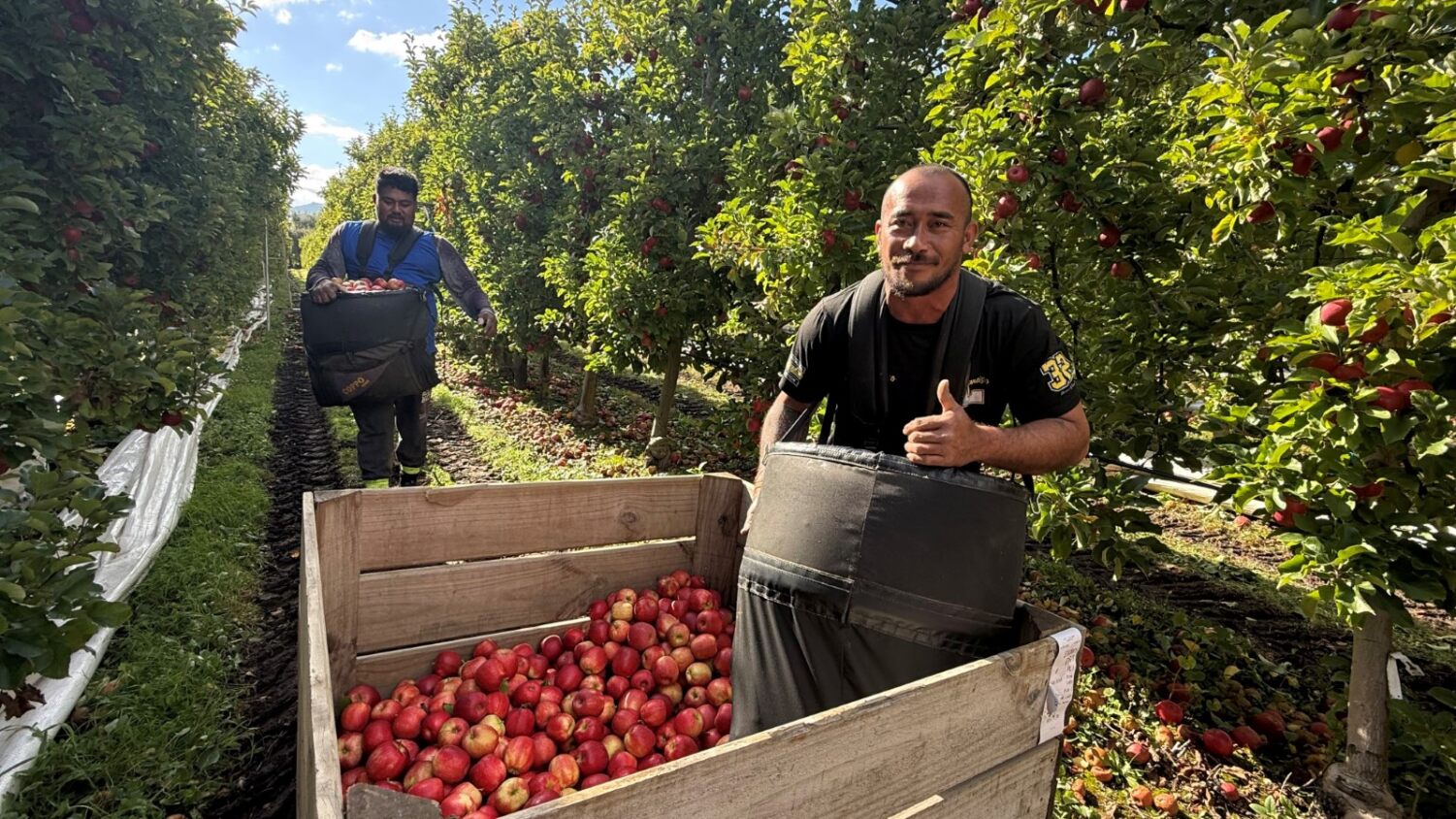
The 2026 apple harvest in the Tasman region has wrapped up as one of the strongest in recent memory, with solid yields, exceptional fruit quality and favourable market conditions reported across the sector.
Steve Thomas, of Thomas Brothers Orchard in Riwaka, says the season has been one to remember.
‘It’s been a standout year. No disasters, great weather through harvest, and generally, the yields have been up. The market has a good appetite for the fruit, which is exciting,’ Steve says.
He describes a season where everything came together. ‘The weather, the market – the stars all aligned for this one.’
One of the biggest highlights has been the quality of fruit coming off the trees, with reject rates at historic lows.
‘The quality has been absolutely astounding. In regards to reject fruit used as sheep tucker or turned into juice, it’s been the lowest ever in recent years,’ he says.
Steve credits consistent moisture and calm conditions, with regular rain and no strong winds to damage or scuff fruit. The harvest ran from early February through to early to mid-May.
Duncan Cederman of Cedermans Orchards in Motueka reports a similarly positive season, with some variation across varieties.
‘This season’s apple harvest has delivered a solid overall result, with total volumes slightly up on recent years,’ Duncan says. ‘Later-season varieties such as Pink Lady and Dazzle performed particularly well, while early varieties like Royal Gala and Koru were slightly down.’
He says Royal Gala matured quickly, requiring tighter harvest timing, while later varieties held well on the trees.
‘Colour development improved toward the end of the season, resulting in good overall fruit finish, although some varieties, particularly Koru, did not reach the same standard,’ he says.
Weather again played a defining role. Higher rainfall through the early and mid-season created challenges, but Duncan says two to three weeks of settled weather at the end allowed growers to finish on a positive note.
Both growers report a smooth season on the labour front.
Steve says a higher unemployment rate has helped lift staff availability and quality, while Duncan says labour availability has been strong, supported by the Recognised Seasonal Employer (RSE) scheme, with only minor impacts from day-to-day illness.
Production costs have been mixed. Duncan says costs at Cedermans Orchards have remained relatively stable, while Steve says higher diesel prices have pushed up shipping costs for Thomas Bros.
‘A lot of our apples are shipped to the other side of the world, and shipping costs have risen,’ he says.
Export demand has been a bright spot this season. Steve describes export markets as ‘very strong’, with solid demand from China, the United States and Europe. Duncan says domestic sales have been slower, likely reflecting tighter household budgets.
Export demand has remained steady across Asia, Europe and the United Kingdom, despite some disruption in the Middle East due to ongoing conflict. Duncan says fruit has continued to move steadily out of cool storage. Both growers say Asian markets are increasingly shaping future planting decisions, driven by consumer preference for larger, sweeter, red-coloured apples.
‘There’s reduced cost getting it to the Asian market because it’s closer, and you don’t have to go through channels that get blocked,’ Steve says. ‘They’re also varieties that grow well and produce a high-quality apple.’
Duncan agrees, saying these trends are prompting a gradual shift away from some traditional varieties toward newer options that better meet premium market demand.
The recent New Zealand–India Free Trade Agreement, has added further optimism, although it is not yet in force and awaits ratification in both countries.
The agreement aims to open larger markets and reduce tariffs, helping New Zealand apples compete more strongly offshore and giving growers greater opportunities to lift returns over time.
With India representing a large and fast-growing consumer market, the deal is seen as a chance to diversify beyond traditional export destinations.
Steve says he believes the agreement will have long-term benefits. ‘The Indian FTA will definitely have an impact and should be a beneficial impact to growers,’ he says.
Duncan sums up the season as a positive one for the industry. ‘Overall, the season reflects a positive and steady performance for the apple industry, with encouraging export results and a clear direction for future growth,’ he says.
