
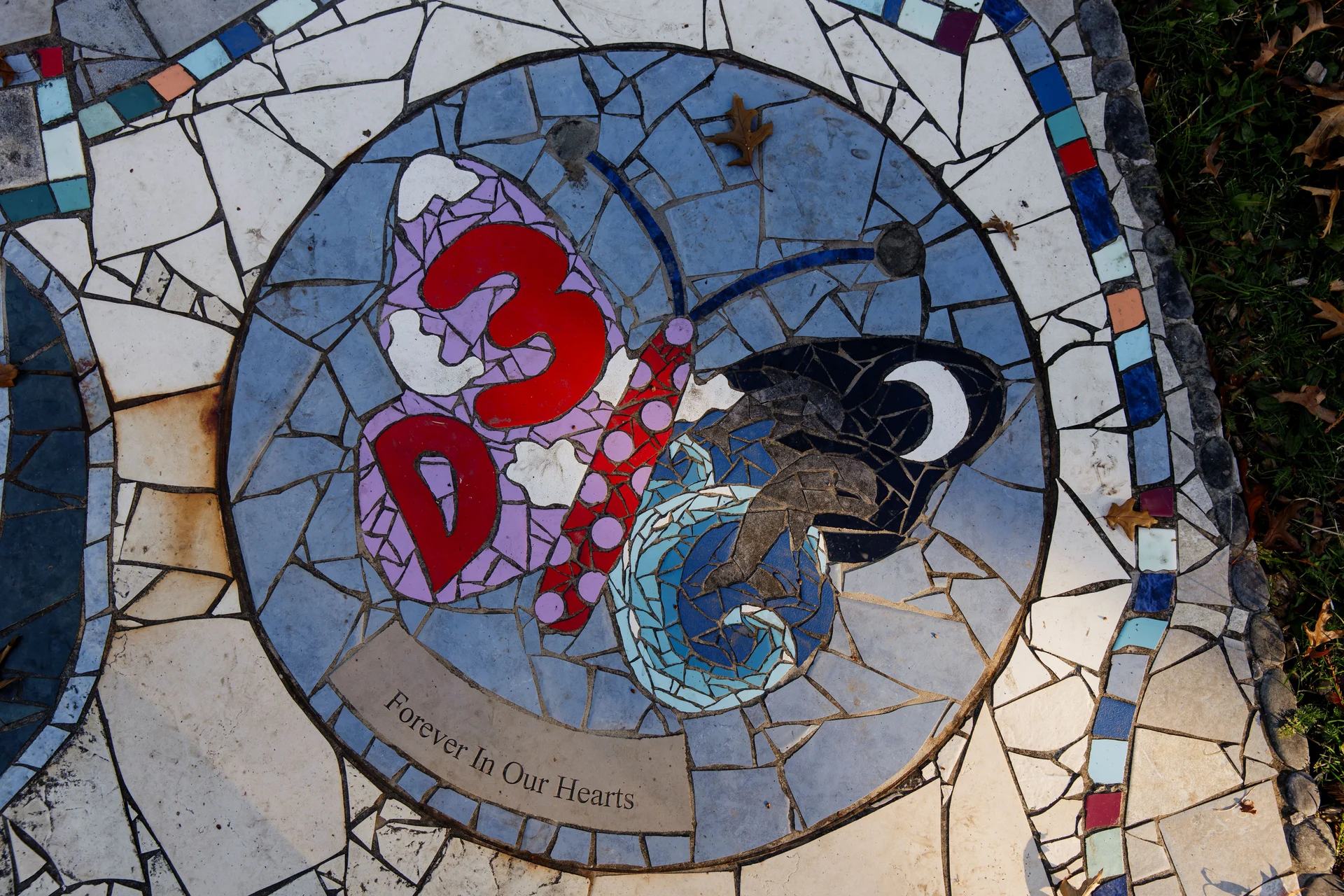
The utter despair of losing a child. How do you find your way out of the emotional abyss, and what can the rest of us do to support parents on such a journey? Britt Coker talks to two Nelson parents living with the enduring grief of losing a child, and how Project Butterfly helped them navigate life after loss.
For Gill Entwhistle, her son Alfie was two and a half when his life was tragically taken in the September 2009 tsunami in Samoa (the result of an 8.1 magnitude earthquake). As part of the grieving, Gill wanted desperately to connect with other parents who had gone through the same thing, driven by a desire to find people who truly understood what she felt. It was through this search that she discovered that there was no organisation available in Nelson to assist grieving parents. “You don't feel connected to anybody, apart from people that understand what it feels like to lose your child. It's a real, sort of primitive need to connect with people that understand.”
Gill and her husband supported themselves through the experience as best they could with the help of friends. The couple had settled here from the UK some years earlier, so didn’t have family nearby. “My partner, Gary, obviously, it hit him equally as hard. All our support was either in the UK, but the difficult thing was, all my friends had children that were the same age as Alfie, and it was just really hard for me to connect with my friends…It was the people that were helping me, ultimately, also it hurt me, so it was really tough.”
Gill’s inability at the time to find parents who were going through the same trauma, meant that in the years subsequent, she would initiate contact with others. “If I found out that anyone had lost a child, I just randomly found out who they were and got their number and contacted them. My counsellor at the time, said it's a really, really tapu space, almost like an underworld. You don't really get what it's like to be in normal society. You're in a different place and connecting with other people that know what that's like, I think that's a huge part of the healing.”
It was both, through this personal motivation and the conduit of a mutual friend, that she connected with Rebekah Malthus who had lost her son, MacAuley, in 2012.
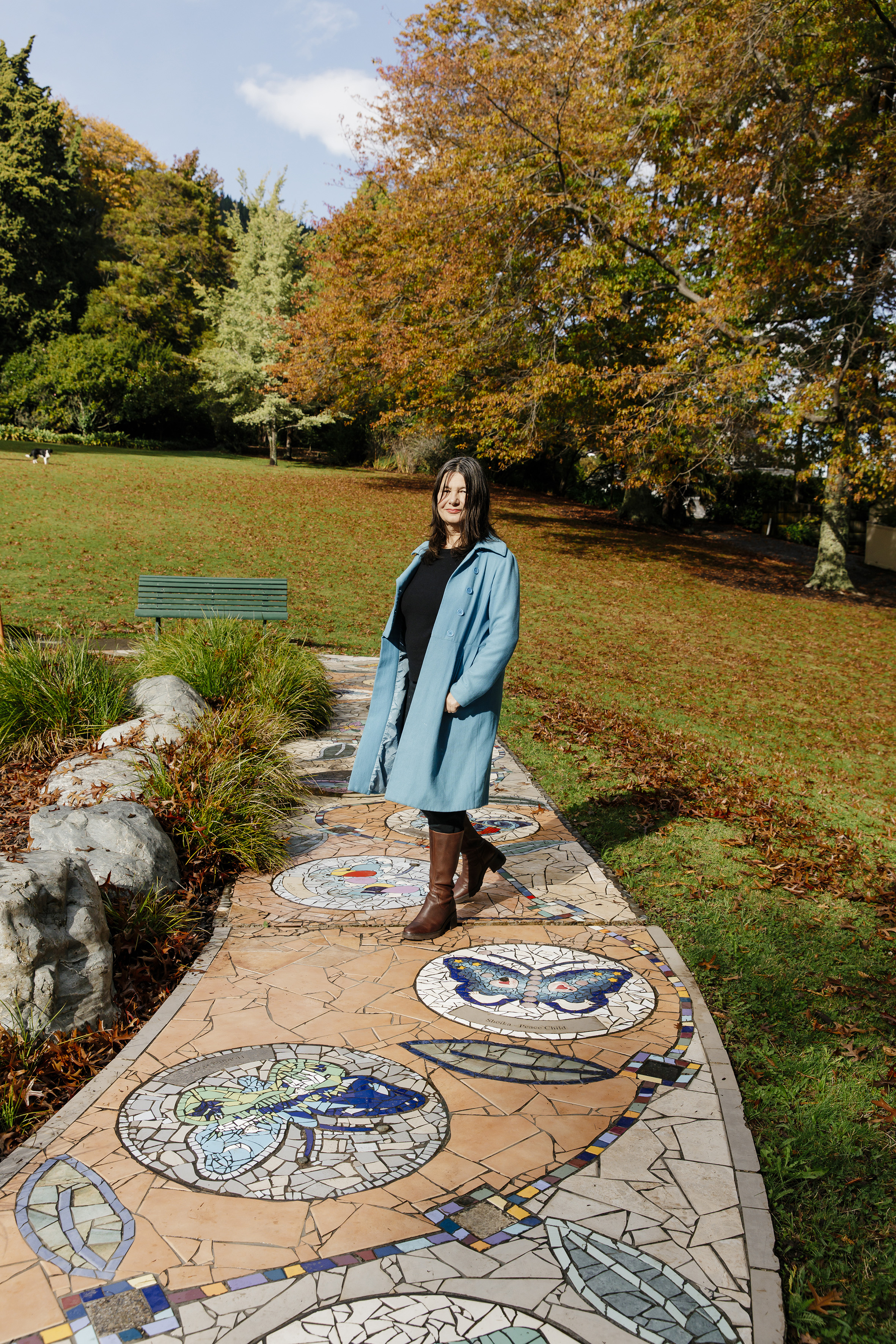
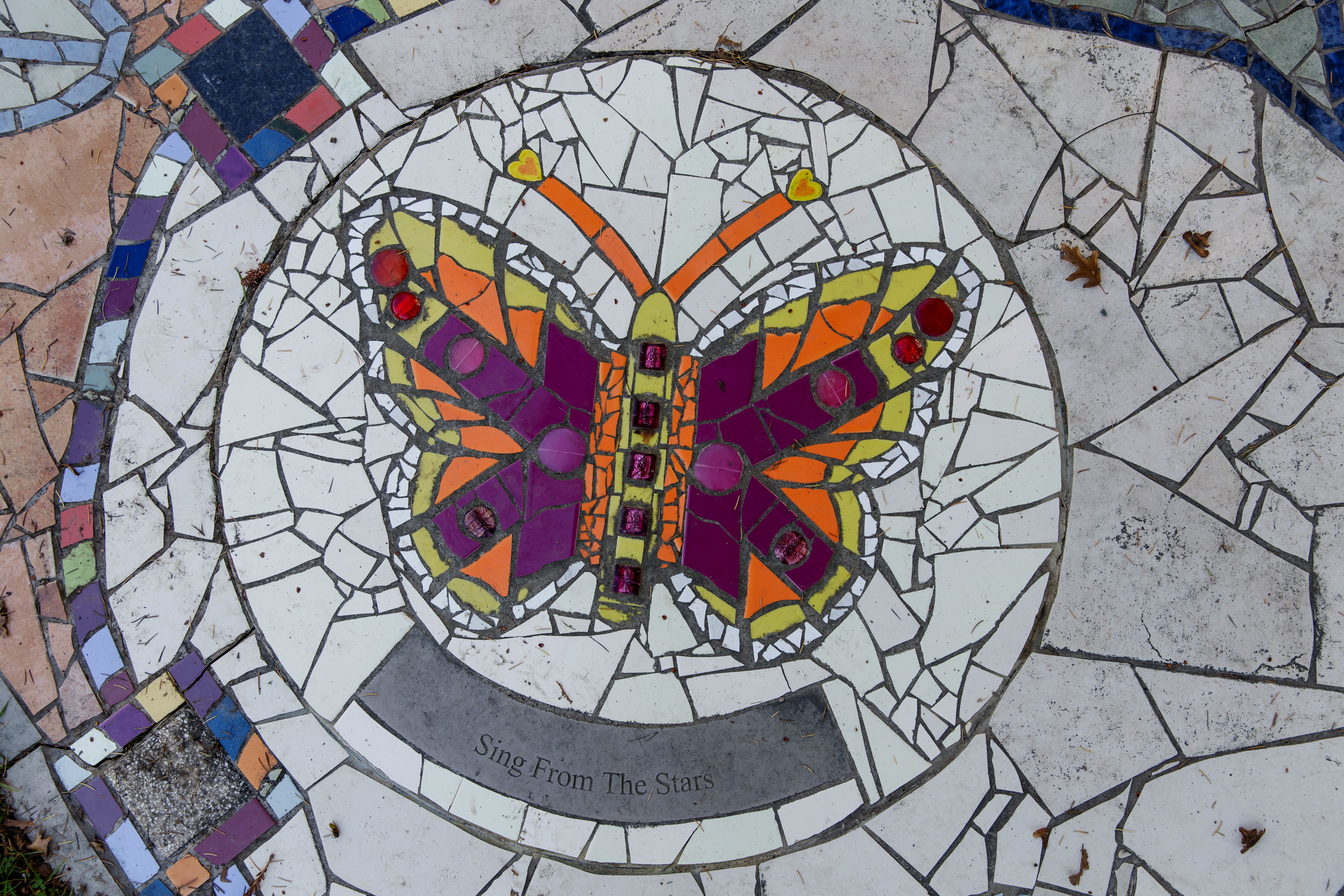
Gill says, “I have a friend who lost their child in Samoa, in the tsunami where we lost Alfie and her husband, he wrote a book of poems. Sometimes you just need to do something to deal with all this overwhelming grief and misery.” For Rebekah, her focus went into the creation of a public place in Nelson where parents could go to honour and remember their children. The result was Project Butterfly, a setting amongst the trees in Fairfield Reserve where children are remembered with butterfly mosaiced pavers acknowledging each of them individually.
Rebekah explains, “I started Project Butterfly in hopes of connecting people and giving them a safe space in order to be able to talk about their loss and meet others who may be going through the same thing.”
The name for the charitable trust she says, was inspired by one of the parents attending a grief circle who “talked about butterflies and energy never dying, and people when they die not 'dying', but changing into spirit form. It was something I latched onto at the time and I always get a smile on my face all these years later when I see a butterfly.”
Gill explains the reserve area’s significance to her. “It's a beautiful pathway in a really beautiful spot near the Grampians. Because quite often there's other children, and rather than take your kids to a graveyard, it was just a nice idea to take your children to a place where there's a park. And it's colourful, it's beautiful. People have picnics there.”
The area was set up in consultation with NCC as it is a public reserve. Additions to the pavers can be added twice a year. As well as the Fairfield path, Gill says the trust also holds meetings for parents that would like to connect with each other, plus at art therapy classes where they can channel their grief through creative projects. “So rather than sitting around in a circle, like an AA meeting, you know, ‘my name is Gill, I lost my son’ it was very organic. It was people sitting around and doing some arts and crafts too, and just chatting. I attended one of them. It's a really lovely, way to connect with other parents that know what it's like… It's not as confronting when it's presented like that. It's also fun and it was super healing, very, very special.” She says a creative writing class is planned for the near future.
Although Gill met Rebekah over a decade ago, it was only recently that she has become fully involved with Project Butterfly. In 2011 Gill and Gary became parents of twins. The pair kept Gill busy, then a breast cancer diagnosis became her focus. She’s quick to acknowledge that it is a significant event for people, but because she had gone through the pain of losing Alfie, for her personally, her perspective of the cancer diagnosis was muted. “My only concern was, I can't die because I've got two little boys that really need me… It [the loss of a child] changes the way you respond to life events. I'm so not diminishing other women's experiences with breast cancer at all. It's just me. My personal experience was, ‘Okay, I've been through hell. Here we go again’, kind of thing.”
Breast reconstruction surgery in the following years took more of her energy, then she undertook a counselling degree which she completed late last year. Gill has a special calling to do grief counselling. But while she is establishing her new practice, she has also stepped into the role as Chair at Project Butterfly, providing Rebekah opportunity to now focus on other life responsibilities. “So for years and years and years, I was just not ready to commit. I always felt that I wanted to be involved with it [Project Butterfly], because I just kept remembering my own experiences. There was nothing there for me, really like that.”
Project Butterfly provides her with a clear sense of purpose. “I knew that it would help me and help other parents. I just knew that that was my way to do something for Alfie, to do something to give back.”
“Last year he would have been 18, and I hate having to say would have been, so it's all those milestones. He didn't start school at five and all his friends did, you know? It's those milestones, and moving house was big. It's like we're moving house, but he's not coming with us. So, yeah, you grieve the child [but] I'm grieving an adult that I never met. Grief, it changes and morphs and never goes away. But it's a lifetime thing.”
For Shaz Blackburn, the loss of her adult son, Mitchell, in December 2024 still seems like it was yesterday; the anguish and loss she feels can sometimes be so great, getting out of bed in the morning is a Herculean effort. Mitchell, 29, passed away in hospital after having a cardiac event while at a friend's house. A phone call on Christmas Day she wished she never had to take.
“Every day is just survival. You know, like my counsellor said, pretty much that first, up to 18 months or two years, you're just living in shock and trauma. …Some days, the pain, it's just a fog, you live in a fog, a complete fog. It's like, the calendar tells me that I'm 15 months in, but in my heart and my head, I was not long sitting with my son… Your body goes into survival, and this part protects your brain and whatever else, and everyone moves on around you. Of course, I just haven't caught up yet, and I'm okay with that. Yeah, I'll catch up one day. There's no rush.”
Shaz needed someone to talk to who understood her experience, but like Gill, she was frustrated not to easily find an organisation that supports parents shattered by the loss of a child. As there is no nationwide charity or organisation, so individuals and groups have resorted to setting up their own gatherings in towns and cities. “After going through all the formalities, the funeral, and getting back to Nelson and trying to readjust somehow, I don't know what. I was just in the big blob. But there came a point that I needed to talk to somebody, and there was nothing. There was no support for someone in my position, a parent with the loss of an adult child. So I started making lots of inquiries and lots of phone calls to Citizens Advice [Bureau], advocacy groups. I rang the Cancer Society, other groups, and they kind of put me on to a church group, and then somebody else and somebody else, there was just nothing unless it was a suicide, cancer or a cot death. And I was like, it's crazy, there's got to be something for us.”
Eventually it was an organisation in Auckland that connected Shaz with Project Butterfly and she has since found some solace meeting with other Nelson parents. “They organised a workshop at Founders just to greet and meet, where we did some pottery so that our hands were busy. And that was just really nice. Just being in a safe space with mums that absolutely got it, was invaluable. I mean, I was doing my own personal counseling through my doctor myself but being with other parents just kind of felt a normal space, if that makes sense, when it's not normal at all for any parent to lose their child. And it was just safe, and they totally got it. You felt relaxed, and you could just be yourself. And tears came freely. And for me too, it was like these women, some of them had lost adult children and had lost little ones and babies, and they're a lot further on in their journeys. It has kind of given me that little bit of hope, a little bit of faith that I will get through somehow. Because you just don't think you will, because your life's completely shattered. It's changed. Who am I now? I was a mum of two children, and now I'm not. But actually, yeah, I'm still a mum with two children. I've just got one here and one there.”
“Gill actually said something on our last group, she said, we carry this weight, it's huge, and its, just got no energy. And she said that for her now, seventeen years down the track, the weight is still there, but it doesn't feel as heavy. So is it because we've moved on or is it because we've gotten fitter and we've adapted to it as time goes by? … It changes your whole outlook because to me, I'm invincible now, because no one can hurt me anymore.” An indomitability Shaz concedes, that comes with few alternatives… “People say, Oh, you're just so strong. Well, I didn’t have a choice. What are my options?”
Many people, including Shaz, draw on their personal faith of something beyond what we can see and hear and touch. “I am thankful for the little signs he sends me. I've had readings done, and I know that he's okay, and he's always with us... And it's all those little things. Like they say, it's when you've lost someone, anything that makes you stop to think about the person is their sign. So I absolutely hold on to those little things. I've always been spiritual, but I'm probably more so now and wanting to know more about him, to connect with Mitchell.”
While Shaz has got comfort from the meet ups organised by the Project Butterfly team, the memorial path at Fairfield Reserve doesn’t quite help with grief as it is primarily for babies and young children. One day, she would like to see a designated place available for memorial tree plantings, but all in good time. “I'm not ready for him to be buried anywhere as yet, because he'd be on his own. So he's [his ashes] just staying with me until I rock on, or unless something happens to Nana, and I might reevaluate.”
What is apparent through talking to both these women is that part of the comfort they get in sharing their stories with other parents who are processing the same tragedy is that if the conversation veers to other topics, the pain is still there, just below the surface for everyone. But for friends, acquaintances, work colleagues, our thoughts can transition in a short space of time from empathy to work tasks, grocery lists, weekend plans. This tendency to deal with what is right in front of us is adaptability and compartmentalising that is part of human nature. But parents don’t want their children to be forgotten so observing the rest of us moving on so effortlessly can be jarring and challenging. What can we do to help? One option is to talk about the loved one. Shaz provides some insight. “It doesn't go away for us. We live it every day. And we love talking about our kids.”
It ‘makes her heart sing’ when people contact her saying that they saw something that reminded them of Mitchell; that he is in their thoughts. “Someone said to me a long time ago which I hold on to, they said, ‘We don't talk about our children to get sympathy. We talk about them to keep their memories alive’.”
Love that doesn't end
In her 1969 book On Death and Dying, Elizabeth Kubler-Ross suggested that there were five stages of grief - denial, anger, bargaining, depression and acceptance. The book was originally written for terminally ill patients but thousands of people through all kinds of life challenges over the decades since, have recognised the five stages in their own circumstances. They can present wherever deep grief is triggered - divorce, job redundancy, and of course, the loss of someone you love. The stages are not linear, and experiencing all of them is not expected. At the time, it was groundbreaking for its recognition of grief as a complex, shifting response. Frameworks such as Kubler-Ross’ (and others) can provide some sense for what appears, a senseless journey. For many people, they can offer hope that we are in a transitional stage rather than a permanent state, even when the deep emotions show no sign of ending.
After WWII when Kübler-Ross was 21, she visited a Polish concentration camp, an experience that affected her understanding of the resilience of the human spirit and impacted her subsequent work. There, she was profoundly moved by the images of hundreds of butterflies that had been carved into the walls by children in the camp.
