

Lisa Austin will continue to serve as a Nelson councillor after facing a vote on her future at the council.
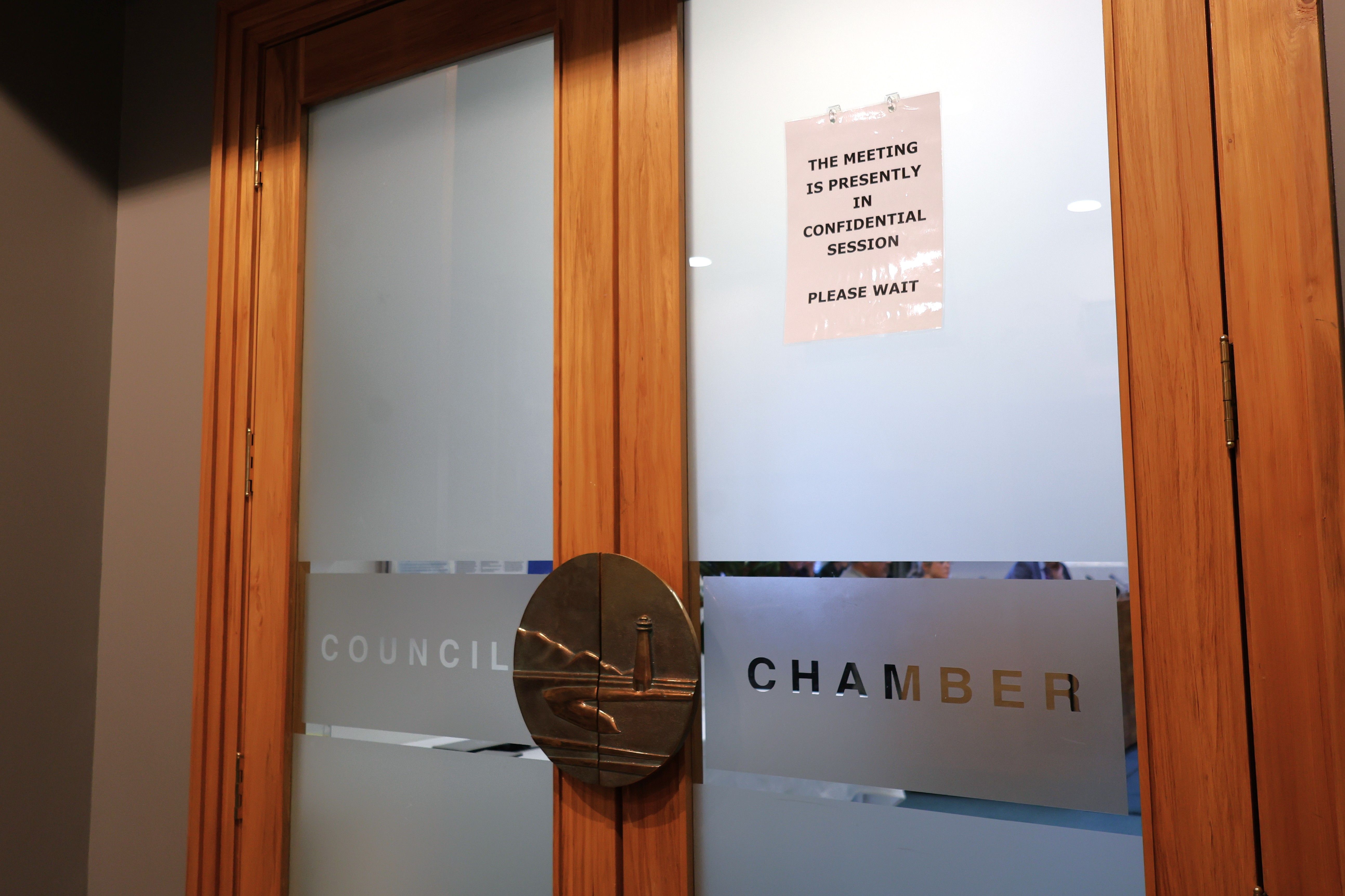
On Thursday morning, Nelson City Council met behind closed doors to discuss a report from its Audit, Risk and Finance Committee relating to Lisa’s business interests.
Though elected members affirmed her position around the table, it had been possible that her seat would have been declared vacant, triggering a by-election that could have cost upwards of $200,000.
The first-term councillor has spent the last month mired in questions about her ability to have originally stood for office because of her financial interests.
While the matter was debated and voted on behind closed doors, the council released some details in a statement once Lisa had been informed of the decision.
“Council has resolved not to proceed with a by-election. Councillor Austin will rejoin her colleagues for the rest of the meeting and fully resume the duties she was elected to perform as a councillor,” the statement read.
The council meeting promptly resumed, and both Lisa and Mayor Nick Smith, who has strongly defended Lisa, were both immediately unavailable for comment.
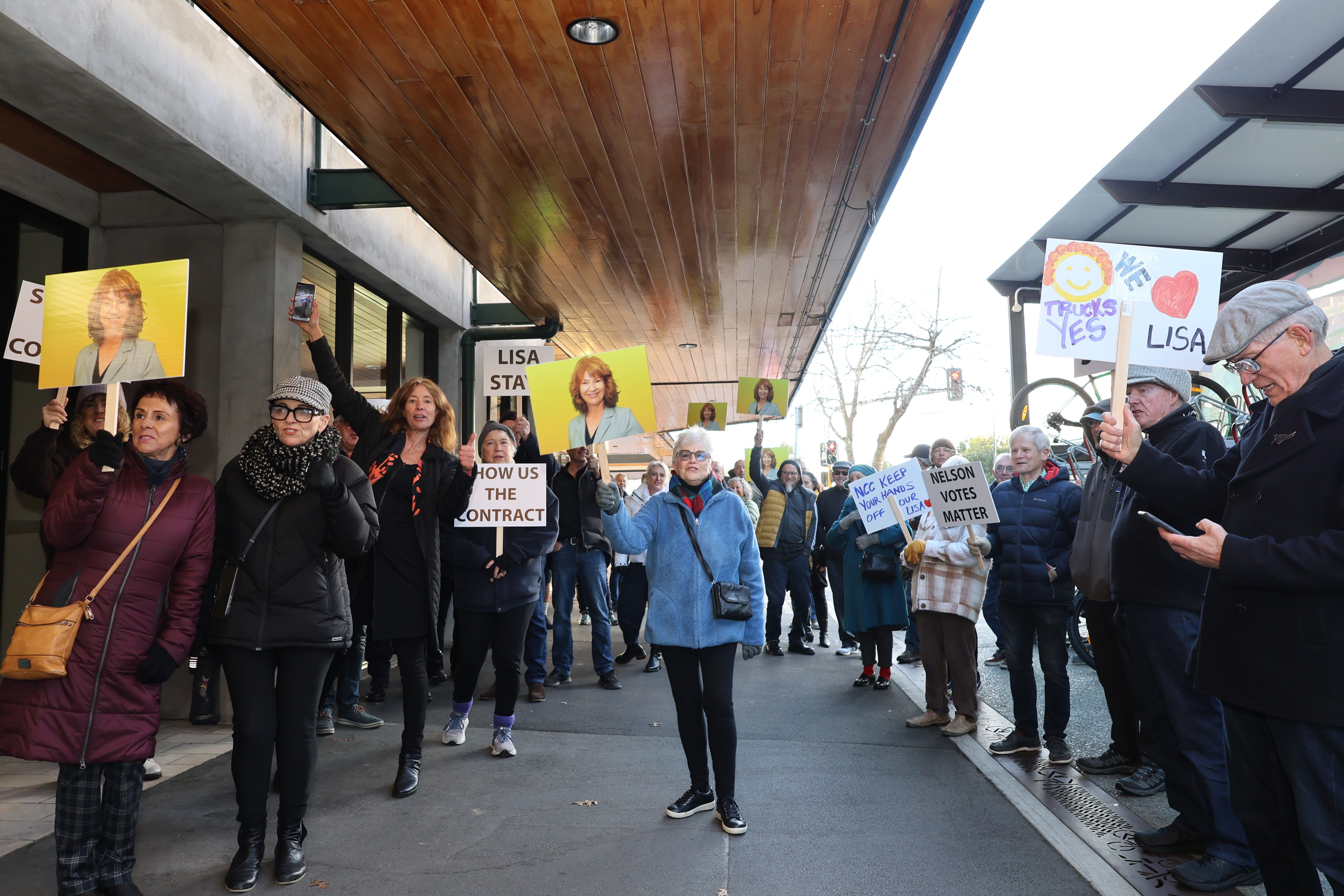
Dozens of residents had shown up outside of Civic House in a demonstration of support for Austin ahead of the meeting, with several police officers observing nearby.
They wielded signs that bore her face and messages of support, while occasionally breaking into chants of “Free Lisa Austin” or “Don’t pay 200k”.
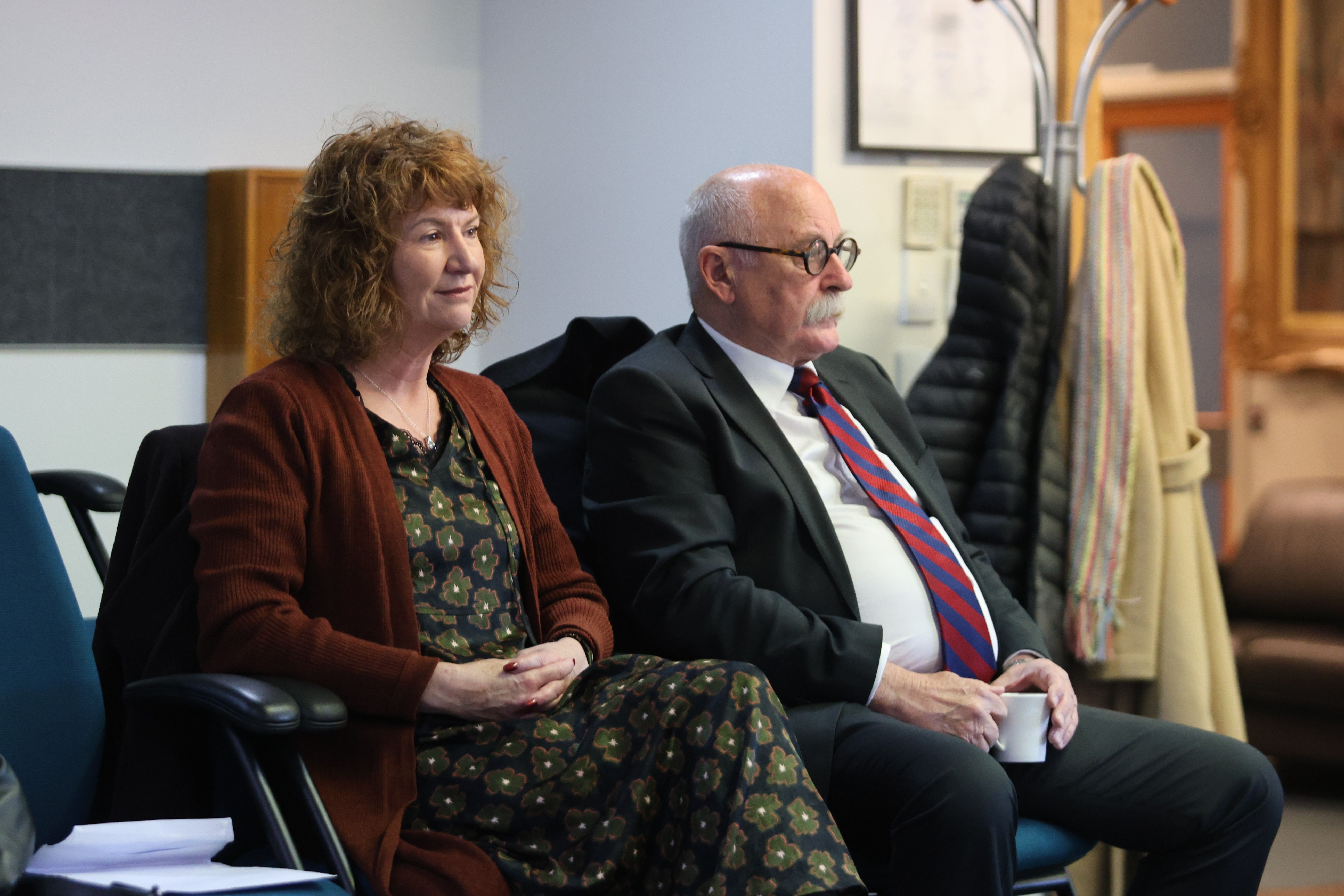
In a speech given behind closed doors to the council, and then later read to her supporters outside – before the outcome of the council’s deliberations – Lisa said it would not have been appropriate to have her removed from the council without “proper foundation”.
“This is not a judicial process, and that is not what voters would expect from a local authority.”
She maintains that she has been honest throughout the ordeal and has correctly completed her election disclosures and pecuniary interests.
Residents were barred from sitting in the council chamber’s public gallery so that the “sensitive issue” could be considered in an “orderly way”, Nick said ahead of the discussion.
The open session before the debate was only 14 minutes, but some councillors raised concerns with the day’s proceedings before the meeting went behind closed doors.
Councillor Tim Skinner acknowledged that some commercial sensitivities or legal opinions should be discussed behind closed doors, but wanted the debate and vote conducted in public session.
Aaron Stallard also described a decision to allow Lisa’s lawyer, Nigel McFadden, speaking rights at the beginning of the confidential meeting as “irregular” and gave rise to an “obvious fairness” issue ahead of the debate.
However, the majority councillors assented to Nick’s proposals, and the meeting was held behind closed doors, with a 15-minute segment allocated for Lisa and Nigel to present their arguments.
The controversy surrounding Lisa stems from her financial interests in a company she co-owns.
Her business hires trucks out at regular rates to provide carting services council contractors, but holds no contract directly with the council.
However, the Local Authorities (Members’ Interests) Act 1968 prohibits people who have financial interests of more than $25,000 with the council from standing for election.
Lisa maintains that her company’s supply of hired trucks is neither contracting nor subcontracting, and so is not prohibited under legislation.
But that opinion is not shared by the Audit Office, the independent transparency watchdog.
Nick said the council decided to be “cautious” and sought retrospective approval for her financial interests from the Audit Office after one of her business’s vehicles was seen on a council worksite after last year’s local election.
The Audit Office can grant approval, including at times retrospectively, for incumbent elected members’ contracts worth more than $25,000, and has granted such approvals for Nelson's elected members in the past.
However, the office says legislation prevents it from approving interests held by individuals before their election – an opinion contrary to the council’s own independent legal advice.
The Audit Office was then obliged to consider prosecuting Lisa once alerted of the situation.
It eventually concluded that “a prosecution would not be in the public interest” but remained of the view that Lisa had not been eligible for election, “and remains disqualified from office”.
Given the conflicting legal options, the situation could pose a risk to the council if one of its decisions was judicially challenged on the basis that Lisa should not have been involved.
Lisa said council staff told the Audit Office her financial interests were contracts or subcontracts before she had responded to their request for her to provide her position, and that the office had simply accepted that information without conducting its own investigation.
“A subcontract is where a council contractor passes down part of its obligations to another party. That is not what happened here. All that happened was ordinary cartage work, supplied on demand, in the ordinary course of business.”
Nelson City Council has been approached for comment.
The Audit Office said its prosecution decision had not been a broader investigation of the council’s handling of the matter.
“The Act requires councils to apply to us for approval on behalf of members. Our standard process therefore is to engage with council staff who we expect to provide us with all relevant information on behalf of members.”