

SCOTT DONALDSON
Love and a health journey led Tradd Porter from the suburban United States to the idyllic town of Motupiko, near Quinney’s Bush in Tasman.
Tradd, from Georgia, met his wife Lisa, originally from Waikato, overseas, before getting married and settling down in New Zealand.
While the couple was originally based in Oamaru, they moved north to a 20-hectare farm four years ago with their young children, as they searched for a bigger property to grow their own vegetables and live self-sufficiently.
“We are on a health journey and trying to source really good vegetables and it was really hard, so we decided to start growing our own and that led to chickens and a bigger property where we could have sheep and plant trees,” says Tradd.
The couple bought a fixer-upper property they named Three Sisters Farm, inspired by the American Indian vegetable farming method of growing the Three Sisters’ crops of corn, beans and squash “synergistically” all together.
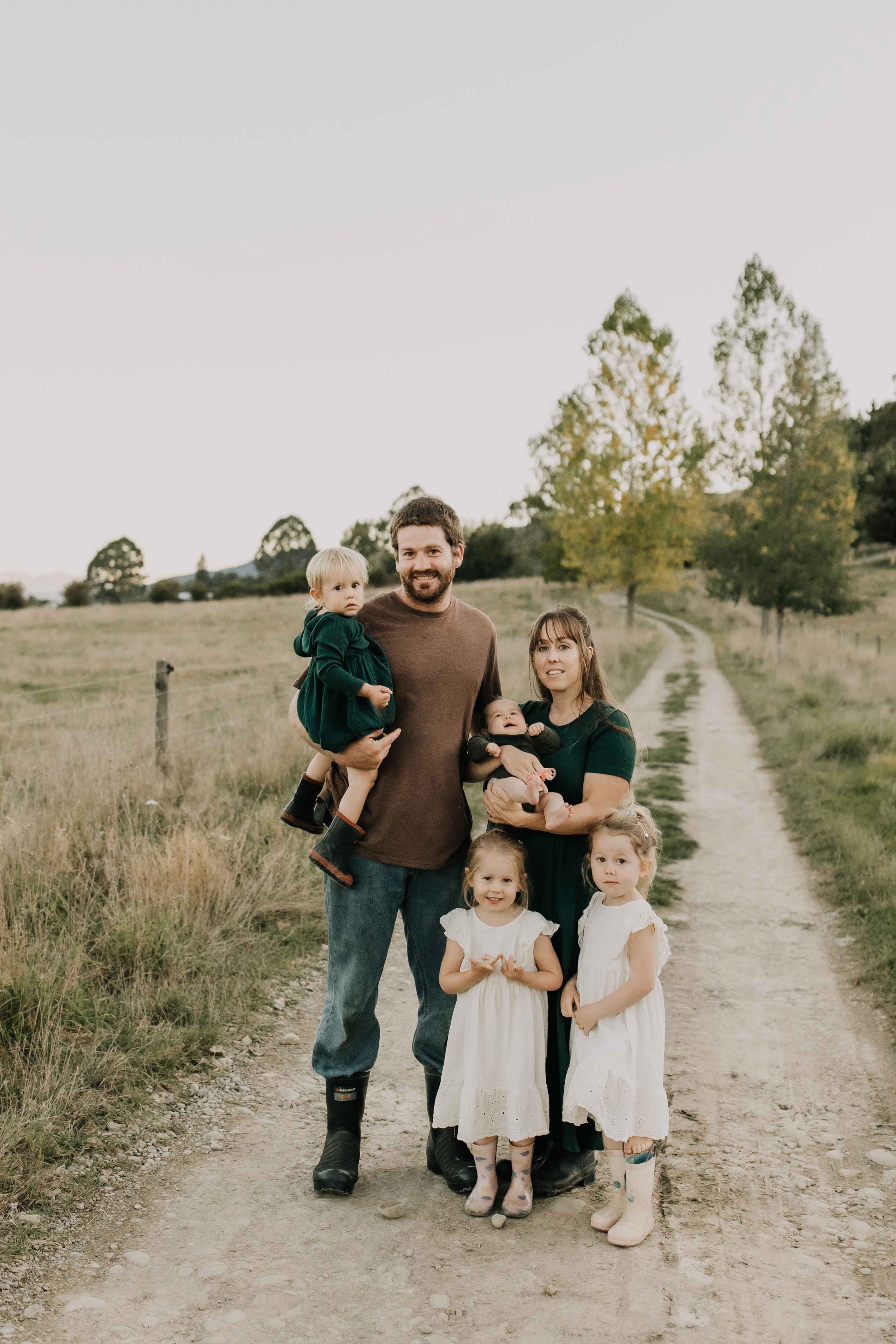
The Porters had three daughters at the time, although now they have four, Ruby, Malia, Althea and Bonnie, but the name stuck.
Three Sisters Farm has chickens, goats, pigs, sheep and cows, including milking sheep and cows.
While Lisa grew up on a farm with chickens, pigs and cows, Tradd learned through experience and watching YouTube videos.
Tradd had previously worked in a range of jobs, in sales, on boats and in dairy factories, so he had some practical skills but now finds himself working 50 hours a week on the farm.
“There were a lot of learning curves, like managing the chickens and finding the best system for keeping them healthy, and the right breeds,” says Tradd.
For Tradd, given the cost-of-living crisis, having food, water and energy options on his own property is a priority. Plus, he enjoys the seclusion and peace and quiet.
“We try to grow staple vegetable crops for us to feed ourselves year-round, we grow a big bumper crop of pumpkin, squash and corn,” says Tradd.
“We currently don’t have much fruit apart from apples, but we have planted a lot of fruit trees and berry bushes.”
Tradd and Lisa researched regenerative farming methods two months after starting to grow their own food.
They first heard of regenerative farming from Joel Salatin, a farmer, lecturer and author in the US.
Tradd and Lisa knew that this was the way they wanted to grow food and live their lives, in a symbiotic relationship with nature.
“The more people who start to live this way and spend their dollars on food produced this way, the more resilient our environments will become,” says Tradd.
“Not only our local ecosystems but also human health, it is a win-win.”
Currently, Tradd sells pastured eggs, along with tallow skincare products made by Lisa, at the Nelson Farmers’ Market every Wednesday, under the Three Sisters Farm label.
Pastured poultry involves allowing chickens to graze along with cattle, sheep or other livestock.
Tradd recommends moving to the country.
“Absolutely, I love it,” he says. “It’s definitely home now. The people are quite similar. It’s an easy change.”
