
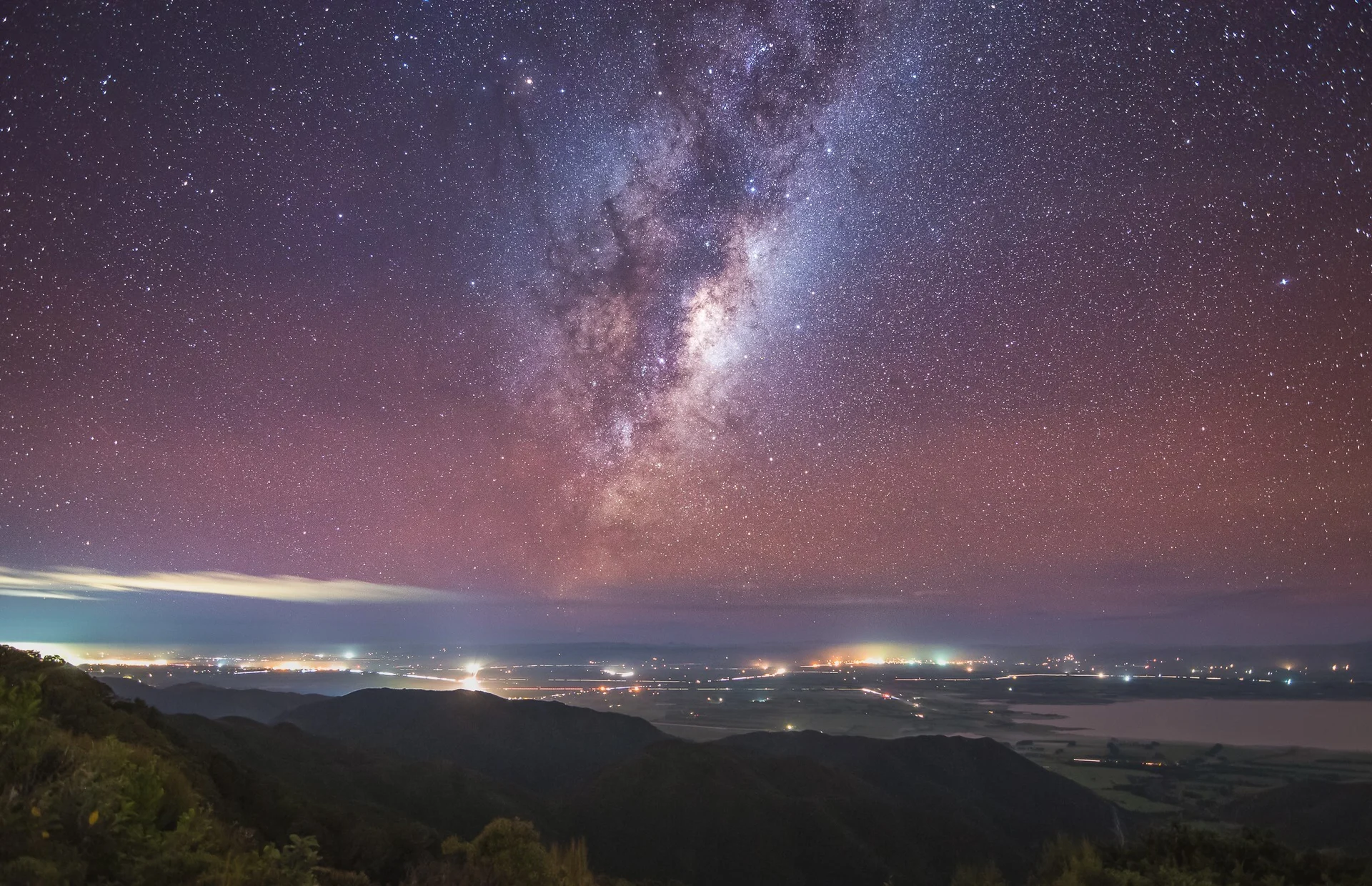
Showing your kids the Milky Way in the night sky may become harder as light pollution increases, and Wai-iti Dark Sky Park advocate Ralph Bradley says he feels that concerns are falling on deaf ears.
When the park south of Wakefield opened in 2020, light readings showed the site was “a whisker away from a beautiful naturally dark sky”. Over the following three years, light levels increased by a whopping 150 per cent.
“If we do nothing, we won’t have a Dark Sky Park – it gets to a point where it isn’t a credible dark sky at all.”
Dark sky enthusiasts like Ralph have long pushed for tighter controls on lighting, but he feels no-one is listening.
Yet a national survey of 1,000 people led by NMIT last year found half of respondents considered protecting the dark night sky very important, while a further 27 per cent said it was moderately important.
Ralph says the findings show the community values dark skies and that future developments should be required to install street lighting that helps protect them.
Older sodium streetlights with their softer orange glow have been replaced by LED lights which, he says, are often not properly shielded to direct light downward. They also produce a whiter, bluer light that spills more light into the night sky.
“You’d be lucky in the centre of Richmond to maybe see 10 stars at night now.”
As the colour temperature of a light drops, it becomes more orange rather than the bright white light commonly used in streetlights.
His goal, along with other dark sky supporters, is to convince councils to introduce lighting regulations so future generations can continue to see the stars.
