

Conservation Minister Tama Potaka may have offered his mea culpa last week for a controversial clause in a proposed bill, but Nelson’s critics remain miffed.
The Conservation Amendment Bill intends to overhaul the 40-year piece of conservation legislation by lessening red tape, fast-tracking commercial approvals and modernising public conservation management.
According to Forest & Bird maps, the bill initially would have allowed 60 per cent of Department of Conservation (DOC) estate to be disposed of, exchanged or sold.
Large swathes highlighted red on the maps represented these potentially targeted areas, which included Mount Richmond Forest Park.
But following backlash, the minister abandoned the bill's provisions around the disposal or exchange of conservation land, noting it wasn’t clear about how the bill improves conservation outcomes and would never dispose of “iconic landscapes”.
Even so, hundreds of people marched from the Nelson Cathedral steps to Queen’s Garden, rallying for the bill to be reconsidered in full.
Concern is now focused on a remaining clause that would require DOC to give greater weight to economic opportunities when making decisions about conservation land.
According to Forest & Bird’s maps, this includes Tākaka Hill Scenic Reserve.
Forest & Bird Top of the South regional manager Scott Burnett, who attended the protest, says the change still poses “significant concerns” and is calling for the bill to be scrapped and redrafted.
“This bill adds an additional clause that would make the Department of Conservation have to also look for economic opportunities and enable commercial development on public conservation land to the greatest extent practicable,” he says.
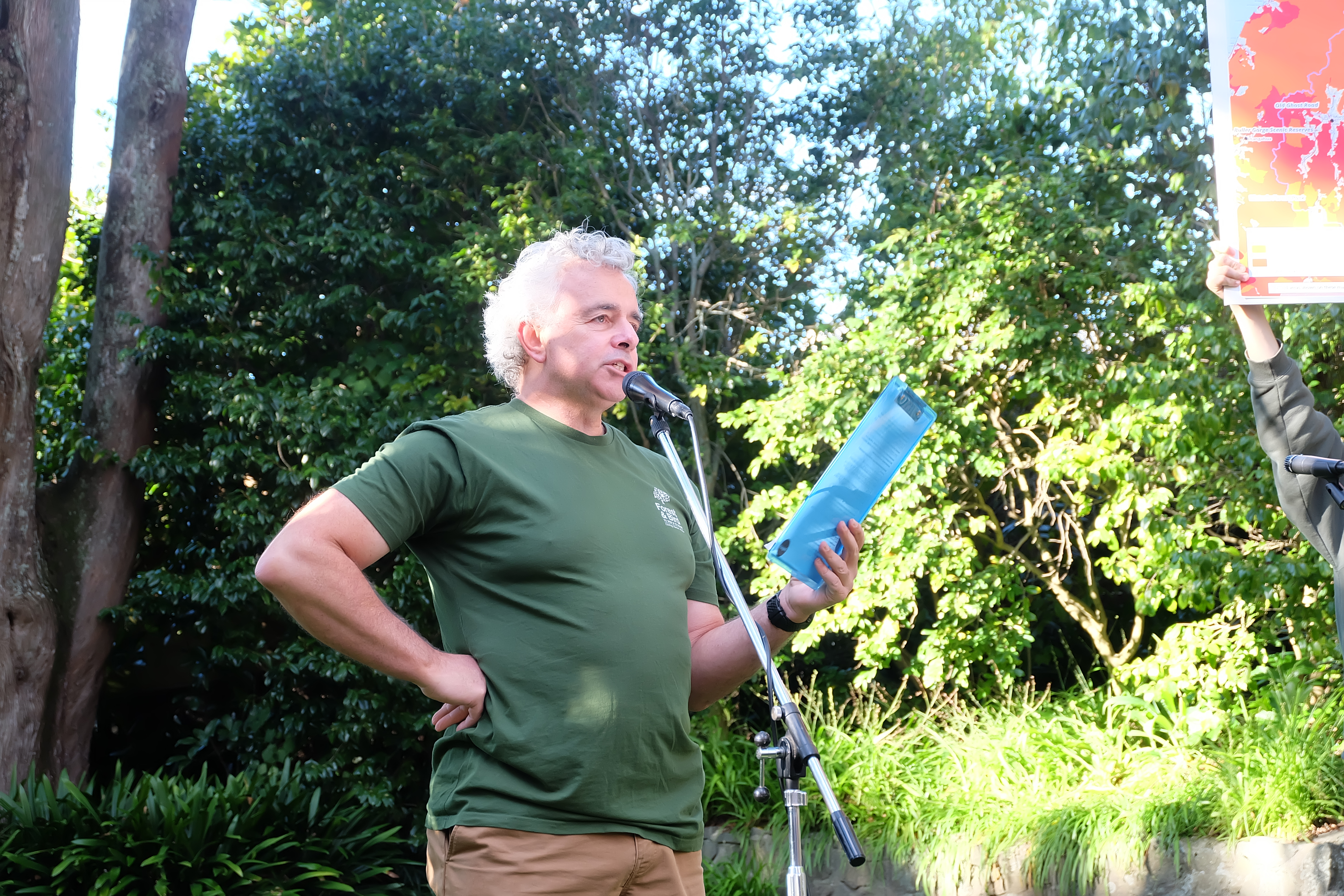
“That will be in clear conflict with the conservation purposes of the act, so that puts DOC in a really difficult position, and so hypothetically, if this act was to progress, it would make controlling tourism say in the Abel Tasman National Park, a lot more challenging.
“It's already challenging, and that would potentially ultimately impact negatively on the experiences of everyday New Zealanders and our ability to enjoy places.”
Scott is also concerned about the impact on species such as rock wren in Kahurangi National Park, the “incredibly endangered” Powelliphanta snails, and the critically threatened Mt Arthur giant wētā.
Nelson Tramping Club wants the bill binned with its president Graeme Ferrier claiming it could prioritise tourism over conservation and exclude local consultation and access to trails on DOC land.
“In granting concessions, they can offer leases up to 60 years, so that has the potential for excluding Kiwi taxpayers from large parts of the conservation estate, because there's no restriction there,” he says.
“You can imagine a high-level hunting lodge wanting a big block of back country with their exclusive rights, flying in rich clients from overseas, charging a fortune, and Joe average is excluded, so aspects like that are really concerning.
“Our view is that this bill should be withdrawn in total, and a better bill prepared by widespread consultation, bipartisan input to get one that'll last the long term.”
Public submissions on the Conservation Amendment Bill close on 2 July.
