
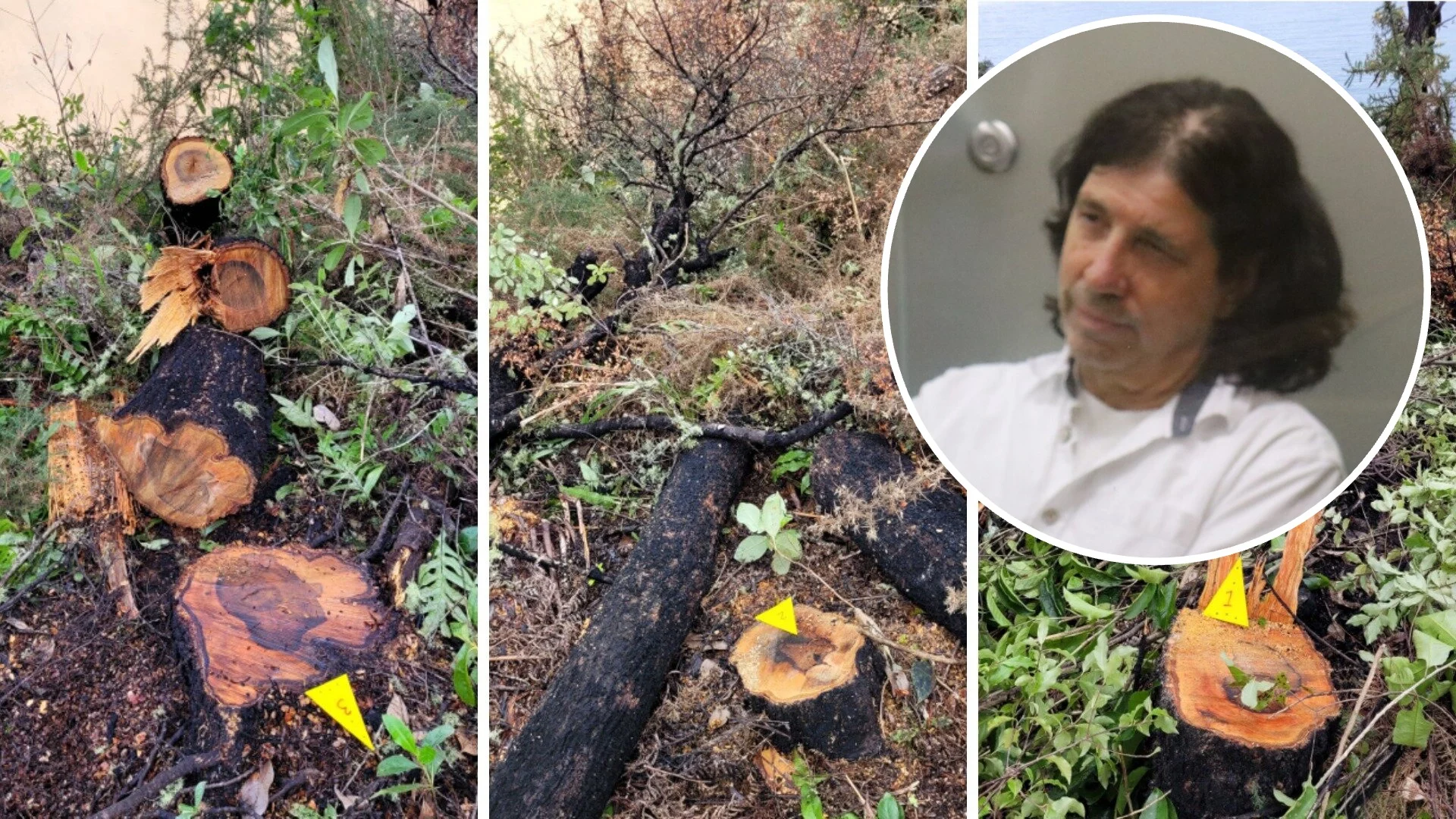
Businessman and property developer Alan Trent has been named as the man who felled native trees on conservation land near his property and ended up in court.
The 62-year-old admitted Department of Conservation (DoC) charges laid last year for felling five native black beech trees and other vegetation on a strip of land in Tasman.
Name suppression in place since then has now lapsed, after he indicated at a recent sentencing hearing he would appeal the decision against declining him permanent name suppression.
Trent had initially planned to defend the charges described as taking plants from a conservation area without authority.
The offence carried a maximum penalty of two years’ imprisonment, or a fine not exceeding $100,000, or both.
At his sentencing last month he was discharged without conviction and ordered to pay reparation of $7200 to DoC for the damage, plus $5000 in costs imposed on DoC when he questioned the boundary, which then needed to be surveyed.
‘Made an error’
He told NZME this week he had simply made an error with the boundary line.
“It’s my fault for not knowing that,” he said.
“Originally I said I was innocent, because I felt I was but when I looked at the letter of the law it was a bit different,” he said.
Asked why he fought to keep his name secret, Trent said it was for business reasons.
The former US businessman has made headlines on a number of occasions, mainly linked to a once controversial development on the Kina Cliffs above Ruby Bay.
Debate became heated in the early 2000s when Trent decided to fell trees on land above the cliffs for a housing development on 200ha of land he owned.
This time, it was the clutch of trees and vegetation he cut down near a different property, the name of which was suppressed to protect third parties involved in it, Judge Tony Snell said at sentencing on June 4.
He claimed the beech trees posed a fire hazard to the seafront property and that DoC had granted permission years earlier.
But the state-run conservation agency said it had never given him permission, while Fire and Emergency New Zealand said in an affidavit to the court that beech trees did not burn particularly well.
Marginal strip ‘important’ to area’s natural values
The Department of Conservation administered the area of public conservation land on a coastal strip bordering Tasman Bay.
It said the strips were important for maintaining water quality, aquatic life and natural values, and also provided public access and recreation along the coast.
On July 8, 2024, DoC received information about recently felled trees on the strip adjacent to Trent’s property.
A DoC ranger visited the site that afternoon and found five freshly cut down native black beech trees, which had been growing 6m to 14m from Trent’s boundary, plus vegetation cleared from the strip.
About two weeks later DoC rangers spoke with him under caution.
Trent admitted cutting down the beech trees and clearing the vegetation, and that he considered he had permission.
DoC said in its summary of facts he had been spoken to by rangers in 2007 and 2010.
He had also been issued a $300 infringement notice from Tasman District Council in December 2006 for felling vegetation on the same property without resource consent.
It was followed by another $300 infringement notice from the TDC in November 2013 for felling vegetation without resource consent on a different property.
Judge Snell described the offending as “modest”, involving a small number of trees, but they were New Zealand natives cut down by someone with a “possibly misguided view of entitlement” and who “should have known better”.
DoC was the central Government agency responsible for the conservation and management of New Zealand’s natural and historic heritage.
It had powers under the Conservation Act to manage and protect natural resources for the enjoyment of the wider public, and to safeguard areas for future generations.
DOC Motueka principal biodiversity ranger Helen Otley said the case was a reminder people can’t cut down or take native trees or plants from conservation areas.
“Native trees provide food and shelter for native birds and insects, sequester carbon and help stabilise slopes; they are an important part of New Zealand’s ecosystem. The look and feeling of being out in our native bush is important for people enjoying the outdoors.
“These trees were cut down in a really visible area where people go to enjoy the natural environment.”

