
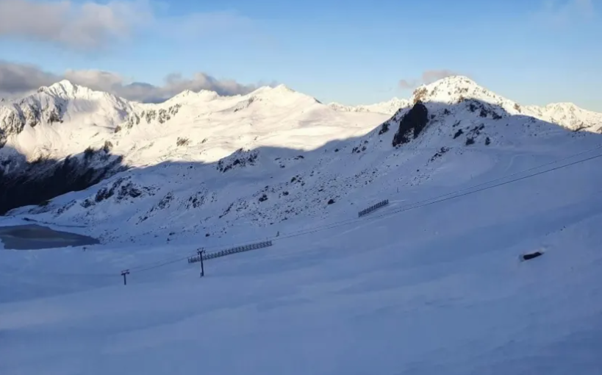
By Samantha Gee/RNZ
The region's only skifield is due to open later this month, but only on weekends to begin with and it will not be making snow, as the club tests out a new operating model.
Last year, Rainbow Ski Area received just 29 centimetres of natural snow between May and August and made the call to let its staff go and not open for the season, before significant snowfall in September.
Rainbow Ski Club chair Ian Goldschmidt said it had been a tough five years and the club chosen to do things differently in a bid to ensure the skifield remained viable into the future.
"The old model had us operating seven days a week, which means we had to have staff ready and available to be able to run the skifield and when you can't open, those staff can't stay around not being paid.
"We would have had a month of skiing last year if we'd had staff but you can't afford to keep them sitting around."
Closed days during Covid-19, severe weather and the lack of snow had impacted Rainbow and a number of other club fields.
Alongside that, compliance costs were increasing as was the cost of fuel, as its operations were diesel powered.
He said as a result the club had focused on reducing its fixed costs - labour and snowmaking.
The skifield would not make snow this year, it would not offer a scheduled schools programme or full-time ski instructors and have a reduced cafe offering. The shuttle service up and down the mountain was being run by a contractor.
It had scaled down from more than 30 paid staff to nine, supplemented by volunteers. It would consider opening on select weekdays, if weather, staff and operational factors allowed. It would review the changes at the end of the season.
Goldschmidt said in the past, staff had spent months in the lead up to the skifield opening, ready to go when the conditions were right for snowmaking.
In 2025 they didn't make much, in 2024 they were able to make significant amounts but it was washed away.
"What we're seeing with these weather patterns now, it gets cold, you make snow, then you get a big rain event, it all disappears, so you've spent thousands of dollars on diesel and people's time to not get any advantage from it."
Goldschmidt said the committee had spent months getting the mountain ready to for the season, and it just needed 30 centimetres of snow to be able to open.
"It's a big change for us, we'll see if it works."
He hoped the snow forecast for this week would give the field enough coverage to open on 18 July.
Data from Earth Sciences New Zealand shows June had been the warmest on record, with temperatures and rainfall well above average for most of the country.
The nationwide average temperature for June was 10.6 degrees Celsius. That was 1.9 C above the 1991-2020 June average, making it the warmest since records began in 1909.
Meteorologist Chester Lampkin said parts of Marlborough were likely to see between 10 to 20 centimetres of snow at 1500 metres elevation from Sunday night through to mid next week, with between 20 to 40 cm expected above 2000 metres.
"The upper South Island Ranges have been a victim of the same problem all of the South Island has seen this winter - dry conditions and a relatively mild weather."
Hydrological forecasting scientist Jono Conway said long-term, projected 21st century warming would mean a decreasing proportion of precipitation fell as snow and more would fall as rain.
Snowmelt was also expected to increase at all elevations.
"Together, these factors are expected to reduce the depth of natural snowpack across the typical elevations of ski fields in NZ and reduce the length of time with viable snow depths occurring naturally."
