
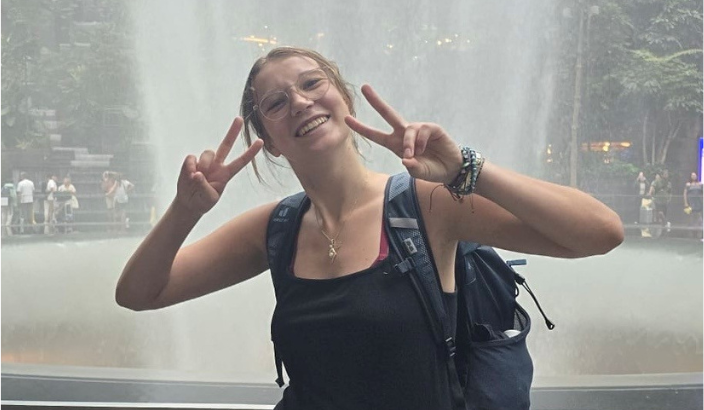
Charlotta Trogisch has completed her internship with Top South Media, so we asked her to share how she found New Zealand life compared with Germany.
School system
Germany and New Zealand both have about 13 years of school, but the way schools work in each country is different. In New Zealand, children generally start school at the age of five, which is one year earlier than in Germany. Primary schools here look more open and creative. Classrooms give children more space to explore, express themselves and move around. This shows that New Zealand schools focus on the whole development of a child and not on the aim that the children must fit into society.
German schools are usually more structured. They follow clear learning paths and often expect students to follow social rules from an early age. Not only the schools but also the state universities are free in Germany, which is an important part of the country’s social system.
Work culture and work life balance
German workplaces are known for clear organisation, efficiency and fixed processes. Work tasks are often planned in detail and carried out in a very structured way. New Zealand seems to be more flexible. Work processes can be slower, but they function well because people work together and communicate openly. Work life balance is very important in New Zealand. Many people spend time outdoors and separate work from private life more easily.
Lifestyle
New Zealanders often appear calm and relaxed. Nature is close wherever you are, and maybe this helps people feel more balanced. In general, daily life usually seems to move at a slower pace here. In Germany, life can feel busier. Cities are large, streets are full, and traffic jams are common. People have full schedules and move from one appointment to the next. This can create stress and leave little time for rest.
Public transport
Germany has a very large public transport system. Trains and buses connect many cities and regions, and travel across Europe is easy. In rural areas, however, transport can be similar to New Zealand. Buses may not run in the evening, and trains stop only in some places.
Food
Food in New Zealand is influenced by British and Asian traditions. The country has many cultures, and this is visible in its food. German food is often based on traditional dishes from different regions. Turkish food is very popular in many cities. Beer and wine are also important parts of German food culture.
Culture
Many people think of pretzels, sausages and traditional clothing when they think of Germany. These aspects mostly come from Bavaria - a federal state located in the south of Germany. But we have many other traditions. Events like Schützenfest, Maibaumsetzen, Karneval and Martinstag show the cultural variety of the country (Google the names if interested).
New Zealand culture is strongly shaped by Māori traditions which I have noticed through events and festivals during my time here. Germany does not have a single indigenous population.
Politics
Both countries face similar challenges. Living costs are rising, housing is expensive and public services are under pressure. Germany has seen more support for right wing ideas in recent years. Some people worry about immigration and job security. At the same time, Germany needs workers from other countries in order to restore the economy to its desired level of strength.
Economy and Industry
Germany has a large and industrial economy. Important sectors include manufacturing, cars and machinery. New Zealand’s economy depends strongly on farming, forestry, fishing and tourism. In general, Germany’s total GDP is much higher, but when looking at GDP per person the gap between the incomes becomes smaller.
Standard of Living
New Zealand has a high standard of living. Nature is close, communities are strong and life is often relaxed. Housing and shopping are expensive, but many quality-of-life indicators are positive. Germany also has a high standard of living. The country has strong social systems and good infrastructure. However, life in cities can be stressful because of high costs and crowded areas.
Healthcare
Both countries have good healthcare systems. Germany has a universal insurance model with public and private options. This gives people access to many medical services. New Zealand has a public healthcare system that offers basic services for free or at low cost. Private insurance can help people get faster treatment for some procedures.
Sports
Rugby is deeply intertwined with New Zealand national identity. It can be compared with the popularity of football in Germany. Even though the national team didn’t play as well as expected in the World Cup, the German Bundesliga is one of the richest and most watched sports leagues in the world. Many Germans are members of football clubs and enjoy watching matches. Although, with Anton Segner’s selection for the All Blacks, maybe rugby will become more popular.
