
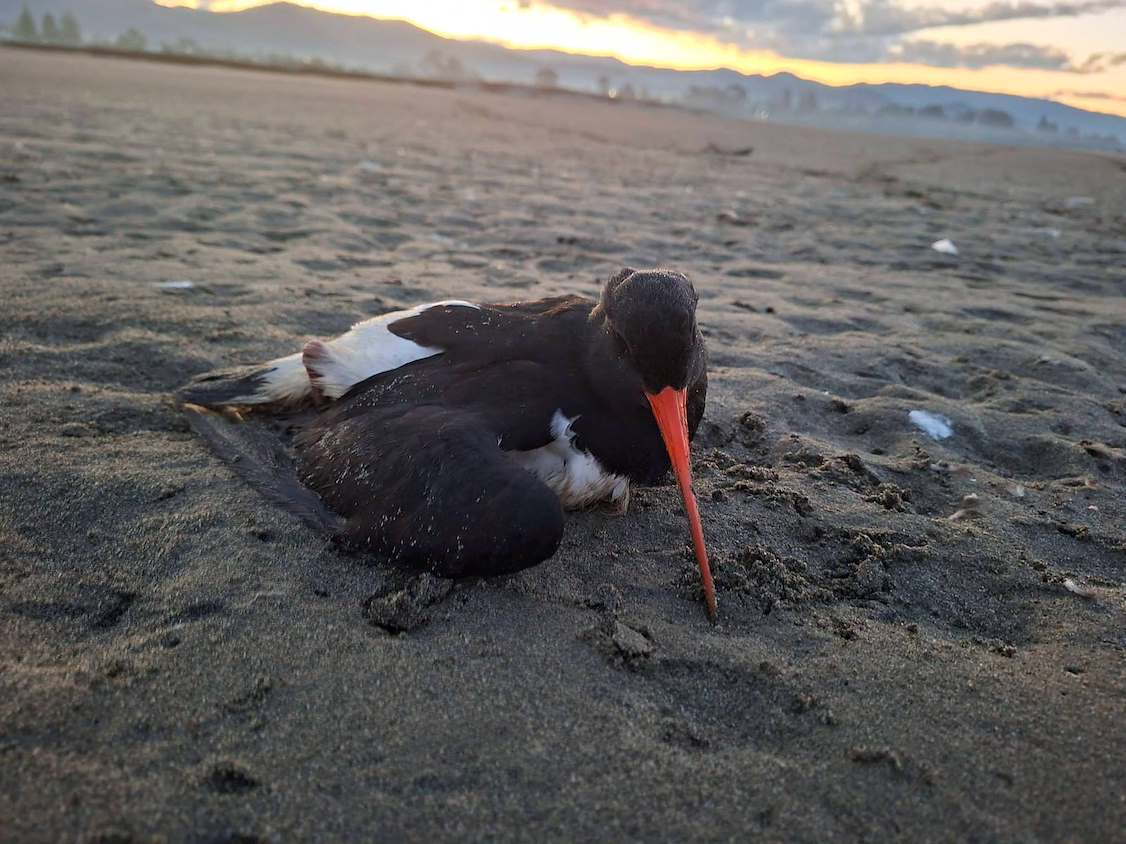
Dozens of South Island pied oystercatchers have been found dead or dying on Motueka's sandspit, with authorities confident neither avian influenza nor 1080 is responsible.
Ministry for Primary Industries chief veterinary officer Dr Mary van Andel said last week that seven notifications about the oystercatchers had been received, and testing confirmed no H5 bird flu was present.
Biosecurity New Zealand's role is to rule out exotic disease.
Department of Conservation Motueka principal biodiversity ranger Helen Otley says DOC is aware of about 35 dead oystercatchers, although she believes there could be more that have not been reported.
No other bird species appear to be affected.
Helen said earlier this week, that some birds have been sent for postmortem examination and tissue sample testing in an effort to identify the cause of death.
She believes the deaths may have been caused by a naturally occurring toxin, potentially botulism or a toxin derived from shellfish, algae or terrestrial prey.
"Unfortunately, these are very difficult to conclusively test for," she says.
"We are confident these oystercatcher deaths are not related to 1080, as some people online are claiming. However, we are testing for 1080 so we can definitively rule it out. There is no reasonable way the birds could have been exposed to 1080, and their feeding habits mean they wouldn't go for baits or animals that have eaten 1080."
On Wednesday, DOC confirmed testing results had ruled out 1080 poisoning.
DOC Motueka and the Nelson branch of Birds New Zealand have been working together to understand the cause of mortality.
Helen says while there is no indication of any risk to human health, people should take the usual precautions when dealing with dead animals and keep dogs on leads or under immediate control.
Anyone who sees groups of three or more dead birds is asked to report them to the Ministry for Primary Industries on 0800 80 99 66.
