
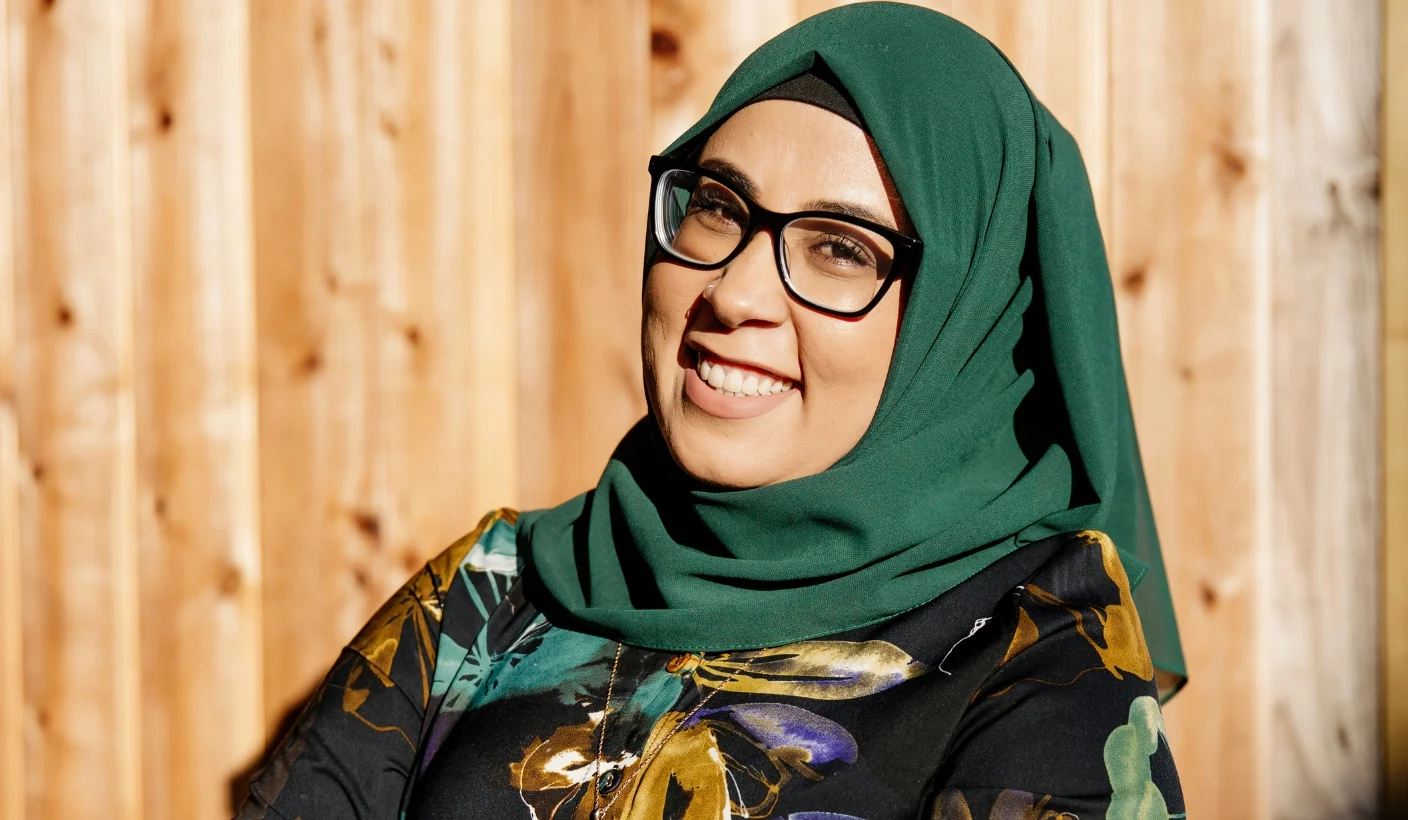
How do you find the strength to be yourself in a place where people harass you for being different? Fatima Khan Mohammed shows us what self-acceptance looks like. As told to Britt Coker.
My name is Fatima, (25) and I came to New Zealand on 25 October 2012, originally from Afghanistan. I was born in a city called Ghazni. We came to Nelson where there's no Afghan family at all. We're the only family. I was shocked. You enter into a country where you don't know anything about the culture, language, lifestyle. It was exciting too, after 12 years I got to see my brother, for the first time.
I was born as a shy girl. I never had the confidence. When I came to New Zealand, the experience, the challenges that I went through, I was like, I cannot be shy anymore. I have to get out of this. So that was a good move… Now I’m loud, confident, eager, and I'm also very quiet sometimes, but that hardly happens!
Not speaking the language was challenging. I started Nelson Intermediate... I cried all the way to school the first day. I was like, wow, I will never be able to fit in, this is way too hard. Everything was so different. I was the first hijabi girl in Nelson Intermediate and also to go to Nelson College for Girls. At the same time, dealing with the language, with the culture, it was just too much.
I didn't have any good friends in high school and intermediate. I guess it was hard for them to come and approach me, and it's harder for me to go to them, because I used to get the look, and I used to get bullied from a few people quite badly. It was really hard for me to have friends. There were quite a few teachers who were very supportive. With time things got a bit better. Either it got better, or I got used to it. …I've got quite a lot of friends now.
I used to just love the way my mum used to wear a hijab when I was a young girl. So I started wearing a hijab really young. I'd say at age maybe seven or eight, but I definitely started wearing it properly by nine. I enjoyed my hijab and not knowing exactly the meaning behind it when I was very young. It was a sign of respect we used to always wear during dinner, and when we used to study the Quran. But it just made me more confident or made me more comfortable. I own quite a lot of hijabs in all the colours and patterns. Anything goes. But I normally wear this simple [one] colour… I’m interesting in a way, because I wear it all the time. The only place I don't have it on is my bedroom. I look after my hair very well, and I love my hair.
It's part of my faith and it's my identity. This is who I am. I knew a lot of people who used to tell me, people who wear headwear are not knowledgeable enough. Or it's a sign you're not open minded enough.
It was extremely challenging, to be honest, because as a young girl at 13, walking in the street with a hijab, a lot of people used to not like it. One guy asked, ‘why do you have to wear this? It’s not who we are. You come to our country, so you obey our rules. More than that, you're not forced to wear it. You can have your own say’. And I said, ‘well, if I have my own say, then I will wear it this way.’ After the Christchurch [mosque] attack I used to get this gun (she shapes her hands like a gun) with their hands at me. And I used to walk to class and see people pointing from their cars.
My second youngest sister wanted to wear it, but she didn't know how to start. She's in university now. So when we went to the mosque, because Friday is our prayer day, we walk there, and there was a bunch of people walking …They started yelling at us, the whole group. ‘Go back to your country, you guys are terrorists’ and so on. And then I said to my sister, just ignore them we are walking, it’s ok. Everyone does this. It's okay. Let them say what they like. She got really scared, and she said, ‘Oh, I can't ever wear this, it's going to be hard. On the first day I encouraged myself to wear it and the reaction is very strong. One of the guys runs towards us. I said, well, if he comes, I'm ready. He ran and I stopped, and he kind of got shocked, and he was like, ‘sorry’.
My family was like, oh, we could go to Auckland, and when we did move to Auckland we didn't like it. But then I said, if I want to change one place in the whole of New Zealand, it's got to be Nelson. Nelson has a lot of migrants, but at the same time, it's an area that we can work together to make it even more approachable to people who visit. I hope to see Nelson growing in terms of, it's not only you have to be hijabi to be accepted, or you have to be any other race. Just accept a person as a human being. We are all human. I get a lot, ‘Why do you wear it?’ I say, ‘Why do you not?’ Isn’t it boring if we are all the same?’ It's good to have some colour. I feel like we are in a garden, it's good to see colours, different flowers.
I'm so used to it that I'm not afraid of anything. I do still get looks. It’s like, when I walk into a shop, sometimes they look at me. They just get out of the shop. I also got a really good compliment yesterday. I was walking to work, and a lady stopped. She said, Oh my god, I love your clothes. Your hijab is stunning. So I do get great compliments as well as the negative side. I guess now they keep it to themselves, but they give it a look, where before they were like, take it [verbally].
The reason why I left [café work], was because I went back to study. Then I needed to look for another job. I needed to find myself, before I found my career because I was making this little battle with myself. Who am I? Who do I want to be? I need to have a dream that I'm very focused [on] and I can achieve it. So I started looking for a job around Nelson, and for almost a year, I got no interview. ... Then one time, I was walking past Pascoes. I had my CV in my hand, I think there's no way. And I said, why not try it? So I introduced myself to the manager and she called me within a week. I really enjoyed it. I work now as a cadet for NCC Community Partnership, which I also really enjoy.
I feel like we're all on a journey. We have our struggles, we have our differences, but at the end of the day, just be proud of who you are. If you really want to be who you want to be, you would face the difficult side. I hope my difficult side will be a lesson for the generations of the future, people who all got turned off and are like, ‘Yeah, Nelson has changed.’
Sometimes when I look back, I'm like, how did you do this? How did you really keep going? I do look back and I'm like, wow, I never want to go back.
