
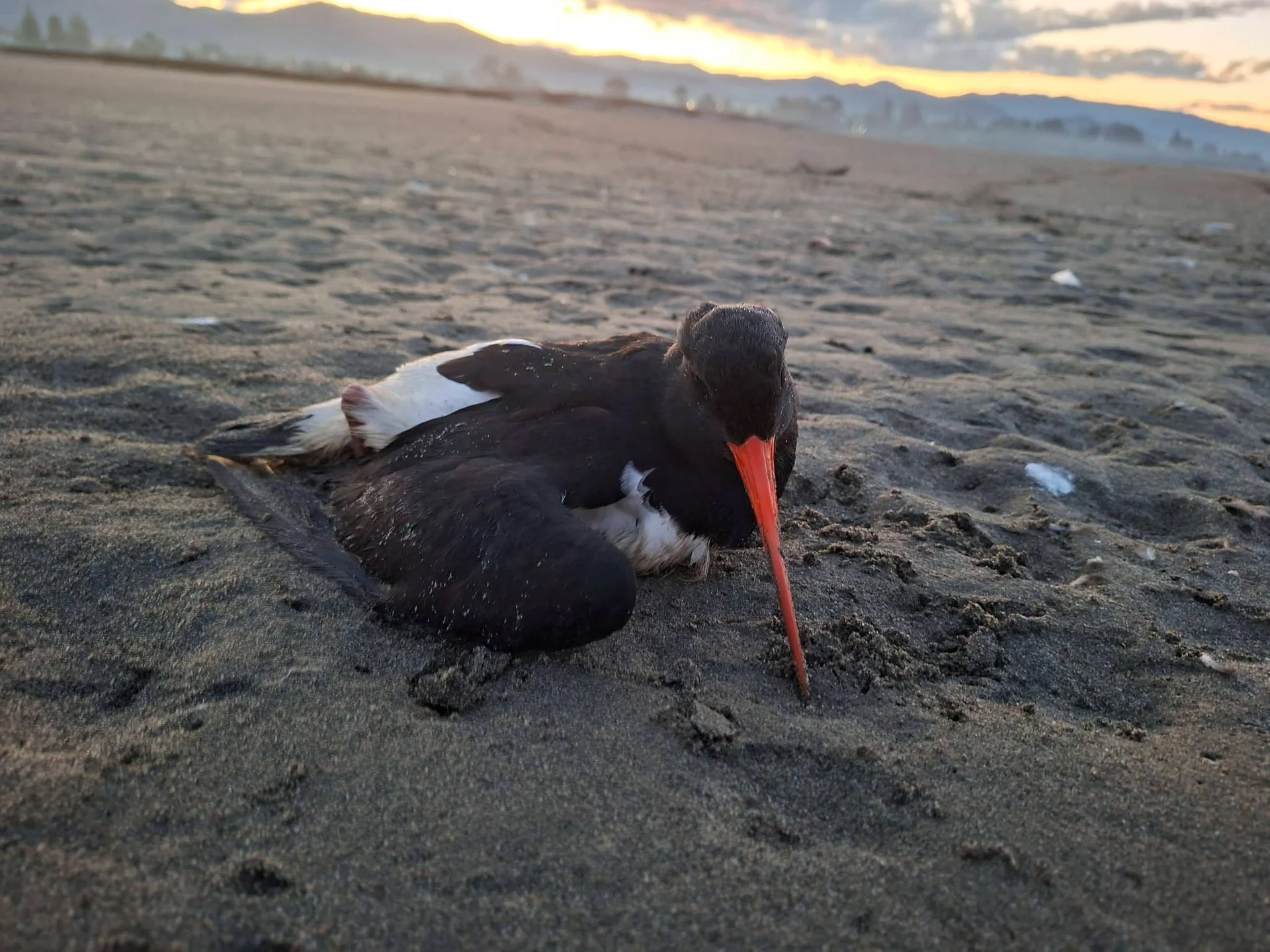
The deaths of several dozen pied oystercatchers on Motueka Sandspit were not caused by 1080, Department of Conservation testing has confirmed.
Samples were sent to a laboratory on 23 July for post-mortem examination and tissue testing. Results returned five days later showed no trace of 1080.
DOC Motueka biodiversity ranger Leon Everett says tissue samples from two birds were sent to accredited facility Landcare Toxicology Lab for 1080 testing, with the results coming back negative.
“The results are not a surprise because there is no reasonable way the birds could have been exposed to 1080. Some people online are claiming 1080 was involved, so the testing was done to definitively rule this out.”
He says two carcasses were also sent for necropsy and pathology assessment at veterinary diagnostic laboratory VetPath. The necropsies did not identify a cause of death and DOC is waiting on further pathology results as the tissue takes time to prepare.
Four birds’ stomachs were sent to Cawthron Institute to test for naturally occurring marine toxins. None were detected, although detection can be difficult, Leon says.
1080 is the common name for sodium fluoroacetate, a toxic chemical used to control invasive pest species such as rats, possums and rabbits.
Avian influenza was also ruled out after separate testing by the Ministry for Primary Industries.
Authorities received seven reports from the public of about 35 dead or dying birds on the sandspit in late July, with a report of another small cluster on Tuesday, 4 August. DOC officials say details so far are limited, and Birds New Zealand members are attending the scene. No other bird species appear to have been affected.
