
KATE RUSSELL & ELISE VOLLWEILER
If there’s one thing Ursula Hubbard wants people to know about greyhounds, it’s that they’re nothing like most people expect.
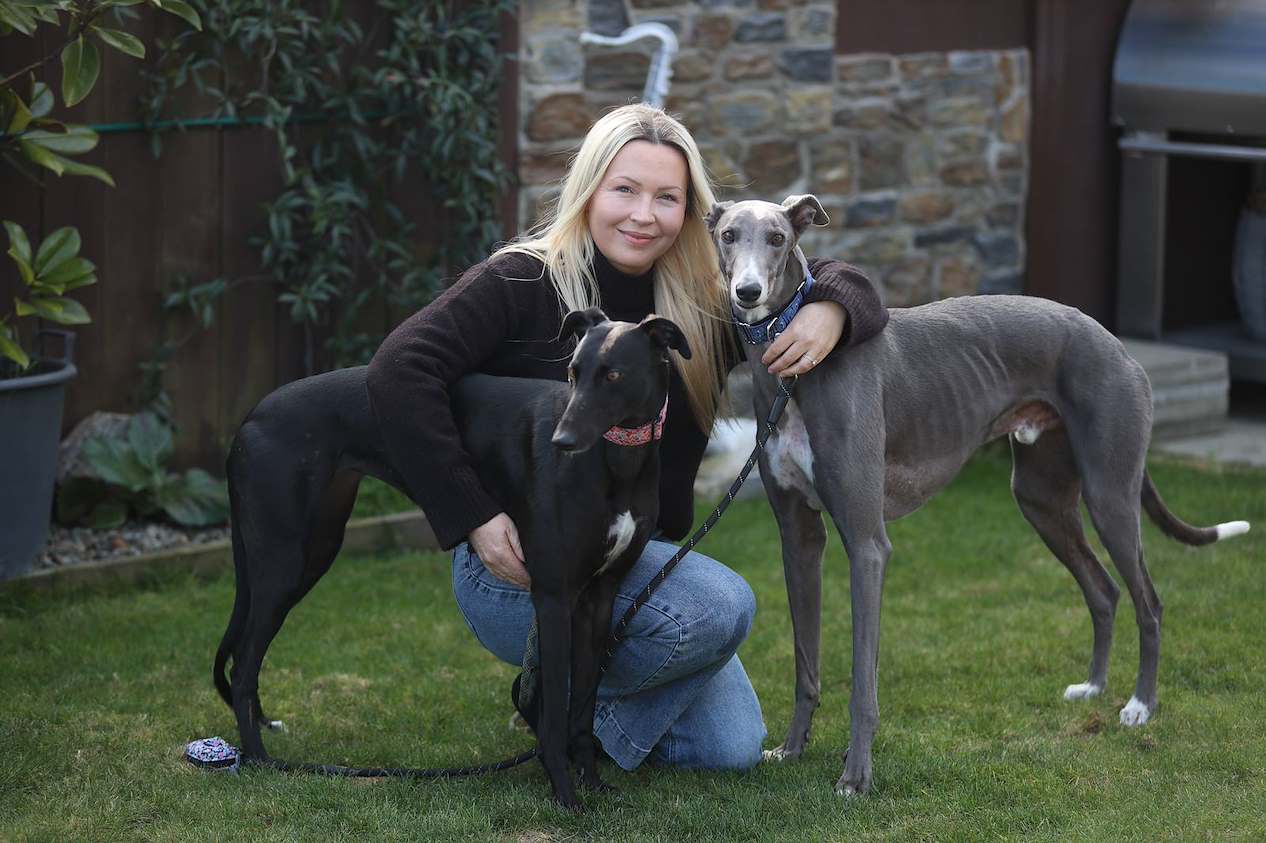
The Nelson woman shares her home with former racing greyhounds Fantail and Bluey and says they spend far more time sleeping than sprinting.
As commercial greyhound racing came to an end in New Zealand on 1 August, about 1300 former racing dogs are expected to need homes and Ursula hopes more people will discover what great pets they make.
Ursula first became involved with greyhounds a few years while living in a rental, where she could not commit to owning a dog, so instead signed up to foster through Greyhounds As Pets.
She says her first foster dog quickly won her over.
“Oh, I absolutely fell in love… I was absolutely smitten. I only had her for a month or two, and then she found a home up north.”
After fostering another two greyhounds, Ursula and her family bought a house, making it possible to adopt their own.
Three-year-old Fantail, whose racing name was Go Fantail, arrived from Christchurch through Greyhounds As Pets six months ago.
“She was really shy when we first got her and she hid from us for two weeks… but she just needed time and patience to get used to being a pet and living in a home.”
Ursula says Fantail is like “a whole new dog” now.
“She is so cuddly, loving and very sweet.”
Four months ago, Bluey joined the family from Oamaru. The five-year-old, whose racing name was Smoke Screen, quickly settled into his new home.
“He’s a velcro dog and will follow me around everywhere.”
She says Fantail and Bluey quickly became best friends – although Fantail is definitely the boss.
Despite their racing pedigree, Ursula says one of the biggest misconceptions about greyhounds is that they are high-energy dogs.
“I’ve had so many people say to me, ‘good on you for adopting such a high-energy dog’ – but it’s the complete opposite.”
She says they will get a sudden burst of energy called ‘the zoomies’ once or twice a day and then they’re back to relaxing.
“They love going for a walk, but they’re quite happy just to lay around and chill most of the day.”
Fantail is especially enthusiastic about her daily walks – although Ursula says took her a while to adjust to unfamiliar sounds after leaving racing.
Ursula, who is an early childhood teacher and a mum of two, says they make “wonderful” family pets and encourages anyone looking to adopt a dog to consider a greyhound.
“They suit so many different households and can live in small homes – even apartments.
“I just love how loving and affectionate they are, and I just love their personality. Once you get to know greyhounds, you realise just how special they are.”
Meanwhile, Alistair Pegg describes his greyhound Rusty as “The world’s fastest couch potato”.
The Motueka man says one of the biggest misconceptions about the breed is that greyhounds are high-energy dogs that need constant exercise.
“That’s the first question people always ask – ‘Oh, you must have to run him all the time,’” Alistair says. “No – a 20-minute walk; done for the day.”
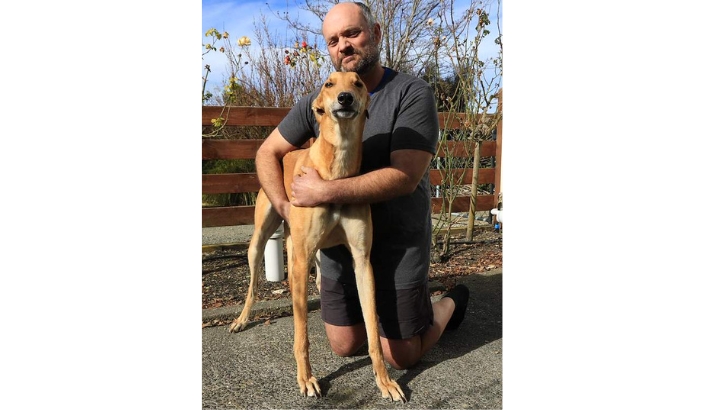
Rusty suffered an eye injury as a puppy, the full extent of which was not discovered until he was about two years old. He was bred as a racing dog, but the injury meant he never made it to the track.
Instead, the sweet-natured pooch spent his first two years hanging with his parents and siblings before being reluctantly rehomed.
Rusty is the Pegg family’s second greyhound. Their first, Mason, was a retired racer who burned off extra energy doing “zoomies” in the backyard.
Both dogs came to the family through adoption agency Nightrave Greyhounds, which Alistair describes as “amazing”.
For anyone considering adopting a greyhound, Alistair has simple advice.
“Get one. They’re just the best dogs, they really are.”
Greyhound racing officially came to an end after the Government banned the industry following years of animal welfare concerns.
Last year, Greyhounds As Pets rehomed 225 greyhounds directly from the racing industry and another 54 through returns and other circumstances.
The Greyhound Transition Agency is now overseeing the rehoming of the remaining dogs as they make the transition from the racetrack to family homes.
